
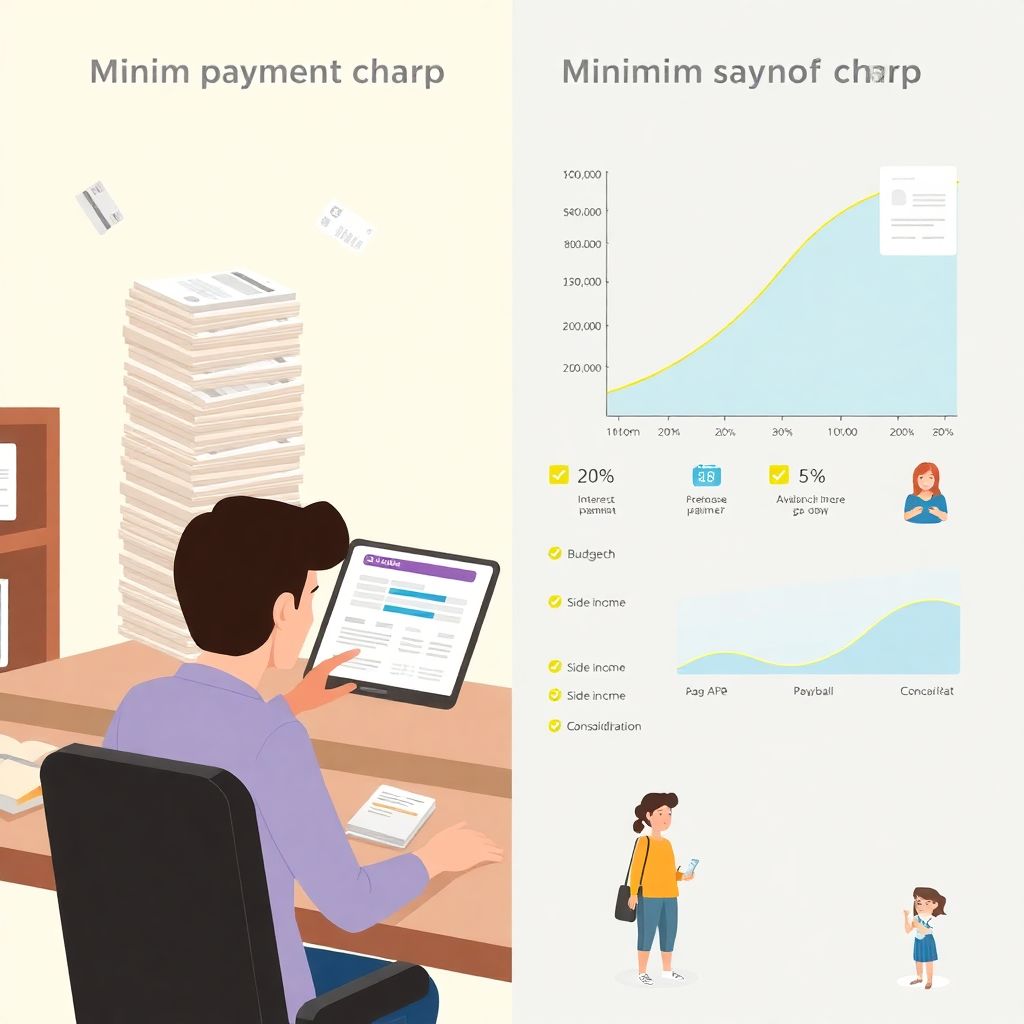
Why Minimum Payments Feel Safe — And Why They Keep You Stuck
If you’ve ever looked at your credit card bill, sighed, and thought, “At least I can afford the minimum,” you’re not alone. The minimum payment system is designed to feel comfortable: just a small percentage of your balance, often 2–5%. The problem is that this comfort quietly extends your repayment timeline to years, sometimes decades, while interest keeps eating your money. That’s the essence of the credit card minimum payment trap: you pay, but the balance barely moves. Understanding how to avoid credit card minimum payment trap starts with seeing it not as a moral failure, but as a built‑in feature of how consumer credit works. Once вы recognize that, it becomes much easier to step out of autopilot and take control using conscious credit card debt payoff strategies instead of just surviving from statement to statement.
How the Minimum Payment Trap Really Works (In Plain English)
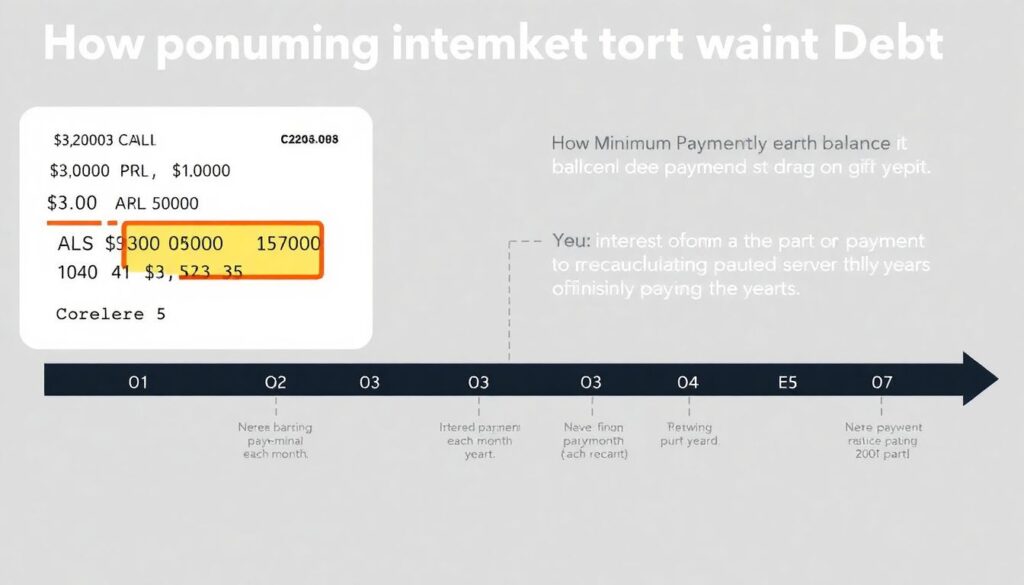
Most people underestimate how compounding interest works against them. Say you owe $3,000 at around 20% APR and only pay the minimum. The card issuer recalculates your minimum each month, so as your balance slowly shrinks, your minimum shrinks too — it never “pushes” you to finish. A big chunk of every payment goes toward interest, not the principal. Mathematically, that means your repayment curve becomes very flat: progress is invisible at first and only speeds up years later. Behaviourally, that’s demotivating, because you see almost no reward for your efforts. This is why the best ways to get out of credit card debt usually start with breaking that pattern: you pick a fixed payment that’s higher than the minimum, don’t let it slide downward, and deliberately shorten the timeline, even if at the beginning it feels like a stretch.
Expert-Backed Mindset Shift: From “Survival” to “Project”
Financial planners often say that paying off cards should be treated not as punishment, but as a temporary project with a clear finish line. Certified financial therapist Amanda Clayman, for example, recommends reframing debt as “a problem to be engineered, not a verdict on your character.” When you think this way, you can ask much more useful questions: not “Why am I so bad with money?” but “What are the most realistic how to pay off credit card debt fast methods that fit my income, stress level, and lifestyle?” Psychologically, this turns you into an active participant: you set milestones, track small wins, and allow yourself to upgrade tactics over time. That shift in mindset is subtle but crucial; it’s the difference between dragging a ball and chain and managing a finite, solvable project.
Real People, Real Turnarounds: Inspiring Examples
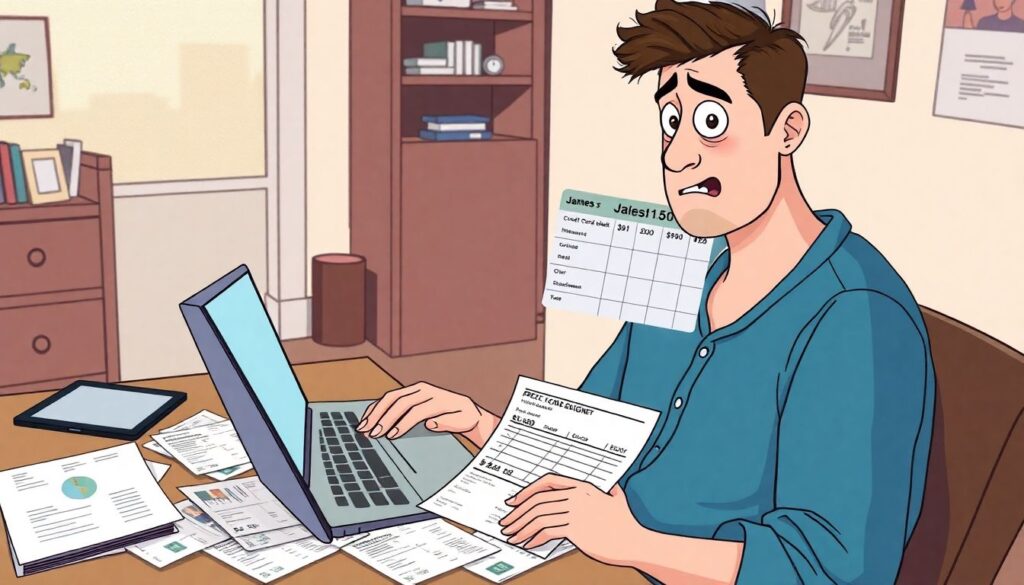
Consider James, a freelance designer who carried around $9,500 on three cards. For years he paid just above the minimums and assumed “that’s just how adulthood works.” After running the numbers with a nonprofit credit counselor, he realized that keeping this habit meant paying over $6,000 in interest and staying in debt for more than 15 years. Shocked, he set a fixed total monthly payment — double his previous combined minimums — and chose a structured plan instead of guessing. In three and a half years, he was card‑debt‑free. Interestingly, he reported that the real payoff wasn’t only the savings. It was the feeling of momentum: every month he watched the balance actually shrink, which made him more willing to cut a subscription here or take a small extra gig there. His case shows that the best ways to get out of credit card debt often depend less on heroic income jumps and more on persistent, slightly uncomfortable but sustainable effort.
Step-by-Step: A Simple Plan to Escape the Minimum Payment Trap
1. Get Brutally Clear on the Numbers
Before you think about how to pay off credit card debt fast, you need a precise map. Open a spreadsheet or a notes app and list each card: balance, APR, and minimum payment. Then add what you actually paid last month. Many people discover they can already afford more than the minimum, but that extra is scattered and unplanned. By gathering these numbers, you’re not just doing admin; you’re creating the foundation for intentional change. This moment can be uncomfortable — seeing the total can sting — but experts in behavioral finance note that clarity reduces anxiety over time, because your brain stops spinning worst‑case scenarios in the dark and can finally work with real data.
2. Choose a Strategy: Avalanche or Snowball
Most credit card debt payoff strategies in research and practice fall into two main types:
1. Avalanche method: You pay at least the minimum on all cards, then direct every extra dollar to the card with the highest interest rate. Mathematically, this is the fastest and cheapest approach.
2. Snowball method: You again pay minimums on everything, but throw your extra money at the smallest balance first, regardless of rate. This gives you quick wins and strong motivation.
Behavioral economists have shown that people using the snowball method are more likely to stick with their plan, even though it’s sometimes less efficient on paper. Financial coaches often suggest a hybrid: start with a small “quick win” balance, then switch your extra payments to the highest APR card once that first card is gone. The point is not perfection — it’s choosing a method you’re actually willing to follow consistently for months or years.
3. Lock In a Fixed Monthly Payment Above the Minimum
The core of escaping the trap is choosing a total monthly amount that’s meaningfully higher than your combined minimums and refusing to let it slide downward as your balances fall. For example, if your minimums add up to $150 and you decide on $250, you pay $250 every month regardless of the new, lower minimums the bank suggests. Over time, more and more of that $250 goes toward principal rather than interest, and your payoff accelerates. Experts often advise using automatic payments to enforce this rule: set your autopay to the higher fixed number, then adjust your spending around it instead of treating debt payments as negotiable leftovers.
Income and Spending Tweaks That Actually Move the Needle
A lot of advice on how to pay off credit card debt fast focuses only on cutting expenses, but professionals who work with real households emphasize a dual approach: trim what doesn’t matter to you and look for modest, realistic income boosts. That might be a temporary side gig, overtime in a busy season, or selling underused items. The key is to define these moves as time‑limited “sprints” for your payoff project, not permanent sacrifices. On the expense side, research shows that people tend to underestimate the power of medium‑sized cuts — for instance, renegotiating your phone plan or insurance, rather than just skipping coffee. Combining a few such changes can free up $100–300 per month, which, consistently directed to debt, can shave years off your schedule.
Development Recommendations: Building Skills, Not Just Cutting Costs
If you only focus on restriction, you’ll probably burn out. Experts in financial education recommend turning parts of your debt journey into a personal development project. For example, learning basic budgeting systems like zero‑based budgeting or “pay yourself first” methods teaches you planning and prioritization skills that spill over into other areas of life. You can treat this as a skill‑building track: 1) understand your cash flow in detail, 2) learn to forecast expenses a month ahead, 3) practice delayed gratification in a way that still respects your mental health. That way, by the time your cards are paid off, you’ve also upgraded your money management toolkit — meaning you’re less likely to fall back into old patterns that lead straight back to the minimum payment trap.
Successful Cases: What Worked — And Why
Take Lina, a nurse who juggled rotating shifts and $12,000 of card debt. She felt too exhausted to think about complex plans. A credit coach helped her set up a very simple system: automatic payment of a fixed $400 total each month, avalanche method, and a rule that every unexpected extra — tax refund, small inheritance, overtime bonus — would be split 50/50 between small joys and debt. It took four years, but she never missed a payment. Interestingly, what worked for her wasn’t discipline alone; it was designing a plan that respected her mental bandwidth. In another case, a young couple used one of the better credit card debt consolidation options to merge four high‑interest balances into a single lower‑rate loan. That allowed them to focus on one monthly figure, avoid temptation to reuse the cards, and set a clear payoff date. In both cases, success came from aligning strategy with personality and daily reality, not copying someone else’s “perfect” method.
Should You Consolidate? Expert Take on Debt Consolidation Options
When people explore best ways to get out of credit card debt, consolidation almost always comes up. It can mean a personal loan with a lower interest rate, a 0% balance transfer card for a promotional period, or working with a nonprofit agency to set up a structured repayment plan. Financial planners stress one key point: consolidation only helps if you change the behavior that created the original balances. A lower rate without new habits just postpones the problem. That said, credit card debt consolidation options can be powerful when used wisely. A fixed‑rate personal loan with a term of three to five years turns a vague, open‑ended obligation into a clear schedule. A 0% balance transfer, if you can pay off the balance before the promo ends and avoid new charges, can slice hundreds off your interest costs. Experts advise reading the fine print carefully — fees, reversion rates, and penalties — and running the numbers before you sign anything.
Learning Resources to Stay Motivated and Informed
To keep momentum, it helps to regularly feed your brain with stories, tools, and frameworks instead of relying on willpower alone. You can look into nonprofit credit counseling organizations that offer free workshops and one‑on‑one sessions; they’re often funded to educate, not to sell you products. Many public libraries grant access to personal finance ebooks and online courses that explain credit card debt payoff strategies in straightforward language. Podcasts with financial planners and behavioral economists can also provide a realistic, research‑based view: hearing how others failed, adjusted, and finally won tends to normalize your own struggles. Treat this as a curriculum: each month, choose one resource to study — a book, a course, or a podcast series — and note one idea you’ll actually implement. Over a year, that slow accumulation of knowledge can fundamentally change how you relate to money.
Common Pitfalls — And How Experts Suggest Avoiding Them
Professionals who work with indebted clients see the same mistakes repeatedly. One is “all‑or‑nothing” thinking: going on an extreme austerity kick, then rebounding into overspending when life inevitably throws a stressful week at you. Another is ignoring your credit score and statement details, assuming they only matter “for later.” In reality, watching your utilization drop and your score climb can be a major motivator, reinforcing your new habits. Experts recommend building small buffers: an emergency fund of even $500–1,000 can prevent you from running straight back to your card the next time a tire blows or a medical bill appears. They also suggest scheduling a 20‑minute “money check‑in” once or twice a month. That appointment with yourself — or with a partner — makes it much harder to slide back into minimum‑payment autopilot without noticing.
Bringing It All Together: Your Personalized Exit Plan
Escaping the minimum payment trap isn’t about perfection, and it’s certainly not about shame. It’s about choosing a few deliberate moves and repeating them long enough to see compound progress in your favor, instead of against you. You gather your numbers, pick a realistic method — avalanche, snowball, or a mix — set a fixed payment above your minimums, and support that decision with modest lifestyle tweaks and better information. Along the way, you treat the process as a training ground: you become someone who plans, tracks, and adapts, not someone who just reacts to whatever the bank statement says this month. If you keep that frame, your goal stops being only “get rid of debt” and becomes “build a financial system that makes future debt crises unlikely.” That’s the real win: not just a zero balance, but a durable sense of control that lasts long after the cards are finally paid off.