
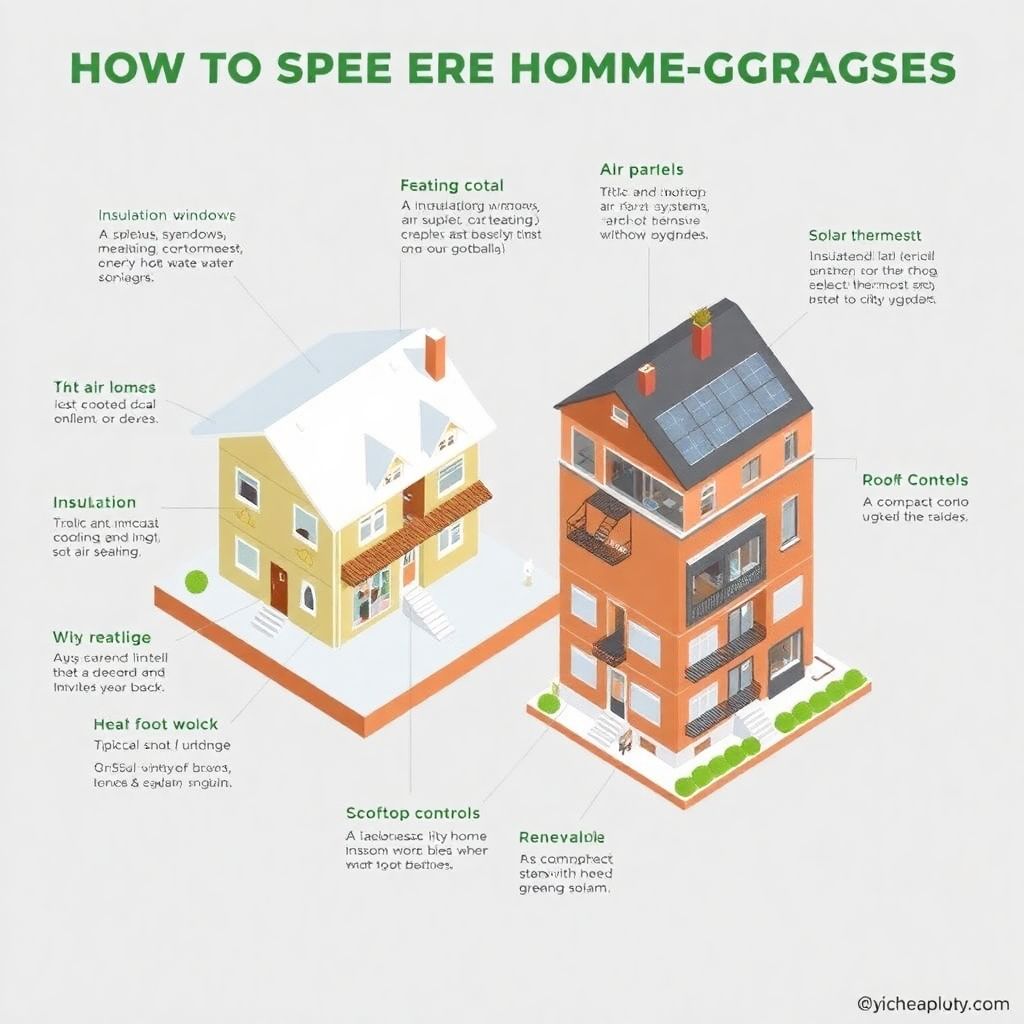
Planning a green home upgrade is less about buying the “shiniest” eco‑tech and more about deciding where each dollar actually saves you money and emissions. Households typically underestimate total costs by 20–30%, mostly because they forget labor, permits and hidden repairs. A clear budget lets you stage the work, compare payback periods and avoid debt that eats up the very savings your upgrades are supposed to generate. When you see the numbers side by side, it becomes easier to justify insulation over fancy gadgets and to separate feel‑good purchases from real performance improvements.
Numbers behind a greener home
Across the US and Europe, heating, cooling and hot water swallow roughly 60–70% of home energy use, so cutting those loads gives the biggest bang per dollar. Studies show that well‑planned energy retrofits can trim household bills by 20–40%, but the actual green home renovation cost ranges wildly: from a few thousand dollars for sealing leaks and LED lighting to five‑figure investments if you add heat pumps and solar. Governments are tightening building codes, so analysts expect the market for residential efficiency upgrades to grow 8–10% annually this decade, shifting “green” from niche to normal.
Dissecting real project budgets
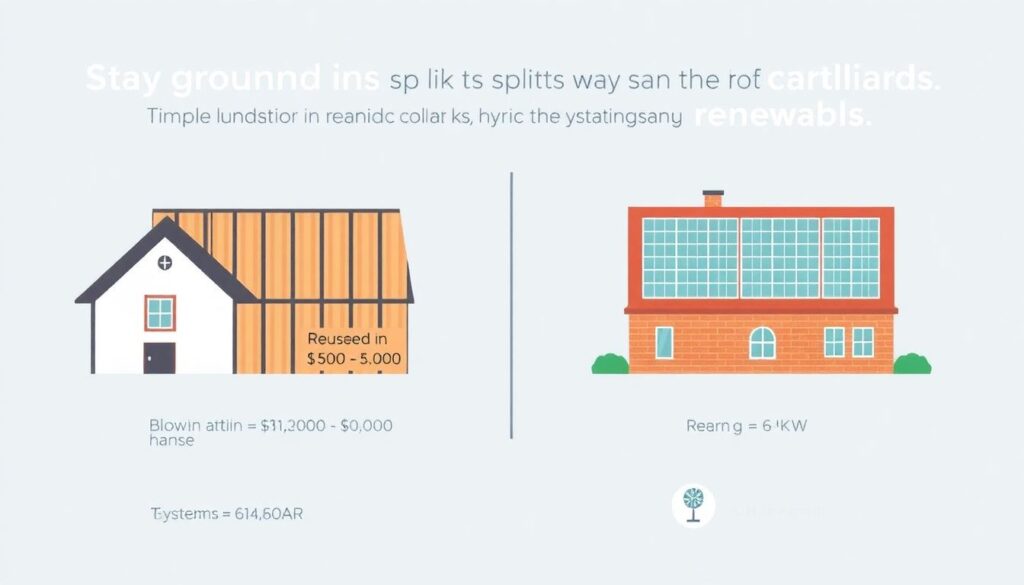
A simple way to stay grounded is to split costs into envelope, systems and renewables. The cost of solar panels and home insulation illustrates the contrast: blown‑in attic insulation for a typical house might run $1,500–$3,000 and often pays back in three to six years; a 6 kW rooftop solar array can cost $12,000–$18,000 before incentives with a 7–10 year payback, depending on electricity prices. In practice, insulation often saves more per invested dollar, yet solar is more visible, which is why many households misallocate budgets toward panels before fixing basic heat loss.
Case 1: Suburban starter home
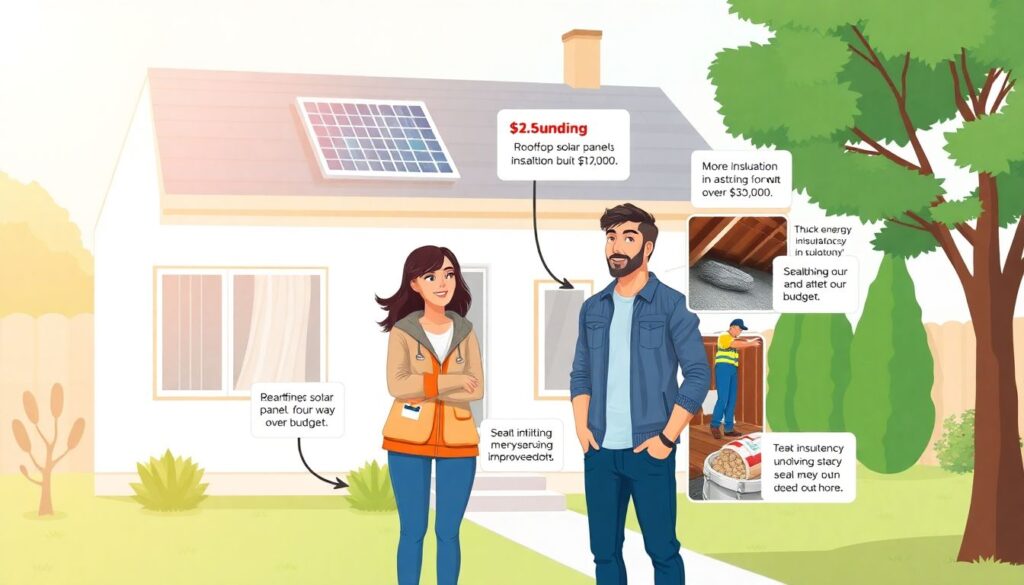
Take Maya and Luis, a couple with a 130 m² house built in the 1990s and a $9,000 cap for upgrades. Their contractor’s first quote focused on solar, pushing their green home renovation cost toward $16,000—way over budget. After breaking down energy use, they instead spent $2,400 on attic and crawlspace insulation, $800 on air sealing, $1,300 on a smart thermostat and zoning tweaks, and $1,500 on higher‑efficiency windows for the windiest side of the house. They postponed solar and heat pump plans. Their gas and electricity bills dropped 28%, saving about $900 a year—enough to build a solar fund later.
Energy savings on a tight budget
If you’re aiming for energy efficient home upgrades on a budget, the priority is to kill waste before adding new tech. In a small urban apartment, for example, a Berlin tenant spent under €700 on LED lighting, smart plugs, window seals and thermostatic radiator valves. No walls were opened, yet annual energy costs fell around 15%. The lesson is simple: measure how your home behaves now, then price several upgrade packages instead of a single “all‑in” quote. That makes it much easier to decide which measures you can do this year and what waits for the next pay raise.
Three budgeting moves that actually work
1. Start with an energy audit and scenario planning. A professional or DIY audit gives you baseline consumption by system—heating, cooling, appliances. From there, create three scenarios: “minimum,” “balanced” and “stretch” packages with itemized prices. This turns vague wishes into concrete options and exposes where affordable eco friendly home improvement ideas, like draft‑proofing or shading, beat expensive gadgets. It also lets you match each scenario to your cash flow instead of leaning on credit for upgrades that will take years to pay for themselves.
2. Compare upgrades by payback and comfort, not marketing. For every measure, list cost, expected annual savings and non‑financial benefits such as quieter rooms or less mold. A $1,000 sealing job that saves $200 a year beats a $5,000 window swap that saves $250, especially if both improve comfort. This approach helps filter out well‑marketed but low‑impact products. It also answers the everyday question: “Will I still be in this home when the numbers break even?”—critical for owners who might sell within five to seven years.
3. Phase projects to match life events. Instead of trying to finance a full overhaul, sync upgrades with inevitable renovations. Redoing the roof in three years? Plan insulation and solar wiring now so scaffolding is paid for once. Updating the kitchen? Bundle in efficient ventilation and induction. Staging like this smooths cash demands and reduces soft costs such as permits and design fees. It also allows you to adapt as energy prices, incentives and technologies change, which can shift which measures make the most financial sense over time.
Case 2: Apartment retrofit on salary income
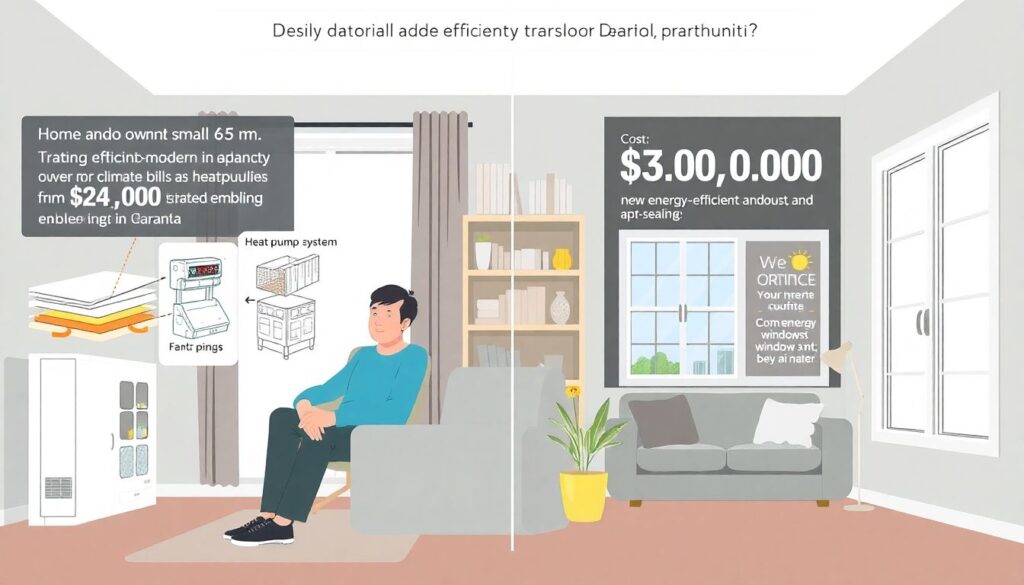
Consider Daniel, who owns a 65 m² condo in Toronto and wanted low‑carbon heating but feared the bill. A full heat‑pump system plus envelope upgrade initially priced at $24,000, far beyond his savings. After reassessing, he tackled the project in two phases: first, $3,800 for window upgrades and better insulation in accessible cavities; second, a compact heat pump the following year. He used a modest line of credit and a utility rebate. Over two winters, his heating costs fell by roughly 35%, and resale agents now highlight the unit’s lower operating expenses as a differentiator in a crowded market.
Financing and incentives
Even carefully staged projects can exceed savings or cash on hand, so understanding financing options for green home upgrades is essential. Many regions now offer on‑bill financing, where you repay loans through your energy bill, and property‑assessed programs that tie repayment to the building rather than the person. These tools reduce upfront barriers but require scrutiny of interest rates and fees. When paired with tax credits or rebates that cover 20–40% of major measures, financing can tilt the math so that monthly savings nearly offset loan payments, especially in areas with high energy tariffs.
Macro trends and industry impact
On the industry side, the surge in demand for green upgrades is reshaping construction and manufacturing. Insulation producers, heat‑pump vendors and solar installers are scaling up, which should nudge prices down over the next decade. Analysts expect the home retrofit segment to outpace traditional new‑build construction, driven by aging housing stock and climate policies. Contractors who once sold only “bigger HVAC” are retraining to offer integrated efficiency packages. For homeowners, this shift means more choice but also more complexity, making transparent quotes and independent audits increasingly important to navigate marketing claims.