

Why big goals feel hard — and why they’re absolutely doable
Big goals like a dream vacation, a meaningful wedding, or saving for a house down payment can feel impossibly far away when you’re staring at rent, groceries, and subscription renewals. The trick is to stop treating them as “one giant number” and start treating them as a series of small, automatic decisions. You’re not just saving money; you’re designing a system that keeps working even on days you’re tired, stressed, or distracted. That mindset shift is what separates people who “mean to save” from people who actually show up at the travel agency, venue, or bank with cash ready. Let’s walk through practical strategies, real-life cases, and the tools that genuinely help in 2025, without sugar‑coating the trade‑offs.
Short version: your system matters more than your willpower.
—
Case 1: Building a vacation fund without feeling broke
Think of a vacation fund as a low‑stakes training ground for bigger goals. In 2025, the smartest move is separating your travel money from your everyday checking and using interest to do part of the work. People who consistently hit their travel goals usually automate transfers the day after payday into a dedicated account, often using the best high yield savings accounts for vacation fund growth instead of letting the money sit in a 0% account. One client, Maya, wanted €2,400 for a two‑week trip in 10 months. That’s €240 per month. She set a €120 automated transfer from each paycheck, moved freelance income “leftovers” once a month, and threw in any cashback rewards. She never felt a big sacrifice, but the balance grew quietly and predictably.
One key detail: she never used a debit card tied to that account.
—
Compare approaches: “leftover” saving vs. “pay yourself first”
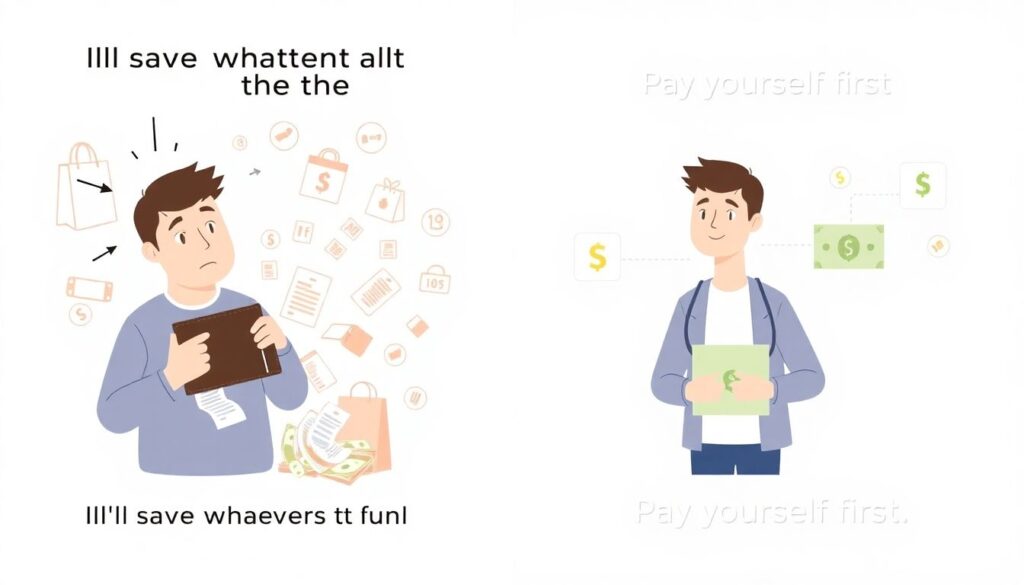
Most people start with “I’ll save whatever’s left at the end of the month.” That sounds reasonable but fails in real life, because modern life has infinite ways to spend “what’s left.” A stronger method is paying yourself first: deciding the monthly amount for your goal, moving it out at the start of the month, and living on what remains. In practice, leftover saving works only for people with unusually high income or discipline. Pay‑yourself‑first works even for messy, real budgets. For vacations, a hybrid is powerful: auto‑transfer a minimum amount, and treat any extra — overtime pay, side gigs, tax refunds — as optional boosts. The psychology matters: when your brain sees the vacation account grow, you’re more willing to protect that money from impulse spending.
Leftovers are random; planned transfers are reliable. Pick reliability.
—
Case 2: How to save money for a wedding fast without wrecking your life
Fast wedding saving is about compression and clarity. I worked with a couple, Jen and Omar, who gave themselves just 12 months to save $15,000. Instead of starting with Pinterest, they started with a spreadsheet: non‑negotiables (venue, food, photography) versus “nice to have” (flowers, favors, live band). They cut the guest list by 20% and instantly saved thousands. Next, they each opened a separate joint savings account specifically for the wedding and set up automatic transfers aligned with payday. To accelerate, they agreed on temporary lifestyle cuts with a clear end date: no new gadgets, eating out only twice a month, cheaper gym options. Importantly, they did monthly “wedding money dates” to review progress. That kept motivation high and prevented last‑minute credit card panic.
Speed comes from intensity plus a deadline, not from guilt.
—
Tech tools: automated savings apps vs. doing it manually
Technology is now a core part of big‑goal planning, but it’s not magic. Automated savings apps for financial goals typically round up purchases, skim small amounts from your checking, or move money based on rules you set (“save $5 on every coffee purchase,” “save 1% of every paycheck”). The pros: they lower the activation energy — you don’t rely on memory or motivation — and they’re great for people who feel overwhelmed by spreadsheets. The cons: some charge subscription fees that quietly eat into gains, and if you’re not watching, they can trigger overdrafts on tight weeks. Manual methods — scheduled transfers inside your bank plus a simple spreadsheet — give you more control and zero extra fees, but they demand a bit more upfront setup.
Rule of thumb: start with built‑in bank automations; add apps only if you need extra nudging.
—
Saving for a house: long game, high stakes

When you move from vacations and weddings to property, the scale changes dramatically. You’re not just picking flights or flowers; you’re dealing with saving for a house down payment strategies that may span years and six‑figure price tags. The core ingredients stay similar: separate accounts, automation, and clear timelines. What changes is the need to understand the housing market, lending rules, and your personal risk tolerance. In practice, people who succeed here usually combine a high‑yield savings account for the near‑term portion of the down payment, possibly low‑cost index funds for anything with a 5+ year horizon, and strict boundaries: the “house money” is never used for anything else. The emotional trap is lifestyle creep — as income rises, so do expenses — unless you deliberately lock in a savings rate as a non‑negotiable bill to your future self.
You’re not just saving; you’re proving to a bank that you can handle a mortgage.
—
Case 3: From rent to keys — a realistic down payment story
Alex and Priya, both 29, lived in a high‑cost city and assumed owning was impossible. Their first step was brutally honest math: target price, 20% ideal down payment, and a minimum 5% “starter” down payment. They aimed for the middle. They redirected annual bonuses entirely to a separate house account, cut one international trip per year, and moved to a slightly cheaper rental. Over four years, their consistent saving plus modest investment returns added up. They also explored down payment assistance programs for first time home buyers in their region and discovered a grant that covered closing costs. That didn’t replace their savings but shortened the finish line. When they finally made an offer, the process felt intense but not desperate, because they had rehearsed the financial discipline for years.
Their key insight: start smaller, buy earlier; you can upgrade later.
—
Comparing strategies: cash only vs. investing part of the goal
When timelines stretch beyond three years, a common debate appears: should you keep all goal money in cash, or invest a portion? Cash is simple and safe: no volatility, no scary red numbers right before your closing date or wedding. But in a world of inflation, long multi‑year goals sitting in low‑interest accounts quietly lose purchasing power. A blended approach often works best: keep short‑term needs (next 1–3 years) in high‑yield savings or short‑term CDs, and consider low‑risk, diversified funds for goals 5–10 years out. The risk: markets don’t respect your timetable. If a crash hits right when you need the money, you might have to delay or scale back.
If the thought of any loss makes you panic, prioritize safety over slightly higher returns. Sleep is part of your ROI.
—
Tech pros and cons: banking in 2025 vs. 2015
By 2025, the gap between “old school” banking and modern, app‑driven saving is huge. The upside: instant account opening, goal‑based sub‑accounts, and visual trackers that show your vacation, wedding, and home funds growing side by side. Apps can nudge you with small, behavior‑based prompts: “You spent less on dining out this week; want to move $20 to your travel fund?” Many online banks are aggressively competing on interest, which matters when you’re comparing where to park a large down payment for 2–3 years. The downside is noise and friction: too many apps, notifications, and overlapping features. Some fintechs fold or change terms suddenly, which can disrupt your carefully built system.
Practical filter: if a tool doesn’t either simplify decisions or boost returns clearly, it’s clutter, not help.
—
Recommendations: choosing your strategy without overthinking
To keep things actionable, align your method with your timeline and personality. For short‑term goals like a vacation in 6–18 months, automate monthly transfers into a separate high‑yield account and ignore investment options — safety and simplicity win. For mid‑term goals like a wedding in 1–3 years, add deadlines and strict spending rules, and consider side income if the numbers don’t add up. For long‑term goals like a home, layer higher savings rates, possible investing, and research into programs and grants. Above all, make your system visible: name your accounts (“Italy 2026,” “Wedding,” “Home Keys Fund”) and check them monthly. The clearer the purpose, the less likely you are to raid them for random wants.
You don’t need a perfect plan. You need a workable plan you actually follow.
—
Trends for 2025: what’s changing in big‑goal saving
Several shifts are shaping how people save this year. First, more employers are adding tools that let you direct slices of your paycheck into multiple goals automatically, making it easier to fund travel, a ring, and a house at the same time. Second, more banks are bundling goal‑based insights into their apps, effectively turning your phone into a basic coach. Third, there’s a noticeable move away from all‑or‑nothing thinking: people are more open to smaller, more frequent trips instead of waiting five years for the “perfect” vacation, or starting with a smaller home in a farther neighborhood. Finally, interest rate changes and tighter lending standards make consistency more important than ever.
In other words, systems beat drama. Start small, automate early, and let time do the heavy lifting.