
Historical background: how family budgeting got so tight
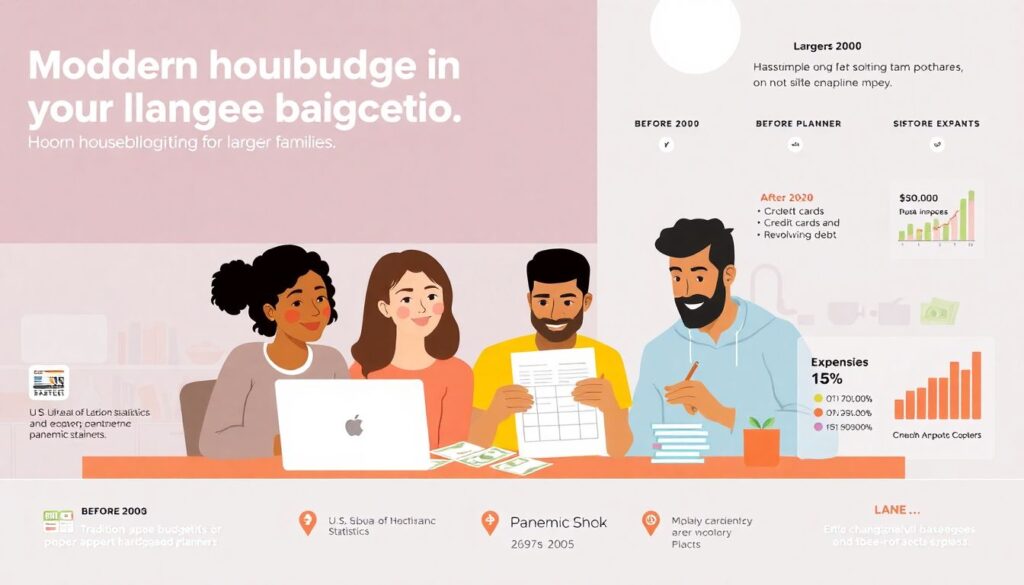
Household budgeting for larger families has shifted a lot over the last few decades. After 2000, credit access expanded, and many parents relied more on revolving debt than on a detailed family of five budget planner. Then came the pandemic shock: according to the U.S. Bureau of Labor Statistics, from 2021 to 2023 average food‑at‑home prices jumped roughly 20%, while rents in many metro areas rose 10–15%. At the same time, wages for middle‑income parents with kids grew slower than inflation. As a result, a family of five today must treat budgeting as a risk‑management tool, not just as a list of expenses, integrating cash‑flow forecasting, debt servicing strategy and emergency‑fund targets.
Basic principles: what really matters in a family‑of‑five budget
Working budget mechanics for five people start with cash‑flow mapping. You identify fixed costs (rent, childcare, transport, insurance) and variable costs (groceries, utilities, kids’ activities) and compare them to after‑tax income. Over the last three years, Consumer Expenditure Survey data show that housing and food now routinely consume 45–55% of take‑home pay for households with children, leaving little room for error. This is why zero‑based budgeting, where every unit of currency is assigned a “job”, has become a core technique. It forces trade‑offs: either you fund future goals (education, retirement), or you fund discretionary categories, but not both at full scale.
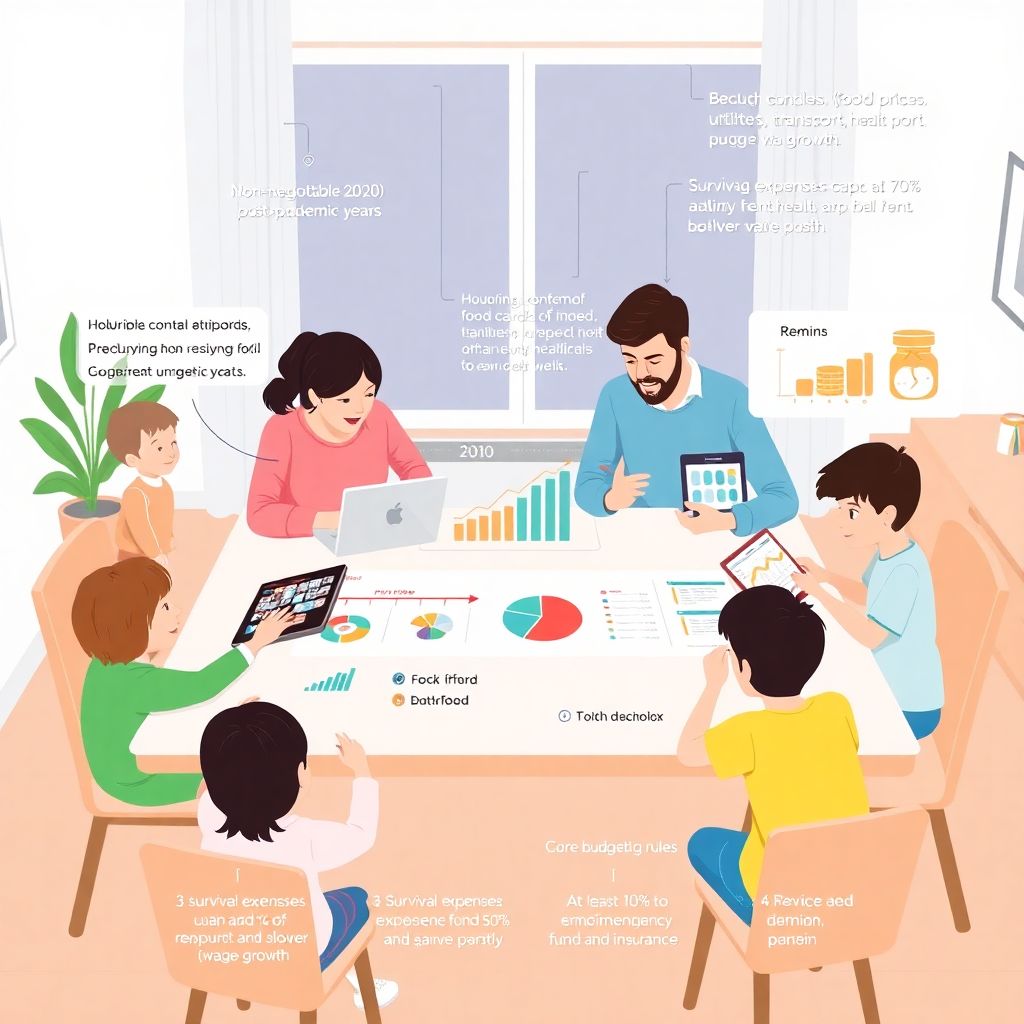
Core rules expressed as a practical sequence
1. Define non‑negotiables: housing, basic food, utilities, minimum debt payments, essential transport and healthcare.
2. Cap these “survival” expenses at ~60–70% of net income; if they exceed this, the priority becomes downsizing or income growth.
3. Allocate at least 10% to risk buffers: emergency fund, insurance, necessary maintenance.
4. Only then distribute the remainder to lifestyle spending and kids’ extras, using monthly and weekly spending caps.
5. Review the structure quarterly; inflation data from 2022–2024 show that static budgets erode quickly when prices for essentials move 5–8% per year.
Practical implementation: tools and everyday tactics

Digital tools now automate much of the heavy lifting. The best budgeting apps for families link multiple bank and card accounts, categorize children‑related and household spending and generate trend reports. Since 2022, surveys from major personal‑finance platforms show a steady rise in multi‑user budgets, where both partners track the same shared dashboard. For a busy household of five, the key is to convert data into weekly decisions: automated bill payments to avoid late fees, alerts when categories (like dining out or subscriptions) exceed thresholds, and envelope‑style “sub‑budgets” for each child’s activities to keep cumulative costs visible instead of scattered and forgotten.
Food costs: where the biggest wins usually hide
For most parents the burning question is how to save money on groceries for a large family without sliding into low‑quality diets. USDA estimates for 2022–2024 show that even a “thrifty” food plan for a five‑person household can exceed several hundred dollars per week, and eating out magnifies that. The structural answer is menu planning, bulk purchasing, and reducing waste. Cheap family meal plans for 5 on a budget rely on a short list of versatile ingredients, batch cooking and using leftovers deliberately. When you standardize 10–15 meals and rotate them, you simplify shopping lists, exploit discounts more efficiently and keep the per‑portion cost under tighter control.
Income, goals and when to seek professional help
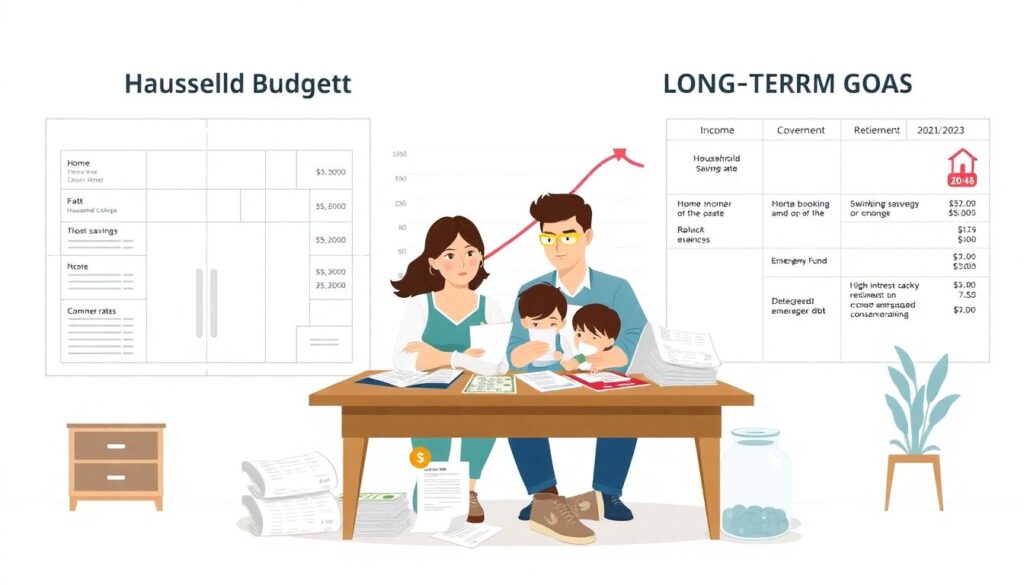
Budgeting is only half of the financial architecture; the other half is aligning income and long‑term goals. Between 2021 and 2023, household savings rates swung sharply, and many families with children depleted emergency reserves. If your family of five carries high‑interest consumer debt or you are facing future college costs, it can be rational to use financial planning services for families with kids. A certified planner can build integrated projections for education, mortgage, and retirement and test scenarios such as one parent reducing work hours. The output is not just a theoretical plan but specific saving rates and investment vehicles that fit the risk tolerance and time horizon of your household.
Common misconceptions about budgeting for five
Several myths keep families from building robust systems. A frequent one is that “apps alone will fix it”; in reality, even the most advanced family of five budget planner is only a decision‑support tool, and without clear rules it just documents overspending. Another misconception is that only very high incomes can save; yet expenditure data from 2021–2023 show that even modest‑income families who automate small but consistent transfers to savings accounts accumulate more reserves than higher earners with no structure. Finally, some parents assume that strict budgets harm children’s experiences, but setting explicit limits typically leads to more deliberate choices—fewer impulsive purchases, more planned activities—rather than a lower quality of life.