
Why Freelancers Need a Different Money Playbook
When you work for yourself, money behaves differently. There’s no HR department, no automatic paycheck every two weeks, no built‑in retirement plan. That’s why personal finance for freelancers is less about fancy investment tricks and more about building a simple, repeatable system you can stick to even when income jumps up and down.
Instead of chasing perfection, your goal is to avoid disasters: missed tax payments, months with no cash, and hitting 55 with zero retirement savings. Everything in this guide is built around that idea.
—
Core Principles: Think Like a Business, Not “Just a Person”
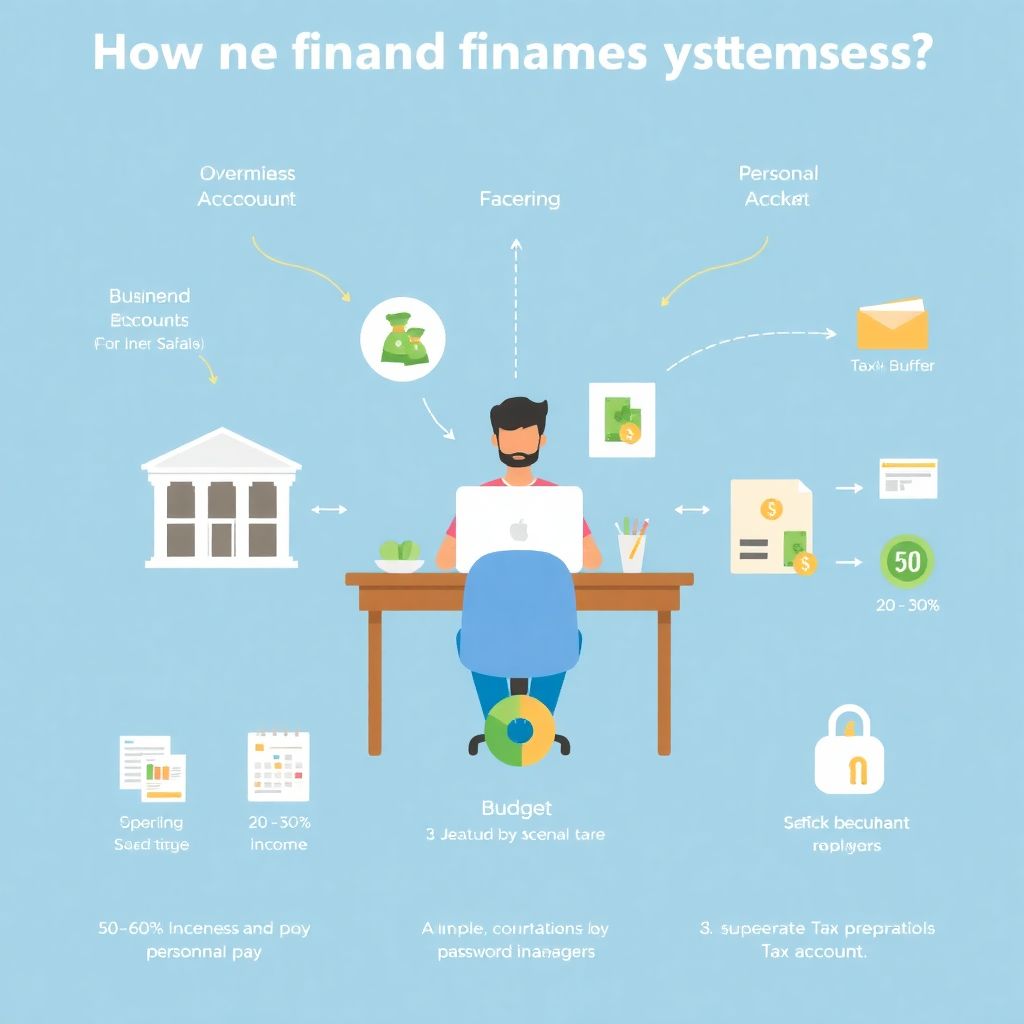
Separate You from Your Business (Even If You’re Small)
One of the most consistent expert recommendations: treat your freelance work as a tiny business from day one. That doesn’t mean you need a fancy corporation; it means drawing a clear line between “business money” and “my life money.”
Open at least two separate accounts:
– A business checking account: all client payments go here, all business expenses come from here.
– A personal checking account: this is where your “salary” lands.
This psychological barrier helps you stop raiding “future tax money” for takeout and impulse gadgets.
—
Pay Yourself a Consistent Salary
Even if your income is irregular, your bills aren’t. To reduce stress, move money from your business account to your personal account on a fixed schedule, like the 1st and 15th of every month.
It doesn’t matter if you call it a salary, draw, or transfer. The point is: your life runs on a predictable number, your business absorbs the ups and downs.
—
Necessary Tools: Make Money Management Easier, Not Fancier
You don’t need a Wall Street dashboard. You need a few reliable tools that you’ll actually use.
Banking & Buckets
Look for a bank that lets you create multiple sub-accounts or “spaces.” Experts often recommend three core buckets in your business banking setup:
– Operating: where client payments land and bills get paid
– Taxes: where you immediately stash a fixed percentage for the government
– Profit/Buffer: your emergency cushion for slow months
This “bucket” approach keeps you from accidentally spending money that doesn’t really belong to you.
—
Software That Does the Boring Work for You
Personal spreadsheets are fine, but most freelancers stick with money systems when the admin is nearly automatic. That’s where the best accounting software for freelancers becomes crucial. Look for features like:
– Automatic bank feeds and expense categorization
– Easy invoicing and payment tracking
– Simple tax reports (income, expenses, profit)
If software feels too heavy, you can start with a simple app that tracks income and expenses and upgrade later. Just don’t rely on a pile of receipts and your memory.
—
Supporting Tools: Not Essential but Very Helpful
A few extra helpers:
– A receipt scanner app (or just your phone’s camera + cloud folder)
– A calendar reminder system for invoices, tax deadlines, and financial check‑ins
– A basic password manager to protect logins to banks and accounting apps
The goal is to make it harder to mess things up by forgetting.
—
Step-by-Step: Building a Freelance Money System from Scratch
Step 1: Know Your Real Monthly Cost of Living
Before you worry about investments, figure out your “floor”: the minimum you need to live each month — rent, food, internet, insurance, transport, debt payments.
Do a quick pass:
– Look back at 3 months of bank and card statements
– Average your regular bills
– Add a realistic buffer for variable stuff (groceries, transport, small treats)
This number is your baseline target for your personal “salary.”
—
Step 2: Build a Simple Freelance Budget
Now you can finally use all those freelancer budgeting tips you’ve seen around, but keep it simple:
– Decide your monthly personal salary (slightly above your floor if possible)
– Choose your tax percentage (more on that below)
– Decide how much goes to savings and investments when possible
An expert-friendly budgeting rule of thumb for freelancers:
– 50–60% of income → your personal pay
– 20–30% → taxes
– 10–20% → business investments, savings, and emergency buffer
These are starting points, not commandments; adjust as income stabilizes.
—
Step 3: Automate Money Flows
Every time you get paid by a client, move money into your buckets using fixed percentages. For example, from each payment:
– 25–30% → Tax account
– 10% → Buffer or savings
– The rest → Operating / then your personal salary on schedule
Automation beats willpower. Set up recurring transfers on set days so you aren’t manually deciding every time.
—
Step 4: Handle Taxes Before They Handle You
If you only remember one section, let it be this one: learn how to manage taxes as a freelancer early, while your income is small. It’s much easier than digging out of a huge tax bill later.
Basic approach (check your country’s rules):
– From day one, put aside a fixed percentage of every payment into your tax account
– Track deductible expenses: software, equipment, coworking, part of your home office, education, etc.
– Calendar all important tax deadlines, including estimated quarterly payments if they apply
If you can, talk to a tax pro at least once a year. Their job is to save you more than they cost, especially by pointing out deductions you didn’t know about.
—
Step 5: Protect Yourself with a Simple Safety Net
Freelancers don’t get sick days or severance. That means you need your own “safety net package”:
– Emergency fund: start with 1 month of expenses, work up to 3–6 months
– Health insurance: whatever your country offers, don’t wing it
– Liability insurance if your work could cause clients real damage (e.g., design, consulting, coding)
You don’t need perfect coverage on day one, but you do need a plan to steadily improve your protection.
—
Step 6: Don’t Ignore Future You (Retirement & Long-Term Goals)
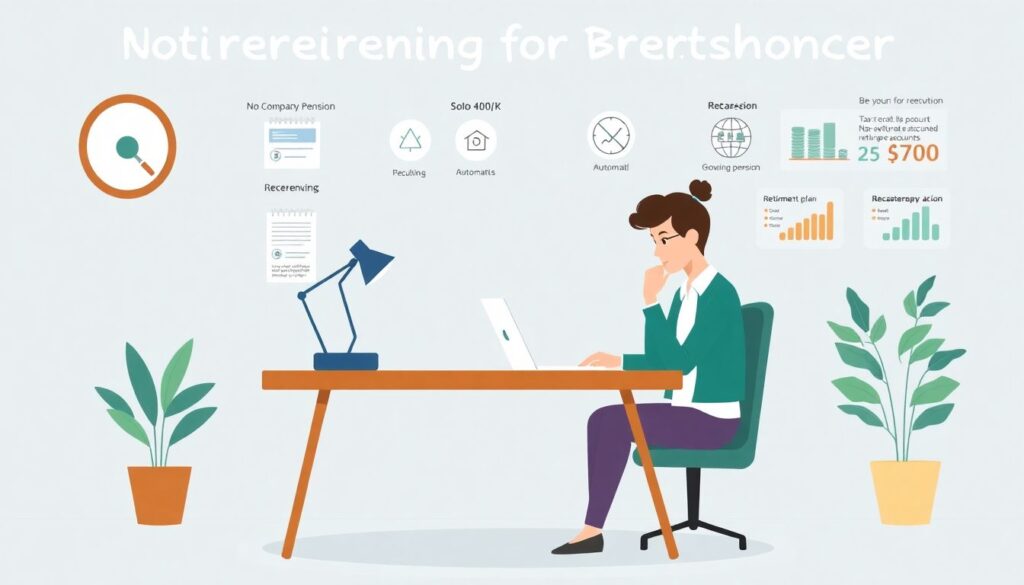
Retirement planning for freelancers sounds intimidating, but in practice it’s a few small recurring actions. You won’t get a company pension, so you have to be your own HR.
Foundations:
– Open a tax-advantaged retirement account available in your country (e.g., IRA, Solo 401(k), SIPP, personal pension, etc.)
– Start with a low amount automatically each month, even if it’s tiny
– Use broad, low-cost index funds unless you truly love researching investments
Experts consistently point out that starting “small and early” beats “big and later.” The habit matters more than the starting amount.
—
Expert-Backed Habits That Actually Work
Weekly Money Check-In
Most financial planners working with self-employed clients recommend a short, regular review instead of long, painful sessions when something’s already on fire.
Once a week, 20–30 minutes:
– Send or follow up on invoices
– Categorize new expenses in your software
– Check how much is in your tax and buffer accounts
– Decide if you can safely move extra money into savings or investments
Think of it like brushing your teeth: boring, but skipping it gets expensive.
—
Quarterly “CEO Day” for Your Finances
Treat yourself like a business once a quarter. Block half a day.
Review:
– Total income versus last quarter and same quarter last year
– Biggest clients and how dependent you are on any single one
– Top expense categories — anything to cut or optimize?
– Is your pricing still fair for your experience and demand?
Many business coaches advise raising rates at least annually, especially if you’re swamped with work. This review is when you check if you’re undercharging.
—
Common Problems and How to Fix Them
Here’s the “troubleshooting” section for when things don’t go as planned.
Problem 1: Income Fluctuates and You’re Constantly Stressed
If some months are great and others are scary, your system should absorb those shocks.
Try this:
– Base your personal salary on your *average* income from the last 6–12 months, not your best month
– Keep your salary stable even when you earn more; let your *business buffer* grow
– When the buffer gets bigger than, say, 2–3 months of your operating costs, you can pay yourself a bonus
This is how many established freelancers make an irregular income feel like a stable job.
—
Problem 2: You Didn’t Save for Taxes (Again)
It happens. The key is not to repeat it.
Emergency fix:
– Contact your tax authority or accountant early, not the week of the deadline
– Ask about payment plans; many systems have them
– Commit to a minimum tax percentage on every new payment starting *today*, even if it’s lower at first
Then, during your next “CEO day,” adjust your rates or cut expenses to create permanent space for proper tax savings.
—
Problem 3: Clients Pay Late and Cash Runs Tight
Cash flow problems sink a lot of freelancers, even profitable ones.
Mitigation tactics:
– Shorten payment terms (e.g., 7–14 days instead of 30)
– Ask for deposits — 30–50% upfront is normal for many projects
– Use invoicing tools that send automatic reminders
– Have a small credit line or overdraft facility as a backup, but don’t rely on it long-term
Over time, prioritize working with clients who respect your payment terms and let go of chronic late-payers if you can.
—
Problem 4: You’re Overwhelmed by Tech and Spreadsheets
If the tools feel so complex that you avoid them, simplify.
Consider this lighter setup:
– One bank for business with 2–3 sub-accounts
– One simple income/expense app, updated weekly
– A single retirement account with automatic monthly contributions
– One folder in the cloud for all receipts and statements, organized by year and month
Once this feels natural, you can always upgrade. Start with the version you can maintain on your worst, most tired day.
—
Realistic Freelancer Budgeting Tips You Can Use Today
To pull it all together, here are a few practical moves you can make this week:
– Open dedicated business and tax accounts if you don’t already have them
– Decide on your tax percentage and set up automatic transfers from every payment
– Schedule a recurring weekly money check-in on your calendar
– Pick one simple accounting or income-tracking tool and commit to using it for 90 days
– Set up a small automatic transfer to a retirement or investment account, even if it’s the cost of one coffee a week
This is how personal finance for freelancers becomes manageable: not by doing everything at once, but by stacking small, boring systems that keep working while you get on with your actual work.
—
Final Thoughts: You Don’t Need to Be “Good with Money”
You don’t need to become a finance nerd or memorize tax codes. You just need a system that:
– Separates business and personal money
– Respects taxes and future you
– Smooths out your income roller coaster
– Is simple enough that you’ll actually stick to it
Think of your money setup like your favorite workflow tools: they don’t make you a better designer, writer, or developer on their own — they just remove friction so your skills can shine. Your finances should do the same for your freelance career.