
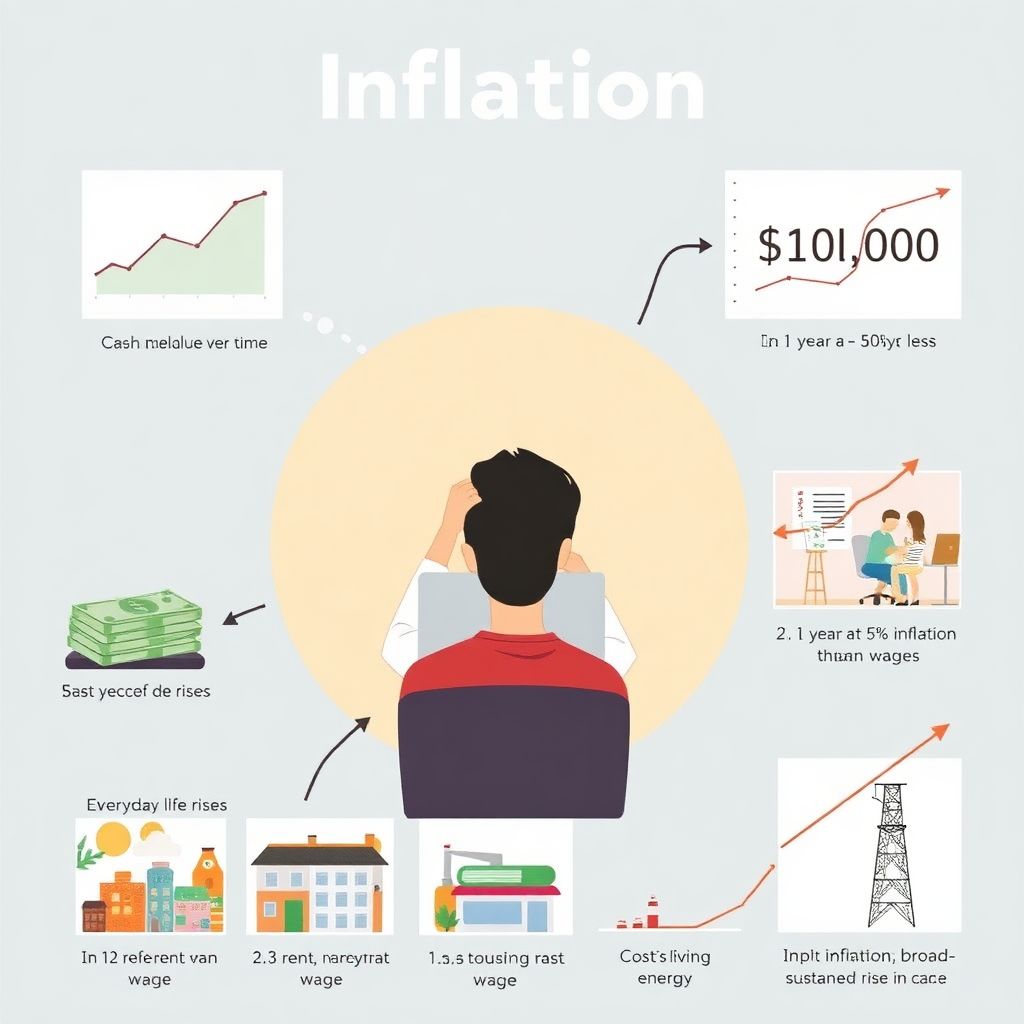
Why Inflation Matters More Than You Think
When people hear “inflation”, they often picture abstract charts on the news, not their day‑to‑day life. Yet the real question most beginners have is: what is inflation and how does it affect my money right now and in the next few years? Вasically, inflation means that, over time, the same amount of cash buys fewer goods and services. Even если your income seems stable, silent price increases slowly erode your purchasing power. Understanding this early helps you avoid the trap of letting savings sit idle while prices march upward every year.
Step 1: Grasp the Basic Mechanics of Inflation
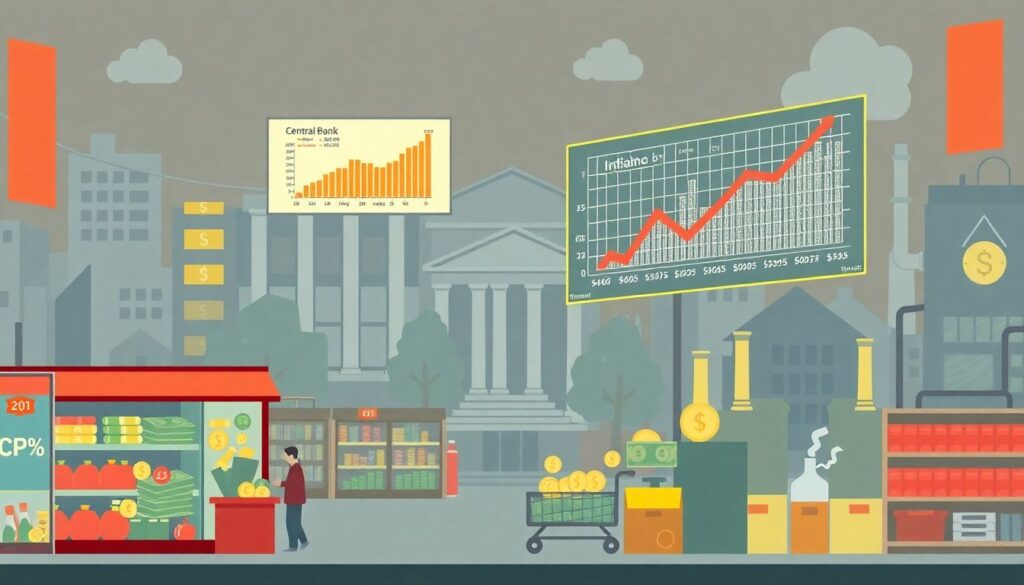
At its core, inflation is a broad, sustained rise in prices across the economy, not just the cost of one product. Central banks track this through indices like CPI, which averages price changes in a basket of typical expenses. When more money chases the same amount of goods, or when production costs jump, prices tend to rise. This is why economists say that cash “melts” over time. If inflation is 5% a year, $1,000 today can only buy what $950 would buy in a year, unless your money grows at least as fast.
How Inflation Shows Up in Real Life
Instead of watching financial news, look at your grocery receipts, rent contract and utility bills over the last few years. You’ll notice that everyday items creep up first, then services. This is how does inflation affect cost of living and wages in practice: your bills respond quickly, while your income and salary negotiations usually lag behind. The gap between these two dynamics determines whether you’re moving forward or backward. If your pay rises slower than the general price level, your real standard of living quietly declines, even if the nominal number on your paycheck goes up.
Step 2: Understand the Direct Hit on Your Wallet
Inflation doesn’t attack all your money equally. Cash in a drawer or checking account loses the most, because it earns close to zero. A small yield on a savings account may help, but if the rate is below inflation, you’re still going backwards in real terms. This effect is often underestimated by beginners because the nominal balance stays the same. The smarter way is to check everything in “today’s purchasing power” and think in real, not just nominal, returns. That shift in mindset is a crucial first protection step.
Using an Inflation Calculator for Daily Decisions
One simple tool that experts recommend is an inflation calculator for personal budget planning. It lets you estimate how today’s prices might look in five or ten years, based on various inflation scenarios. This isn’t fortune‑telling; it’s a way to stress‑test your assumptions. Before committing to a long‑term loan, subscription, or big purchase, plug the numbers in and see how your future payments or savings look under different inflation rates. It quickly shows why “I’ll deal with it later” is a costly strategy when prices consistently drift higher.
Step 3: Typical Beginner Mistakes to Avoid
New investors and savers often make a few predictable errors when confronting inflation. They either ignore it completely, cling to cash for “safety”, or chase risky assets without understanding volatility. Another common mistake is focusing on nominal returns: a 3% interest rate feels positive until you remember 5% inflation means a negative real yield. Finally, some people panic as soon as they hear scary headlines, making impulsive changes instead of following a rational plan calibrated to their time horizon and risk tolerance. Awareness of these traps already gives you an edge.
- Keeping large balances in non‑interest checking accounts for years.
- Confusing price spikes in one item (like gas) with overall inflation trends.
- Believing that “zero risk” exists if you just stay entirely in cash.
Step 4: How to Protect Savings from Inflation
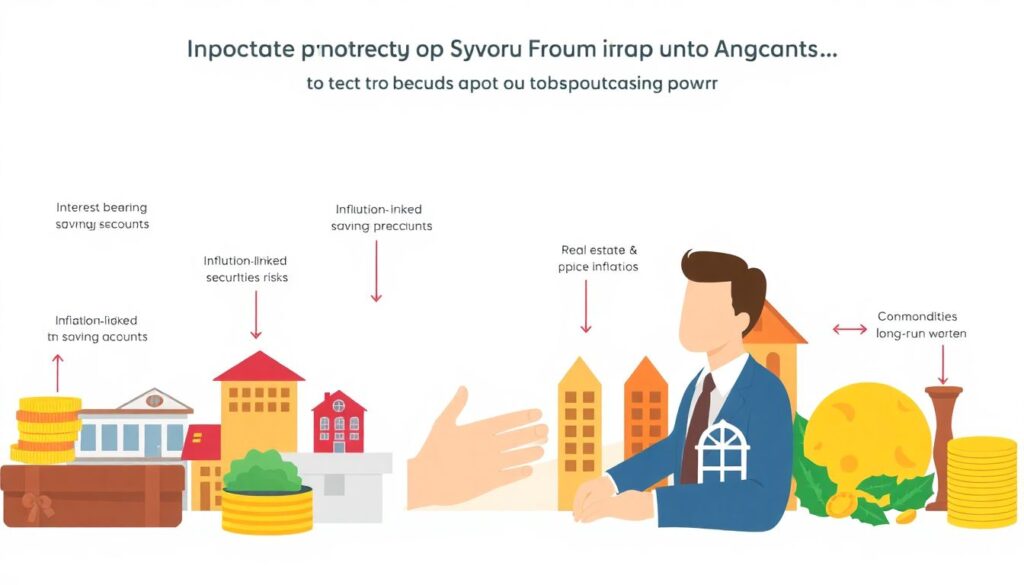
Professionals often frame the core question as how to protect savings from inflation without taking reckless bets. The basic principle is diversification across assets that historically outpace price growth over the long run. That usually means combining interest‑bearing instruments, inflation‑linked bonds if available in your country, and a thoughtful slice of growth assets like equities. The right mix depends on your age, income stability and goals. A young earner may accept more volatility for higher expected real returns, while someone nearing retirement usually prioritizes stability and controlled risk.
Expert Tips for Building an Anti‑Inflation Plan
Most financial planners suggest starting with a clear emergency fund in a safe, easily accessible account covering 3–6 months of expenses. Only after that do they suggest moving extra money into assets with higher potential real returns. They also recommend automating contributions so you consistently invest through different market cycles, instead of trying to predict the perfect timing. Finally, they stress that your plan should be reviewed annually: inflation rates, your income and your goals will shift, and your defense strategy has to adjust in response rather than stay static for decades.
Step 5: Learning About the Best Investments to Beat Inflation
There is no single magic asset, but history shows that certain categories tend to be among the best investments to beat inflation over long periods. Broad stock market index funds give you exposure to companies that can raise prices, improve productivity and grow profits faster than inflation. Real estate can also act as a partial hedge, especially if rents adjust over time. In some countries, you can buy inflation‑protected bonds whose payouts rise with official price indices, helping to preserve purchasing power while reducing dramatic portfolio swings.
- Low‑cost diversified equity funds for long‑term growth above inflation.
- Real estate or REITs where rental income can adjust over time.
- Inflation‑linked bonds and quality conventional bonds as stabilizers.
Risk Management When Chasing Real Returns
Experts warn that chasing high nominal yields without understanding risk is a classic beginner error. Assets that promise to “crush inflation” in the short term often involve leverage or exotic strategies. Instead of speculating, focus on sensible, diversified exposure and an investment horizon of at least five to ten years. Volatility in prices over months or even a couple of years matters less than the long‑run trajectory. Align each asset with a specific role: growth, income, or stability. This way, you’re not tempted to abandon your plan the first time markets wobble.
Step 6: Linking Inflation to Your Income and Career
When you ask how does inflation affect cost of living and wages, you’re really asking whether your earning power keeps up. Many salaries adjust slowly, sometimes only once a year, while essentials like food and housing adjust almost continuously. Over several years, that mismatch can turn into a serious real pay cut. This is why career strategy is part of your anti‑inflation toolbox. Upgrading skills, changing roles, or moving into higher‑value sectors can boost your bargaining power and give you room to negotiate raises that at least match, and ideally exceed, inflation.
Negotiation and Indexation Strategies
Some professionals advise explicitly mentioning inflation when discussing pay, especially after multi‑year periods of rising prices. Instead of simply accepting a flat figure, compare your current compensation to cost‑of‑living changes in your region. You don’t have to be confrontational; present data calmly and explain that you’re aiming to maintain, not just nominal, but real income. If annual raises are constrained, you might negotiate performance bonuses, remote work (which cuts commuting costs), or training budgets that increase your long‑term value, strengthening your defenses against future price climbs.
Step 7: Adapting Your Budget to an Inflationary World
Inflation makes a static budget obsolete faster than most people expect. A practical move is to review your spending categories every few months, focusing on those most sensitive to price shifts—food, transport, energy, and rent. Reprioritize by cutting low‑value subscriptions or impulse purchases, and redirect that money toward savings and investments. Think of your budget as a living system that responds to economic conditions. You don’t control global prices, but you can control your personal financial structure and avoid letting lifestyle creep outpace both your income and inflation.
- Track key expense categories monthly, not just total spending.
- Adjust saving and investing targets when your income rises.
- Test big decisions (like a car or mortgage) against higher‑inflation scenarios.
Using Tools Instead of Guesswork
In addition to an inflation calculator for personal budget planning, use apps that categorize spending over time so you can see where inflation bites hardest. Experts recommend setting not just absolute spending limits, but percentage rules: for example, capping housing at a certain share of income even if rents spike, which forces you to consider moving or renegotiating rather than absorbing every increase. By combining these digital tools with regular reviews, you replace vague anxiety with measurable indicators, making financial decisions less emotional and more data‑driven.
Step 8: Bringing It All Together Into a Simple Action Plan
Understanding what is inflation and how does it affect my money is only useful if it leads to specific steps. Start by calculating how much your cash savings are losing in real terms each year, given current inflation. Next, build or top up an emergency fund, then decide on a modest, diversified investment strategy aligned with your time horizon. Review your income growth relative to inflation annually and adjust your career plan or side income accordingly. Treat this as a continuous process, not a one‑off project, and your wallet becomes far more resilient.
Final Expert Recommendations for Beginners
Seasoned financial advisors tend to converge on a few core principles. First, do not let fear push you into extreme positions—neither 100% cash nor speculative “get rich quick” bets. Second, focus on long‑term real returns; a boring, diversified portfolio often beats flashy strategies once inflation is accounted for. Third, invest just as much effort in your earning power as in your portfolio choices. Inflation is an ongoing reality, but with steady learning, discipline, and periodic adjustments, it becomes a manageable factor rather than a constant threat to your future standard of living.