

Why a Debt‑Free Holiday Season Matters
Every year people swear they’ll “keep it modest,” and then January credit card statements hit harder than any snowstorm. Budgeting for a holiday season without debt isn’t about being stingy; it’s about buying yourself peace of mind so the new year doesn’t start with financial regret. Consumer finance counselors note that emotional spending peaks when family expectations, social media and discounts collide. That’s why experts now speak less оf “holiday magic” and more оf “holiday strategy”: setting limits, talking openly with relatives about budgets and treating time, not just money, as a gift. When you see the season as a project with a clear plan, overspending stops being “inevitable” and becomes optional.
What the Numbers Say About Holiday Debt
Current Statistics and Hidden Traps
Surveys in the US and UK consistently show that around a third of households go into debt specifically because of holiday shopping, with average balances from a few hundred to over a thousand dollars carried well into spring. Roughly 40–50% of respondents admit they don’t set a written budget at all; they “keep it in their head” and then lose track as invitations and flash sales pile up. Financial therapists point out that people underestimate small extras: festive food, rideshares, new outfits, shipping, decorations. These “little” costs can quietly add 20–30% to what you thought your expenses would be, turning a manageable plan into painful debt.
Forecasts: Why Planning Will Matter Even More
Economists expect holiday spending to keep inching up faster than wages for many households, driven by higher prices for travel, dining out and branded gifts. Digital marketing tools are getting sharper too: algorithms learn your impulses and push limited‑time offers right when you are most likely to click. Analysts forecast that “buy now, pay later” services will cover an even larger slice of festive purchases, which can fragment your sense of what you truly owe. Against this backdrop, people who learn how to plan a holiday budget and stick to it will have a real advantage. Think of it as building a shield now before the December advertising storm hits even harder in the coming years.
How to Build a Realistic Holiday Budget
Step‑by‑Step Plan from Financial Coaches
Most fee‑only planners agree on one main idea: start with your total, not your wish list. They recommend this simple framework:
1. Set a hard ceiling. Decide how much you can spend without touching savings or using credit cards you can’t clear in full.
2. Split by category. Gifts, food, travel, events, charitable giving, “miscellaneous.” Assign rough amounts.
3. Turn people into numbers. List names and put a clear range beside each one.
4. Check against cash flow. Divide the total by the weeks left until the holidays and see if that weekly amount is realistic.
5. Automate savings. Open a separate “holiday” sub‑account and move that weekly sum automatically.
When the pot is empty, you’re done. No “just this once.”
Holiday Budgeting Tips to Avoid Debt

Experts in behavioral economics say it’s not enough to know holiday budgeting tips to avoid debt; you need frictions that make overspending harder. One practical move is to shop with a prepaid card or a dedicated debit account capped at your budget; when the balance hits zero, the party’s over. Another is to freeze credit cards at home or literally in a block of ice for online‑only shoppers—yes, people still do that, and it works because it adds a cooling‑off period. Planners also suggest scheduling a 10‑minute “spending check‑in” after each shopping trip to log expenses. That tiny habit keeps you alert before things get out of hand.
How to Save Money for Christmas Gifts in Advance
Advisers say that how to save money for Christmas gifts is less about big sacrifices and more about early, boring consistency. Start in January or at least mid‑year: even 20–30 dollars a week becomes a solid December fund. Many banks let you create named savings “buckets”, so label one “Gifts” to keep the goal visible. Another expert move is skimming irregular income—bonuses, tax refunds, side gigs—and sending a small, fixed slice straight to that bucket before you see it as “extra” cash. If money is tight, look at temporary cuts: pause one subscription, swap two dinners out per month for potlucks, or sell unused items online and send every cent to your holiday pot.
Cheap Christmas Gift Ideas on a Budget
Psychologists consistently find that people remember thoughtfulness longer than price tags, which is good news if you’re hunting for cheap Christmas gift ideas on a budget. A framed printed photo with a short handwritten story on the back can mean more than another generic gadget. Home‑made food kits, like jars with layered brownie mix and a simple recipe, travel well and feel personal. Service‑based gifts also help your wallet: a “tech support afternoon,” babysitting vouchers, or a promise to cook someone’s favorite meal. Financial coaches suggest setting a modest per‑person limit and then using creativity, not credit, to stretch it. When expectations are clear, most relatives happily play along.
Using Technology: Apps, Alerts and Digital Envelopes
Fintech experts argue that using the best budgeting apps for holiday shopping can turn vague intentions into actual guardrails. Many apps let you build “envelopes” for each holiday category and sync them with your bank; as soon as you pay, the app subtracts from that envelope and shows a visual bar shrinking. You can set alerts when you’re at 50%, 75% and 90% of your target, so you don’t discover a problem at the checkout line. Some tools also flag when you’re shopping late at night or after a string of purchases—moments when impulse spending tends to spike. The key is to pick one app you like and actually use it, not download five and ignore them.
Economic Aspects of a Debt‑Free Season
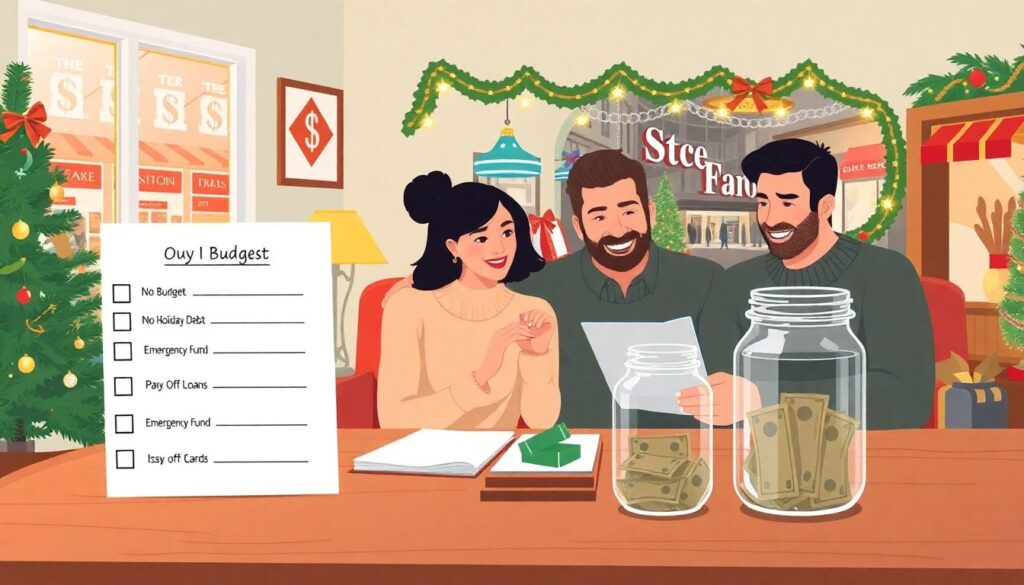
On a household level, avoiding holiday debt strengthens your entire financial base. Money that would have gone to interest payments can instead pad an emergency fund or chip away at existing loans. On a broader scale, consumer behavior around the holidays affects retailers’ pricing strategies. If more people stick to strict budgets and resist high‑interest financing, businesses are nudged to compete with better value instead of just pushing “buy now, pay later.” Economists note that steady, within‑budget spending is healthier for the economy than a December blowout followed by months of cutbacks. Stable demand helps companies plan inventory and keeps the new year from starting with a mini “hangover” in sales.
How the Holiday Industry Is Adapting
Retail analysts already see signs that the industry is adjusting to savvier consumers. More stores now offer layaway‑style programs with no interest, early‑season sales that spread spending across months, and transparent cost breakdowns at checkout. Brands understand that shoppers are asking how to plan a holiday budget and stick to it, so marketing increasingly emphasizes “bundles,” multi‑use items and durable quality instead of pure flash. At the same time, experience‑based gifts—classes, streaming subscriptions, local trips—are taking a bigger share of the market, often at lower cost than high‑end physical goods. As families normalize talking about money limits, the industry is learning to make profit without relying solely on customer debt.
Putting It All Together: Expert Holiday Game Plan
Financial planners often boil their recommendations down to three pillars: decide your total early, track every purchase, and refuse to finance the holidays with future you’s money. Combine those basics with technology, honest family conversations and a focus on memories over merchandise, and you get a practical recipe for a festive season that doesn’t wreck your budget. The goal isn’t to strip away joy; it’s to separate real joy from expensive noise. When January arrives and your bank account still looks sane, you’ll feel something rare: holiday cheer that actually lasts.