
Understanding the Foundation of Scalable Side Income
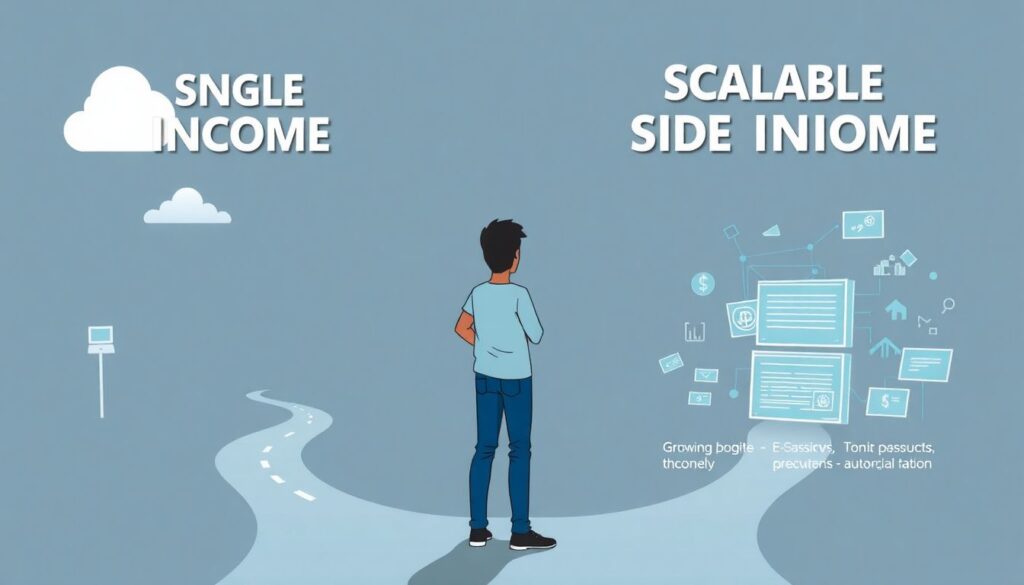
In the modern economy, relying on a single income stream is both risky and limiting. The question isn’t just how to make extra money, but how to build a system that grows beyond your direct involvement. Creating a scalable side income plan requires more than hustle—it demands foresight, digital literacy, and strategic thinking. While many jump into popular gigs like ride-sharing or food delivery, these options offer limited scalability and long-term potential. Instead, the focus should shift to platforms and models that allow automation, replication, or delegation.
Comparing Approaches: Linear Effort vs. Scalable Systems
Let’s start with two opposing side income ideas: freelancing versus digital product creation. Freelancing (writing, design, coding) pays well and scales with skill, but it’s linear—more work equals more money. However, its ceiling is defined by your available hours. In contrast, creating an online course, eBook or app involves upfront effort, but once launched, it can reach thousands without additional input. This is the essence of passive income strategies: build once, earn repeatedly.
Hybrid Models: The Middle Ground
Not all sources of income are purely passive or completely active. Affiliate marketing, for example, sits in the middle. It requires content creation—whether through blogs, videos, or social media—but each piece of content can generate income indefinitely. Dropshipping and print-on-demand also fall into this hybrid zone, where systems are automated but require occasional management. These models are particularly attractive in 2025 as AI and e-commerce tools become more accessible to non-tech-savvy users.
Technology as a Double-Edged Sword

Technology unlocks freedom—if wielded wisely. On one hand, AI-powered content generators, e-commerce platforms, and no-code tools lower the barrier to entry. Anyone can launch a store, build a niche website, or start a YouTube channel. On the other hand, this accessibility creates saturation. For example, while YouTube remains one of the best side hustles, standing out demands consistent branding and niche relevance, not just uploading content.
Automation tools like Zapier, Notion, and ChatGPT can streamline workflows, allowing one person to operate like a small team. But they also tempt many into building overcomplicated machines for ideas still unproven. The best use of technology in side income projects? Validate manually, then scale with tech.
Choosing the Right Side Income Path
Your choice should be informed by your existing skills, available time, and willingness to learn. If you have strong writing or speaking skills, consider starting a niche newsletter monetized through sponsorships or paid subscriptions. Those with technical aptitude might explore app reskinning or SaaS micro-products. Creatives can leverage platforms like Gumroad or Ko-fi to sell templates, designs, or sound packs. The key is to avoid purely trend-driven choices. Just because it’s one of the best side hustles today doesn’t mean it aligns with your strengths or interests.
Additionally, consider your long-term vision. If the goal is to replace a full-time income, then the model needs to be scalable from day one. That means thinking in terms of systems: Can it be automated? Outsourced? Multiplied?
Non-Obvious Opportunities in 2025
Looking ahead, several side income ideas stand out for their scalability and novelty. One involves licensing AI-generated assets—such as voiceovers or art—for digital use. Another is building niche communities around specific interests (e.g., indie game development, sustainable living) and monetizing through memberships or premium content. Micro-SaaS platforms built using no-code tools like Bubble or Glide also offer immense potential, especially for solving hyper-specific business problems.
What’s emerging in 2025 is a shift from broad platforms to micro-niche ecosystems. Audiences are gravitating toward specialized, authentic creators over generic influencers. This presents an opportunity for those willing to build in public and share value consistently.
Final Thoughts: Focus on Value, Not Just Revenue
Creating a side income plan that scales isn’t about chasing trends or copying viral tactics. It’s about identifying where your unique expertise intersects with sustainable demand, then designing systems to deliver value over time. Whether you’re exploring passive income strategies like digital products or seeking new ways how to make extra money through content, the golden thread is sustainability.
In this landscape, the winners aren’t those who start fast—but those who scale wisely. Define your unique value, build with intention, and rely on tools that multiply your time, not just your effort. With the right mindset and strategy, your side gig can become your main engine of wealth.