

Why Negotiating Interest Rates Matters More Than Ever
The cost of borrowing has quietly turned into one of the biggest household expenses. In the US, the average credit card APR has climbed above 22% according to Federal Reserve data from 2024, and many borrowers with weaker credit see rates over 28%. At those levels, even modest balances can double in a few years if you only make minimum payments. That is why learning how to reduce credit card interest rates is no longer a “nice to have” skill but a core part of personal financial survival. Lowering your rate by just 3–5 percentage points can shave months off your payoff timeline and save thousands in interest, especially when inflation already erodes purchasing power and wage growth remains uneven across sectors.
What the Numbers Say: The Hidden Cost of High Interest
Let’s put some numbers on this. A $6,000 balance at 24% APR with only minimum payments can easily take more than 15 years to clear, and you might pay over $8,000 in interest alone. Drop that rate to 15% and boost payments slightly, and the payoff period shrinks dramatically. Industry surveys show that about 1 in 4 customers who call and firmly but politely negotiate lower interest rate on credit card accounts actually succeed, especially if they have a history of on‑time payments. At the macro level, credit card balances in advanced economies have been growing faster than incomes since the pandemic rebound, suggesting that more households are leaning on expensive revolving credit just to maintain their living standards. This makes rate negotiation not just a personal tactic but a buffer against broader financial stress.
How Lenders Think: The Economics Behind Your Interest Rate
To bargain effectively, it helps to understand the economics on the other side of the phone. Card issuers price interest as a function of three main factors: benchmark rates (like central bank policy rates), expected default risk and competitive pressure. Their funding costs have risen as central banks tightened policy to fight inflation, but credit card APRs rose even faster, widening profit margins per customer. From a bank’s perspective, keeping you at a slightly lower rate can be more profitable than losing you to a competitor or watching you default. That asymmetry gives you leverage. Especially if you have a solid payment record, your account is a valuable cash‑flow asset for them. You are not asking for a favor; you are offering them continued business at a slightly lower return rather than forcing them into the costs of collection or customer acquisition.
How to Prepare Before You Call Your Lender
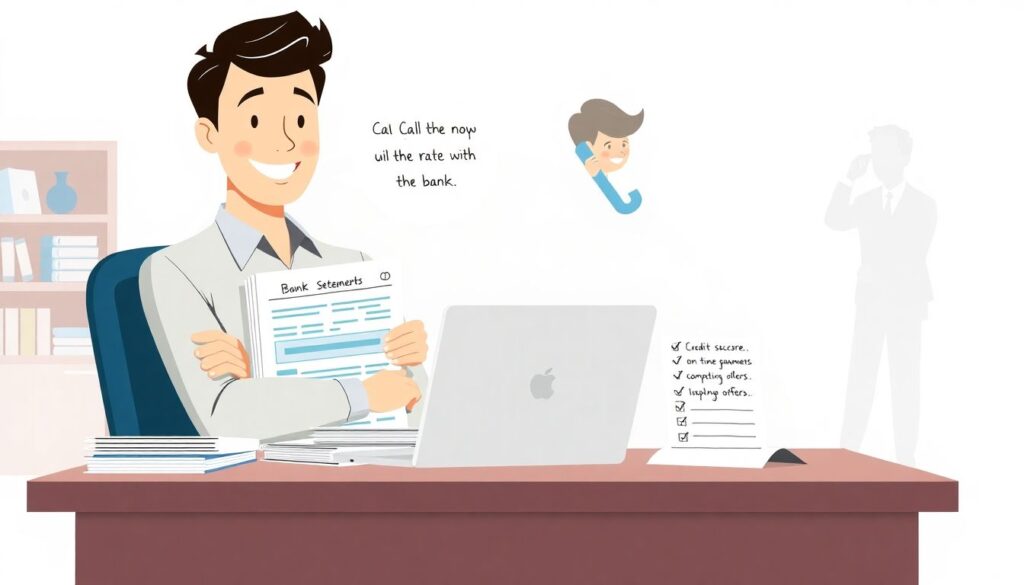
Most people wing it when they call their bank, and then wonder why nothing changes. Preparation is what separates those who get a rate cut from those who get a scripted refusal. Pull your latest statements, check your credit score, and write down your history of on‑time payments and any competing offers you have received. Financial planners consistently emphasize that readiness and data are more persuasive than emotional appeals. Before you decide how to reduce credit card interest rates, benchmark your current APR against national averages published by your central bank or major financial websites. If you are paying 27% while the market average is around 22%, you have a clear, rational argument that your pricing is out of line given your risk profile and payment behavior.
Step‑by‑Step Script for Negotiating Lower Rates
Debt counselors who coach clients on the phone tend to use a structured conversation, not improvisation. A practical approach looks like this:
– Call the number on the back of your card and ask for the “retention” or “account specialist” department, not just general service.
– Start with your track record: how long you have been a customer, your on‑time payment history, and any recent credit score improvements.
– Reference market conditions: mention that competitors are offering lower rates and you would like to keep your account open if they can review your APR.
Many experts recommend making a specific, realistic ask—say, a reduction from 27% to 17%—rather than saying “What’s the best you can do?” If they push back, stay calm, mention that you are considering balance transfers, and ask whether there are promotional or product changes that could deliver a lower rate. The goal is to make it clear that the bank has a choice between slightly lower interest revenue from you or potentially losing your entire balance to a competitor.
Best Ways to Pay Off Debt Faster Once Your Rate Drops
Lowering your interest rate is only half of the equation. The best ways to pay off debt faster combine lower costs with disciplined cash‑flow management. Consumer finance experts frequently recommend the “debt avalanche” method: prioritize extra payments to the highest‑rate balance while making minimums on the rest. Once a balance is cleared, roll that payment onto the next one. This tactic minimizes total interest and accelerates payoff. Another effective step is to automate payments the day after your paycheck hits, so you are not tempted to spend what should go to principal. The psychological benefit is important: when you see balances falling each month instead of barely moving, motivation tends to build, which reduces the risk of giving up halfway through a payoff plan.
Using Consolidation Wisely: When It Helps and When It Hurts
A common question is how to consolidate debt to lower interest without creating new problems. Consolidation loans, balance‑transfer cards and even home‑equity lines can all reduce the average rate on your debt stack. But experts warn that consolidation only works if you address the behavior that created the balances in the first place. Otherwise you end up with a new loan plus newly re‑used credit cards. From an economic perspective, consolidation is a form of refinancing: you are swapping multiple high‑cost, short‑term liabilities for a single, usually lower‑cost, longer‑term obligation. The spread between the old and new rates is your opportunity; the extended term is your risk, because it can encourage complacency and delay aggressive repayment.
Practical Strategies to Reduce Loan Interest and Pay Off Debt Fast
If you are juggling credit cards, personal loans and maybe an auto loan, you need a coordinated plan, not random payments. Smart strategies to reduce loan interest and pay off debt fast generally share three elements: rate reduction, payment prioritization and income optimization. Rate reduction can come from negotiation, consolidation or refinancing. Payment prioritization focuses each extra dollar where it does the most mathematical damage, often the highest APR or the smallest balance if you need quick wins. Income optimization means channeling any temporary income spikes—bonuses, tax refunds, side‑gig earnings—directly into debt instead of lifestyle upgrades. Over a 12–18‑month period, this combination can transform a chaotic debt situation into a shrinking, well‑structured plan.
Expert Recommendations: What Professionals Tell Their Clients
Debt‑relief attorneys, financial planners and credit counselors tend to converge on a few core recommendations, even if they disagree on fine points. They emphasize that timing matters: calling your lender before you miss payments gives you far more negotiating power. Many also suggest documenting hardship events, such as medical issues or job loss, not for drama but to justify a temporary rate reduction or structured workout plan. When they discuss how to reduce credit card interest rates with clients, they stress that re‑negotiation is an ongoing process, not a one‑time event. If the central bank cuts rates or your credit score improves by 40–50 points, that is a natural moment to call again. Professionals also urge clients to avoid “debt settlement” companies that promise miracles while charging heavy upfront fees; in many cases, a calm, informed call by the borrower can achieve similar or better results without damaging credit as severely.
How Industry Trends Are Shifting in Response to Consumer Pressure
The credit industry is not static. As more consumers learn to negotiate, banks and card issuers are adjusting. Competition from fintechs and buy‑now‑pay‑later platforms is putting pressure on traditional revolving credit products. This competition has encouraged some issuers to offer limited‑time hardship programs, lower promotional balance‑transfer offers and “step‑down” rate structures for customers who consistently pay more than the minimum. On the regulatory side, several jurisdictions are exploring caps on certain fee structures or requiring clearer disclosure of payoff timelines. If these reforms spread, the bargaining position of informed consumers will strengthen, as lenders compete on transparency and flexibility rather than just introductory perks.
Macroeconomic Outlook: Why the Next Few Years Are Crucial
Looking ahead, interest rate forecasts are uncertain, but most economists expect central banks to keep policy rates relatively elevated compared with the ultra‑low era of the 2010s, even if there are occasional cuts. That means average consumer borrowing costs are unlikely to return to previous lows in the short term. In practical terms, anyone carrying variable‑rate debt, especially credit cards, is operating in a structurally more expensive credit environment. If wage growth slows while debt costs stay high, household balance sheets become more fragile, increasing default risk. This creates a feedback loop: higher expected defaults encourage lenders to keep spreads wide, pushing APRs up even when base rates fall. Breaking that loop at the individual level—through negotiation, consolidation and faster payoff—is your best defense.
Impact on the Financial Industry: Profits, Risk and Innovation
From the industry’s viewpoint, widespread adoption of negotiation tactics and payoff strategies has mixed implications. On one hand, lower average interest income per borrower can pressure short‑term profits. On the other, more stable repayment patterns and lower default rates can reduce long‑run credit losses and regulatory scrutiny. Analysts already see a shift in business models: issuers invest more in data analytics to segment customers by risk and responsiveness, tailoring offers that trade a modest rate cut for improved loyalty and payment behavior. Meanwhile, fintech competitors use transparent fixed‑rate installment plans as a selling point, framing themselves as a “healthier” alternative to revolving credit. The overall impact is a gradual move toward more personalized pricing and product design, where informed borrowers who proactively negotiate tend to capture the greatest financial benefit.
Everyday Actions That Compound Over Time
While big moves like consolidation or a successful negotiation call can feel dramatic, what really accelerates debt reduction is consistent, smaller actions that compound. Setting a strict spending cap on categories that often trigger card use—restaurants, streaming services, impulse online purchases—frees up cash for extra payments. Reviewing your statements monthly for subscriptions you no longer use can easily uncover 5–10% of your take‑home pay over a year. Coupled with even a modest rate reduction, these changes can shave entire years off your payoff schedule. Expert advisors repeatedly highlight that financial stress is often less about a single large mistake and more about a string of unexamined habits that make expensive credit feel normal.
Bringing It All Together

To wrap up, negotiating lower interest rates and reducing debt quickly is not about mastering arcane financial tricks; it is about understanding incentives, preparing your case, and backing that negotiation with disciplined follow‑through. Lenders want profitable, stable customers; you want affordable, declining balances. When you approach your bank with clear data, realistic requests and a credible plan to pay down what you owe, your interests overlap more than they conflict. Combine that with thoughtful choices about consolidation, structured repayment strategies and ongoing habit changes, and you turn a seemingly immovable debt mountain into a manageable, shrinking line on your statement.