

Money stress in 2025 feels different than it did even five years ago. Buy-now-pay-later is everywhere, credit cards live in your phone, and “just refinance it” has become a default answer to everything. In this noise, a clear, realistic debt payoff plan isn’t just a nice idea — it’s a survival tool and a fast track to feeling in control again.
Before diving in, keep one idea in mind: paying off debt isn’t about being perfect or “good with money.” It’s about building a simple system that still works on your worst week, not just your best.
What a Modern Debt Payoff Plan Really Looks Like
A lot of old-school advice assumes you sit at a desk with a calculator once a month and never miss a due date. That’s not how life — or technology — works in 2025. Today, a solid debt payoff plan should be app-friendly, automation-heavy, flexible, and compatible with irregular incomes, side hustles, and subscription chaos.
In simple terms, it’s a written and digital roadmap that shows:
– What you owe
– In what order you’ll attack it
– How much you’ll pay each month
– How you’ll handle surprises without wrecking your momentum
Necessary Tools: Your 2025 Debt Toolkit
You don’t need a finance degree; you need a handful of tools that reduce friction. The fewer clicks between you and your plan, the more likely you’ll stick to it.
At minimum, you’ll want:
– A budgeting or money-tracking app that links to your accounts (YNAB, Monarch, Copilot, or even a well-set-up Excel/Google Sheet)
– Access to your credit reports and scores (free annual reports + your bank’s score tracker)
– A notes app or document where your plan lives in plain language
– Auto-pay and calendar reminders for every debt
In 2025, many banks and fintech apps can automatically categorize spending, detect subscription creep, and even suggest how to pay off debt fast by showing custom payoff timelines. Use that; don’t rely on memory or willpower alone.
Step One: Get Ruthlessly Clear on the Numbers
This step hurts a little, but only once. Gather every single debt: credit cards, personal loans, buy-now-pay-later balances, car loans, student loans, medical bills — everything. Then write down for each: current balance, interest rate, monthly minimum, and due date.
If you’re avoiding opening certain emails or apps because they stress you out, that’s your first red flag — those are usually your highest-interest or most overdue accounts, and they’ll matter most to your strategy.
Choosing the Best Debt Repayment Strategies for You
There are three main approaches people use, and in 2025 we often hybridize them:
1. Debt Snowball (motivation-first)
You pay minimums on everything, then throw all extra money at the smallest balance first. When that’s gone, you roll its payment into the next smallest, and so on. The psychological “wins” come fast, which is powerful if you’re feeling defeated.
2. Debt Avalanche (math-first)
You pay minimums on everything, then target the highest interest rate first, regardless of balance size. This is usually the most efficient way financially and one of the best debt repayment strategies if your main goal is saving on interest.
3. Hybrid approach (reality-first)
Many people in 2025 do a hybrid: wipe out one or two small balances quickly for morale, then switch attention to the highest interest debts. You get emotional momentum without throwing the math out the window.
Pick one approach and write it down in one sentence:
“I’m using the avalanche method and attacking my 29.9% card first.”
That clarity matters more than obsessing over perfection.
Designing Your Monthly Payment Engine
Now you translate strategy into actual numbers. Decide how much you can commit above your total minimum payments. This is the “extra” that powers your payoff engine. Even $75–$150 per month can shift the timeline dramatically.
Then set up automatic payments:
– Auto-pay at least the minimum on every debt
– Schedule your extra payment to hit the priority debt the same day you get paid
Automation is your ally. The less you have to remember manually, the less likely you are to miss payments or spend money you meant to send to debt.
Step-by-Step: Turn the Plan Into a Routine
Here’s a simple, repeatable process you can run every month:
1. Money check-in (15 minutes)
Open your main financial app, review account balances, and confirm all minimums are scheduled.
2. Target debt payment
Send your extra payment to the current “target” debt according to your chosen method.
3. Micro-adjustments
If you had a more expensive month, lower the extra payment a bit; if it was cheap, bump it up. Aim for consistency, not heroics.
4. Update your payoff tracker
Adjust balances in your sheet or app so you can see the new projected payoff date. Many apps visualize this for you.
5. Two-minute reflection
Note what went well and where you slipped: impulse buys, late-night scrolling purchases, or underestimating certain categories.
Done monthly, this isn’t elaborate financial planning — it’s a quick systems check that keeps you on track.
Modern Helpers: Debt Consolidation and Relief Options
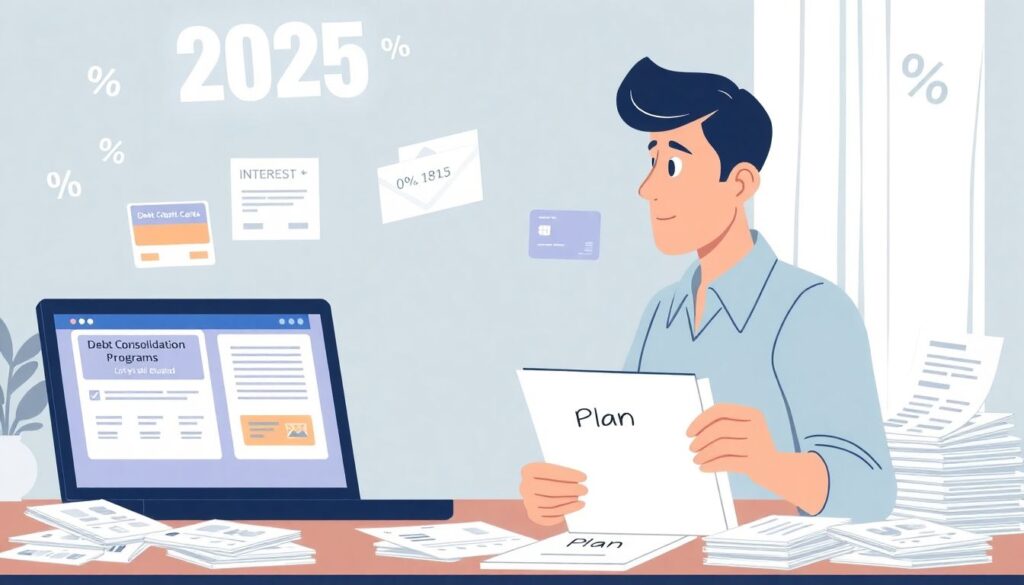
With interest rates still elevated in 2025, you’ll see endless ads for debt consolidation programs and zero-percent balance transfer cards. These can be useful tools, but they’re not magic.
Consolidation means rolling several debts into one new loan, ideally with a lower interest rate and a clear payoff term. This can lower your monthly payment and simplify your life, but only helps if:
– The interest rate is truly lower
– You don’t run up the old cards again
– You keep a clear, fixed payoff timeline
If your situation is more severe — for instance, you’re behind on multiple accounts, getting collection calls, or choosing between basics and minimum payments — it might be time to look at reputable debt relief services. These can include nonprofit credit counseling agencies that help you negotiate lower interest rates and create a structured payoff plan. Just be wary of anyone promising instant fixes, guaranteed results, or asking for large upfront fees.
How to Pay Off Debt Fast Without Burning Out
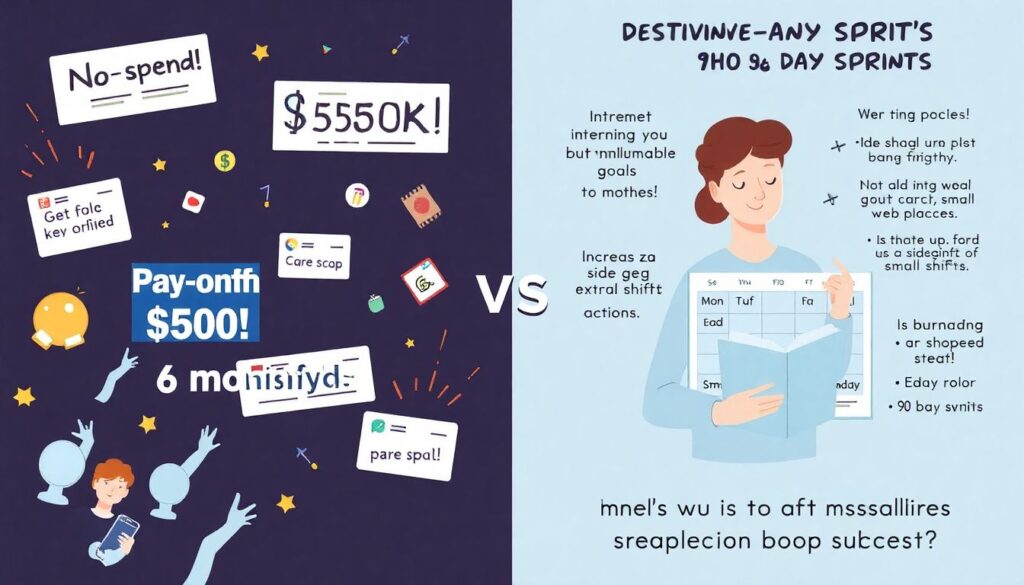
The internet loves extreme challenges: “No-spend year!” or “Pay off $50K in 6 months!” That might work for a tiny percentage of people, but for most, burnout shows up, and then the plan collapses.
Instead, think in sprints. For 90 days, you might:
– Increase income via a side gig, extra shifts, or short-term freelance work
– Cut or pause a few non-essential subscriptions
– Direct every extra dollar to your priority debt
After those three months, reassess and deliberately reset your baseline. The trick to how to pay off debt fast is stacking multiple realistic sprints over a few years, not one impossible marathon that you abandon.
Weaving Your Plan Into Real Life in 2025
Our financial lives now are subscription-heavy and impulse-friendly. That means your plan has to anticipate friction. Your main enemies usually aren’t giant luxuries — they’re small, automatic leaks.
Do a “subscription audit” twice a year. Cancel or downgrade whatever you wouldn’t fight to keep if you lost your job. Redirect that freed-up money into your extra payment. Ten small cancellations can easily produce an extra $50–$75 a month toward debt without feeling like a punishment.
Troubleshooting: When Your Plan Starts Breaking Down
No plan survives contact with real life unchanged. You’ll have months where your car breaks, your hours get cut, or you get sick. That doesn’t mean the plan failed; it means you’ve discovered weak spots.
Common issues and fixes:
– You keep dipping into credit for emergencies.
You probably tried to skip an emergency fund. Build even a tiny buffer (e.g., $300–$500) alongside your plan so unexpected expenses don’t slam you back into debt.
– You’re missing due dates.
Move them to just after payday where possible, use auto-pay for minimums, and set two reminders: one a week before, one a day before.
– You feel like progress is too slow.
Allow yourself periodic “wins”: when a card is paid off, take 5–10% of what you would have sent to debt that month and enjoy it on purpose. Then roll the remaining 90–95% forward.
If your balances are still growing even with a plan in place, pause and track every dollar for one month. No judgment, just data. Often, one or two categories — food delivery, ride-hailing, or random online purchases — are eating the room you thought you didn’t have.
Balancing Tech, Psychology, and Math
The strongest payoff strategy in 2025 sits at the intersection of three things: digital tools that reduce friction, psychological tricks that keep you motivated, and solid math that minimizes interest. Ignore any one of those, and your plan becomes harder than it needs to be.
Use tech to automate, use psychology to stay encouraged, and use math to choose the right order of attack. Your plan doesn’t have to impress a financial advisor; it just has to keep you moving forward, month after month.
Redefining “Freedom” as You Go
When people talk about a debt payoff plan, they often imagine a magical day when every balance hits zero and all problems vanish. Reality is quieter and more interesting. Freedom usually starts earlier — when you can cover an emergency without panic, when the collection calls stop, or when you realize your net worth is rising instead of shrinking.
By building a plan suited to how money and technology really work in 2025 — and adjusting it when it breaks — you’re not just eliminating old debts. You’re training yourself to handle future money decisions with less fear and far more options, which is the kind of freedom that actually lasts.