
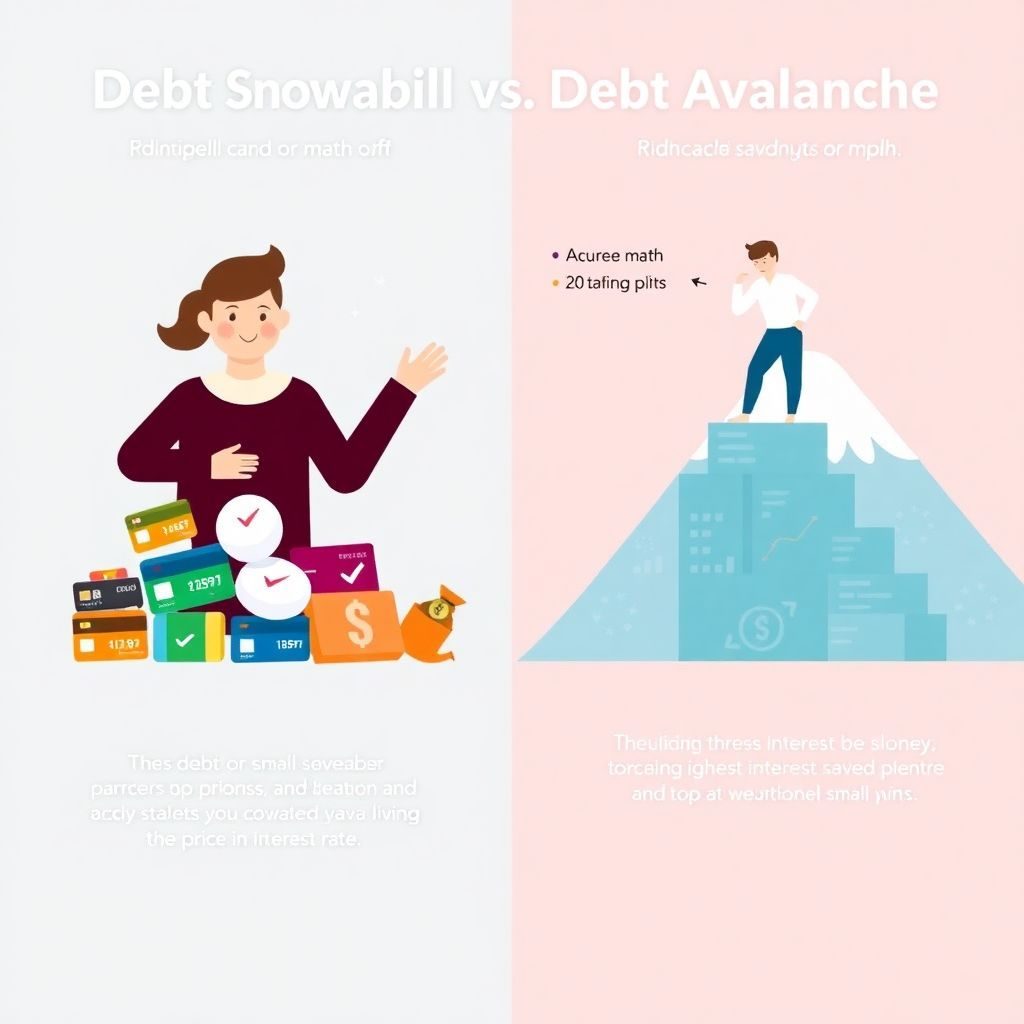
Understanding the Real Problem Behind Your Debt
Before arguing about “Debt Avalanche vs. Debt Snowball”, you need to answer a blunt question:
Are you fighting *math* or are you fighting *your own behavior*?
If your main problem is interest eating you alive, the best debt payoff method debt snowball vs avalanche comparison will lean one way. If your main problem is motivation and chaos, it’ll lean another. Most people quietly struggle with both.
Let’s break it down without jargon and guru-speak, and walk through real-world choices, common rookie mistakes, and a few non-obvious tweaks professionals actually use.
—
What Is the Debt Snowball?
Простое объяснение
Debt Snowball = focus on smallest balance first, ignore interest rates at the start.
1. List all debts from smallest balance to largest.
2. Pay minimums on everything.
3. Throw every extra cent at the smallest debt.
4. When it’s gone, roll that freed payment onto the next smallest.
Psychology first, math second. You get quick wins and build emotional momentum.
—
What Is the Debt Avalanche?
Чуть более математично
Debt Avalanche = focus on highest interest rate first, regardless of balance size.
1. List your debts from highest interest to lowest.
2. Pay minimums on all.
3. Aim all extra money at the highest-rate debt.
4. As each is paid off, redirect to the next-highest rate.
Math first, psychology second. You save more on interest and often finish faster—if you can stay consistent.
—
Debt Avalanche vs. Debt Snowball: What’s the Real Difference?
Деньги vs. Мотивация
In most simulations (and any decent debt snowball vs debt avalanche calculator will confirm this), Avalanche wins on pure dollars saved.
But.
Humans are not calculators.
– Snowball is better if you:
– Struggle to stay motivated
– Need to see fast progress to keep going
– Feel overwhelmed and avoid looking at numbers
– Avalanche is better if you:
– Are comfortable with delayed gratification
– Get motivated by “beating the system” and saving interest
– Can follow a plan even when wins are slow and invisible
The trap? Many people *say* they’re logical, start with Avalanche, then quietly give up after three months of feeling stuck.
—
Real Case #1: “Logical” Engineer Who Kept Failing
Когда математика не спасает
Alex, an engineer, had:
– $1,000 at 0% (promo)
– $1,800 at 18%
– $4,500 at 22%
Every calculator screamed: Attack the 22% card first. Alex tried.
Three months in, the balance barely moved because interest kept accumulating. It felt like bailing water with a spoon. He skipped a few “extra” payments, then dropped the plan entirely.
We switched him to a hybrid:
– Cleared the $1,000 first (fast emotional win)
– Then attacked the 22% card Avalanche-style
Total cost? Maybe $100–150 more interest over the life of the plan.
Result? He actually finished, instead of restarting every six months.
Lesson: The “best” plan on paper is useless if you can’t stick to it emotionally.
—
Real Case #2: Creative Freelancer and the Snowball Trap
Когда быстрые победы затягивают
Maria loved quick wins. She used Snowball and rapidly paid off:
– $300 store card
– $600 outdated credit card
– $900 personal loan
She felt unstoppable. But she kept:
– A $7,500 card at 27%
– A $15,000 line of credit at 11%
Her minimums on the 27% card were barely covering interest. After a year of “winning”, her total balance almost didn’t move.
We shifted her:
– Finished paying a small remaining balance for psychological closure
– Then went *full Avalanche* on the 27% card
Lesson: Snowball can become a comfort zone where you keep chasing small wins while your worst debt silently grows.
—
Frequent Newbie Mistakes (Both Methods)
Ошибки, которые ломают любой план
1. Ignoring minimum payments
People get excited about “the method” and forget basics. Missed minimums trigger fees, default interest rates, and credit damage. Any plan where you skip minimums is trash.
2. Not building a mini emergency fund
You throw *everything* at debt. Car breaks. You use the card again. Cycle restarts. Keep $500–1,000 aside first, then attack debt.
3. Changing the plan every time life twitches
One high bill, or one bad month, and people jump from Snowball to Avalanche to balance transfers. Constant switching kills progress.
4. Ignoring the emotional side
“I’ll just use Avalanche because it’s logical.” Then you burn out. Or “I’ll just use Snowball because it feels good,” while interest quietly eats your raise.
5. Using new credit while paying off old credit
“But it’s 0% so it’s okay.” No, it’s another leak in the boat.
—
How to Choose: Avalanche vs. Snowball
Мини-тест на 3 вопроса
Ask yourself honestly:
– Do I get more satisfaction from seeing balances hit zero or from watching total interest shrink?
– When I’ve tried to pay off debt before, did I quit because it was too slow or because it was too strict?
– Am I currently more in need of emotional stability or maximum financial efficiency?
Then:
– Choose Snowball if your main enemy is procrastination, avoidance, or shame.
– Choose Avalanche if your main enemy is high interest and you’ve proved you can follow disciplined routines.
If you still feel stuck, genuine financial advisor help choosing debt snowball or avalanche can save you months of trial and error because they’ll look at your patterns, not just your spreadsheet.
—
Non-Obvious Hybrid Solutions Professionals Use
Не обязательно выбирать только одно
Pros rarely use a “pure” method. They bend the rules.
Here are three hybrids that work well in messy, real lives:
– “Starter Snowball, Finisher Avalanche”
Use Snowball to knock out 1–2 smallest debts fast. Once you feel more control and less panic, switch to Avalanche for the rest.
– “Motivation Threshold”
Sort debts by interest rate, but if two balances are similar, pay off the smaller one first for a quick win. Math loss is tiny, motivation gain is big.
– “Mental Load Reduction”
Pay off a few tiny debts first even if they’re low interest, just to reduce the number of bills you track monthly. Then shift to Avalanche.
These are the kind of “rule-bending” strategies coaches and planners quietly use while public debates obsess over which method is “correct.”
—
Alternative Methods: When Neither Snowball Nor Avalanche Fits
Когда стандартные методы не попадают в вашу жизнь
Sometimes your situation is beyond simple DIY methods. That’s where alternatives like debt consolidation vs snowball vs avalanche come in.
Debt Consolidation
You roll multiple debts into one new loan—ideally with a lower interest rate and a fixed payoff schedule.
It might beat both Snowball and Avalanche if:
– Your credit score is good enough for a lower rate
– You can’t manage 6–8 separate bills
– You want one payment and a clear end date
But consolidation fails if you:
– Keep using the old cards and rack up new debt
– Take a longer term just for the smaller payment
– Don’t fix the spending habits that created the problem
Other options professionals consider:
– Balance transfers (0% interest for a promo period—only works with strict discipline)
– Debt management plans (through nonprofit credit counseling; they negotiate lower rates and you pay them one monthly amount)
– Formal restructuring or bankruptcy (for severe situations—not “failure”, but a legal tool)
—
How to Pay Off Credit Card Debt Fast: Snowball or Avalanche?
Скорость — не только про проценты
If your single biggest goal is speed—“I want out ASAP”—you usually:
– Use Avalanche to minimize interest
– Combine it with temporary aggressive cash flow moves: selling stuff, overtime, freelancing, cutting subscriptions ruthlessly
To decide how to pay off credit card debt fast snowball or avalanche, look at two graphs:
1. How much total interest you’ll pay
2. How quickly you’ll get your first and second debts to zero
If seeing early progress is the only thing that will keep you in the game, starting with a short Snowball phase may actually be the *faster* route in practice, because you won’t abandon the plan halfway.
—
Tactical Pro Tips (That Almost No One Tells Newbies)
Лайфхаки для тех, кто хочет играть в долгую
Use these to upgrade whichever method you choose:
– Automate everything
– Minimums: automatic.
– Extra payment to your target debt: automatic right after payday.
If you have to “decide” every month, you’ll talk yourself out of it sooner or later.
– Hide your extra cash from yourself
Use a separate account just for debt payoff money. Out of sight, fewer temptations.
– Create one visual scoreboard
Wall chart, note on the fridge, spreadsheet, app—doesn’t matter. Track just:
– Total debt
– Target debt balance
– Paid off so far
– Schedule a monthly “Money Meeting” with yourself
Same day/time each month. Review:
– Balances
– Any upcoming irregular expenses
– Whether you’ll adjust Snowball/Avalanche order next month
– Cap lifestyle creep
When income rises, commit in advance:
– “50% of any raise/bonus goes to debt until I’m free.”
—
Newbie Mistakes Specific to Snowball
Когда снежный ком превращается в детскую игрушку
Common traps:
– Never graduating to bigger debts
You linger on tiny balances because they feel good to knock out, while a huge, high-interest card keeps draining you.
– Treating each paid-off debt as an excuse to celebrate with spending
“That $80 payment is gone! Time for a nicer phone plan.” No. That $80 should roll into the next debt, or you kill the Snowball effect.
– Using “I’m following Snowball” as a shield against fixing habits
You can’t out-snowball ongoing overspending. If cards keep creeping up, the method isn’t the problem.
—
Newbie Mistakes Specific to Avalanche
Когда лавина засыпает вашу мотивацию
Typical failures:
– Starting with the soul-crushing balance
You pick the biggest, highest-interest loan first. Three months later the number feels the same, so you assume “it doesn’t work”.
– Checking numbers too often
Avalanche progress is slow at the start. Looking at your balances daily just fuels frustration.
– Using it as an excuse to underfund your emergency buffer
“If I send every spare dollar to the highest-rate card, I’ll be done faster.” Then one emergency forces you right back into debt at an even worse time.
—
Using Tools Without Letting Them Run You
Калькуляторы — помощники, а не начальники
Online tools can be helpful. Any solid debt snowball vs debt avalanche calculator will show you:
– How much interest you’ll save with Avalanche
– How many months earlier you’ll be debt-free
– How quickly each individual debt will disappear
Use them to compare, not to punish yourself for “choosing wrong” if your emotions need something different. The right plan is the one you’ll follow even on bad weeks.
—
Step-by-Step: Choose and Start Your Strategy Today
Чек-лист запуска
1. List all your debts
– Balance
– Interest rate
– Minimum payment
2. Decide your priority:
– Motivation? → Start Snowball or hybrid (1–2 small debts first).
– Interest savings? → Go Avalanche, but choose a target you can see move.
3. Build a mini emergency buffer
$500–1,000 in a separate account before going full speed.
4. Automate minimums + your extra payment
Set it up once so future-you doesn’t need to remember.
5. Create one simple visual tracker
Update it monthly, not obsessively.
6. Review every 3–4 months
– Are you sticking to the plan?
– Are you more anxious or more confident now?
Adjust: pure Snowball → hybrid → Avalanche as your emotional capacity grows.
—
Final Thought: The “Best” Strategy Is the One You Won’t Quit
Debt Avalanche vs. Debt Snowball isn’t really about picking a team; it’s about understanding *you*.
– If you know you’re fragile right now, start with wins. Snowball or a hybrid is not “stupid”—it’s strategic psychology.
– If you’re steady and number-driven, let Avalanche do its work while you ignore the noise and stick to the schedule.
And if you’re unsure, or your situation is complex—multiple cards, collections, maybe business debt mixed with personal—talk to a professional. A good advisor or counselor won’t just push products; they’ll help you align the method with your actual behavior, not your idealized version of yourself.
Start small, commit for 90 days, and give your chosen method time to work. The hardest part isn’t picking Snowball or Avalanche; it’s refusing to start over again next year with the same debts and a new excuse.