

What Is Lifestyle Creep (And Why It Sneaks Up On Smart People)?
Lifestyle creep is what happens when your spending quietly rises every time your income goes up.
You get a raise, bonus, promotion, better freelance rates — and instead of your savings growing, your life just gets… a bit more “comfortable”: nicer apartment, more subscriptions, pricier dinners, better gadgets. A year later, you’re earning 30–50% more, but your bank balance feels exactly the same.
This is the core of how to stop lifestyle creep and save more money: not by hating your life or living like a monk, but by decoupling income growth from automatic lifestyle growth.
—
Why Lifestyle Creep Is So Dangerous (Even If You “Can Afford It”)
Lifestyle creep is sneaky because it feels rational:
– “I work hard, I deserve it.”
– “My friends all spend like this.”
– “It’s just $150 more per month… no big deal.”
The math tells a different story.
Example:
– At 25 you earn $2,500/month net, spend $2,000, save $500.
– At 35 you earn $5,000/month net.
– With lifestyle creep, you now spend $4,800 and save just $200.
– Your income doubled, but your savings dropped by 60%.
That’s how people hit 40–45 with a nice car, good clothes, lots of travel photos — and basically no investments.
Understanding how to avoid lifestyle inflation and build wealth starts with realizing:
It’s not your income that makes you rich. It’s the *gap* between your income and your spending — and how consistently you invest that gap.
—
The Three Main Approaches To Stopping Lifestyle Creep
Let’s compare three common strategies people use when income grows:
1. “No Rules” Approach – Just spend as it comes
2. “Frugal Forever” Approach – Freeze your lifestyle, invest everything
3. “Rule-Based Upgrade” Approach – Structured balance between better life now and wealth later
We’ll walk through each, then I’ll show you specific financial planning tips when your salary grows and how to manage increased income to save and invest more with real numbers.
—
Approach 1: The “No Rules” Approach (AKA Default Mode)
This is what happens if you do *nothing* intentionally.
How It Looks In Real Life

You get a promotion:
– You move to a slightly more expensive area
– You start ordering food instead of cooking “because time is money”
– You add a car payment because “at this stage I shouldn’t be driving an old car”
– You upgrade your phone yearly instead of every 3–4 years
None of these decisions is crazy on its own. The problem is:
There’s no ceiling. Spending expands to fill the income.
Pros
– Feels natural, no resistance
– Quality of life improves quickly
– Socially “normal”, you fit into your new income group
Cons
– Savings rate is random and usually too low
– You get used to every upgrade fast (hedonic adaptation)
– Harder to “go backwards” if something happens (job loss, health issues)
Technical detail block — Why “feeling fine” is a bad metric
– Humans adapt to higher comfort levels in 3–12 months.
– Research in behavioral economics shows that once a higher spending baseline is established, cutting back feels like a loss, even if your absolute quality of life is still high.
– This “loss aversion” is one big reason why downsizing feels emotionally harder than never upgrading in the first place.
—
Approach 2: The “Frugal Forever” Approach
This is the opposite extreme. You keep your lifestyle almost frozen, no matter how much your income grows.
How It Looks In Real Life
Anna is 29, a software engineer:
– Income at 25: $3,000/month net
Spending: $2,200 · Savings: $800 (26%)
– Income at 29: $6,000/month net
Spending: $2,400 · Savings: $3,600 (60%)
She still lives with a roommate, cooks most meals, doesn’t upgrade her car, and channels pay raises into investments.
Pros
– Very high savings rate, very fast wealth building
– Huge flexibility in your 30s and 40s (career changes, mini-retirements)
– You don’t “trap” yourself in an expensive lifestyle
Cons
– Risk of burnout and “life passing you by” feeling
– Harder socially if friends spend freely
– Some people snap and rebound into overspending later
This approach technically works incredibly well. But psychologically, it doesn’t suit everyone.
Technical detail block — The math of extreme anti-creep
If Anna invests $3,600/month at a 7% annual return (long-term stock market average after inflation is historically around 6–7%):
– After 10 years: ≈ $620,000
– After 15 years: ≈ $1.25M
She could become financially independent in her early 40s. That’s the power of not inflating your lifestyle when income doubles.
—
Approach 3: The “Rule-Based Upgrade” Approach (The Sustainable Middle)
This is the most realistic for most people:
You allow your lifestyle to improve — but in a *controlled, formula-based* way.
You consciously decide how to stop lifestyle creep and save more money by locking in rules *before* the raise hits your account.
Core Idea
When your income goes up, you split the raise:
– X% goes to increased lifestyle
– Y% goes to more saving and investing
X and Y are fixed in advance (e.g., 30% / 70%).
Example: Mark’s Promotion
Mark, 33, marketing manager:
– Old net income: $4,000/month
Spending: $3,200 · Saving: $800 (20%)
– New net income: $5,000/month (raise of $1,000)
He uses a 30/70 upgrade rule:
– 30% of raise ($300) → lifestyle upgrades
– 70% of raise ($700) → increased saving/investing
New setup:
– Spending: $3,200 + $300 = $3,500
– Saving: $800 + $700 = $1,500 (now 30% of income)
He moves to a slightly nicer apartment and adds a monthly massage subscription — but his savings rate jumps from 20% to 30%.
Pros
– You enjoy some immediate benefits of higher income
– Savings rate steadily climbs with every raise
– No guilt: upgrades are planned, not impulsive
Cons
– Requires a bit of tracking and discipline
– Not as “sexy” as extreme frugality or YOLO spending
– You need to revisit rules when big life changes happen (kids, moving country, etc.)
—
Which Approach Actually Works Best Long-Term?
If your goal is how to avoid lifestyle inflation and build wealth without feeling deprived, the Rule-Based Upgrade approach usually wins:
– The “No Rules” approach feels good short-term but destroys long-term wealth.
– The “Frugal Forever” approach builds wealth fast but is emotionally demanding.
– The “Rule-Based Upgrade” offers a stable compromise that most people can sustain for decades.
—
Best Budgeting Strategies As Income Increases
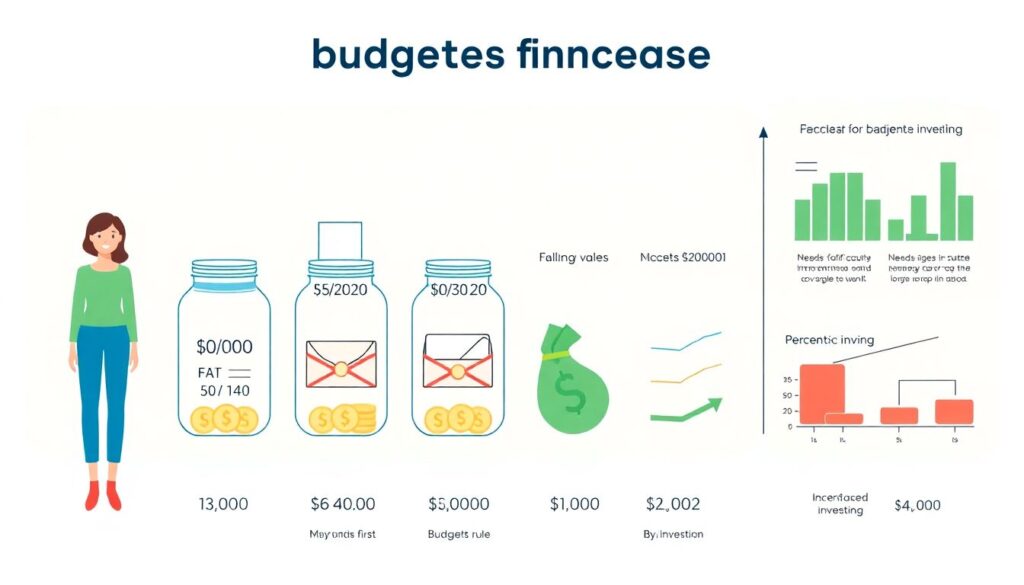
Let’s dig into specific, practical best budgeting strategies as income increases, and compare how they work.
1. Fixed Savings Rate vs. Rising Savings Rate
Strategy A: Fixed Savings Rate (e.g., always 20%)
– No matter your income, you save 20% and spend 80%.
– Simple, easy to understand.
But if your income doubles, your absolute savings grow a lot, while your lifestyle also doubles. That’s slow wealth building compared to what’s possible.
Strategy B: Rising Savings Rate
– You target a higher savings rate as your income grows.
– For example:
– Under $3,000/month: 10–15%
– $3,000–5,000/month: 20–25%
– $5,000–8,000/month: 30–40%
This is a built-in brake on lifestyle creep and a built-in accelerator on wealth.
2. “Pay Yourself First” vs. “Save What’s Left”
“Save What’s Left”
– You pay bills and spend, then see what remains.
– Works only if you’re naturally frugal.
“Pay Yourself First”
– On payday, you automatically move money to:
– Investment accounts
– Savings for goals (home, education, etc.)
– Emergency fund
– You live on what’s left *after* saving.
This is one of the most robust answers to how to manage increased income to save and invest more: remove willpower from the equation by automating it.
Technical detail block — Automation in numbers
Say your net income just rose from $3,500 to $4,500:
– Before raise:
– $700 auto-invest (20%), $2,800 spending
– After raise: you decide new rule: 35% savings
– $1,575 auto-invest (35%), $2,925 spending
Your lifestyle still went up by $125, but your *investing* more than doubled — and this happens automatically every month.
—
Concrete Rules To Fight Lifestyle Creep (That Actually Work)
Here are specific, rule-based financial planning tips when your salary grows.
Rule 1: Pre-Commit Your Next Raise
Before a raise or bonus hits:
– Decide:
– “I’ll allocate 50% to investing, 30% to long-term goals, 20% to lifestyle.”
– Put it in writing or in your budgeting app.
So when HR emails you with the new salary, your brain doesn’t spin stories; it just executes a plan.
Rule 2: Hard Cap On Fixed Costs
Lifestyle creep loves fixed monthly commitments:
– Rent/mortgage
– Car payments
– Subscriptions
– Insurance on expensive toys
Set a hard rule like:
“Fixed monthly costs must stay under 50% of my take-home pay.”
When income increases, don’t race to hit that 50% — stay well below it when possible. This gives you enormous flexibility.
Rule 3: Use “Lifestyle Buckets”
Create a specific “fun / lifestyle” bucket in your budget:
– Travel
– Eating out
– Hobbies
– Tech upgrades
Instead of saying “I’ll try to spend less,” you say:
“I give myself $600/month for guilt-free fun. If my income grows, this can grow to $800, but not more unless I also raise my savings rate.”
This keeps joy in the system but on a leash.
—
Real-Life Scenarios: How People Handle Income Growth
Scenario 1: The Consultant With a Big Jump in Pay
Lisa, 31, moves from in-house marketing ($3,200 net) to consulting ($6,000 net).
Option A – No Rules
– New apartment upgrade: +$700/month
– Car lease: +$400
– Eating out more: +$350
– Travel upgrades: +$300
New spending: $5,200 · Savings: $800 (13%)
Result: Feels richer, but is actually *less* secure than before.
Option B – Rule-Based Upgrade
Before job change, Lisa sets a rule:
– 60% of any net income increase → investing & long-term goals
– 40% → lifestyle
Income increase: $2,800
– $1,680 to investments/savings
– $1,120 to lifestyle
She:
– Upgrades apartment by $500
– Adds $200 to monthly travel fund
– Spends $200 more on dining out and experiences
– Keeps $220 as buffer
New situation:
– Old: $3,200 income · $2,600 spending · $600 saving (19%)
– New: $6,000 income · ≈$3,720 spending · ≈$2,280 saving (38%)
Her lifestyle clearly improves, but her savings rate doubles.
—
Scenario 2: The Gradual Climb in a Corporate Job
Tom, 25, starts at $2,500 net and expects steady raises to ~$4,500 in 7–8 years.
He adopts a simple “rising savings rate” model:
– Under $3,000 → 10% savings
– $3,000–4,000 → 20% savings
– Above $4,000 → 30% savings
As income crosses thresholds, part of each raise goes into lifestyle and part into savings, but the savings percentage climbs. Over a decade, this completely changes his net worth trajectory compared to just “spending whatever comes.”
—
Technical Corner: The Cost of a Small Upgrade (Over a Career)
Let’s quantify what “just” $200–$300/month extra lifestyle creep does over time.
Assume:
– $250/month spent on “small upgrades” (coffee, subscriptions, slightly nicer car, etc.) instead of investing.
– Investment return: 7% annually.
– Time horizon: 30 years.
Future value of investing $250/month for 30 years at 7% ≈ $305,000.
So:
– A slightly nicer car + more takeout + a few subscriptions over 30 years
vs.
– A $300k–plus investment portfolio.
Once you see it in those terms, “just $250/month” doesn’t look small anymore.
—
Putting It All Together: A Simple System You Can Start This Month
Here’s a practical, conversational blueprint on how to stop lifestyle creep and save more money without feeling like you’ve joined a financial bootcamp:
Step 1: Decide Your “Raise Rule”
Pick one:
– 50/50: 50% of any raise to lifestyle, 50% to investing
– 30/70: 30% lifestyle, 70% investing (more aggressive)
– Threshold-based: below $3,000 → 10% savings; $3–5k → 20–25%; above $5k → 30–40%
Write it down. This is your default.
Step 2: Automate the New Savings
When your income goes up:
– Increase automatic transfers to:
– Brokerage or retirement accounts
– High-yield savings for big goals
– Adjust the amount immediately after the first higher paycheck.
If your income rose by $800 and your rule says 60% to savings, increase your automated savings by $480 right away.
Step 3: Pick 1–3 “Joy Upgrades” — And Stop There
Consciously choose what lifestyle upgrades matter most:
– Maybe it’s travel, or living closer to the city, or better food.
– Add them *within* the lifestyle budget defined by your rule.
– Avoid adding dozens of small, forgettable expenses.
Step 4: Review Annually
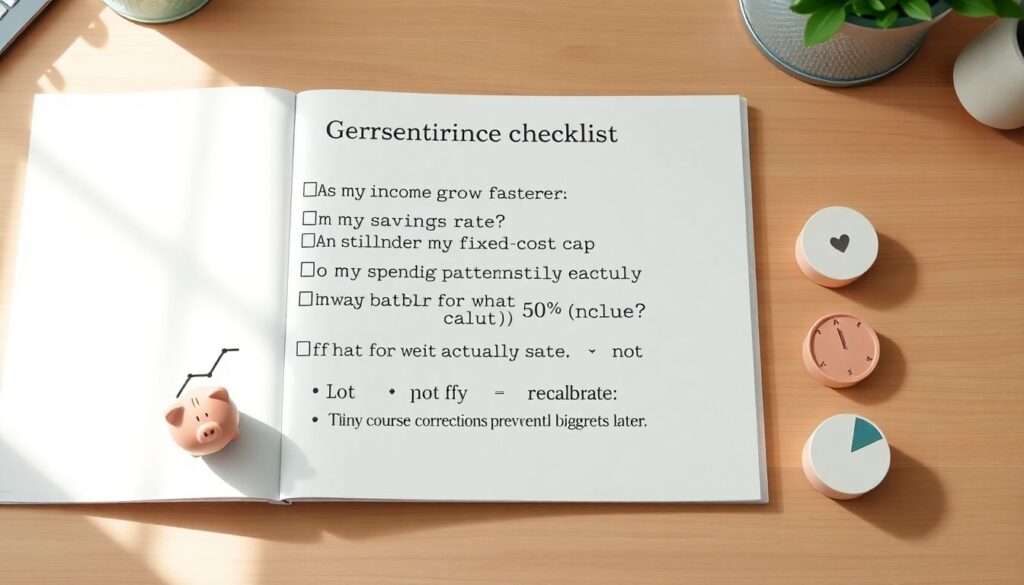
Once a year, ask:
– Has my income grown faster than my savings rate?
– Am I still under my fixed-cost cap (e.g., 50% of income)?
– Do my spending patterns still align with what I actually value?
If not, recalibrate. Tiny course corrections prevent big regrets later.
—
Final Thought
Lifestyle creep isn’t a moral failure; it’s the default of human psychology in a consumer economy. The game isn’t to avoid comfort forever. It’s to upgrade deliberately, not automatically.
When you combine:
– A rule-based approach to raises,
– A rising savings rate,
– And automated investing,
you solve the core problem of lifestyle creep: income goes up, but so does your freedom — not just your monthly bills.