

Why Your Monthly Budget Matters More Than You Think
Most people think of a monthly budget as a boring spreadsheet that tells you what you can’t do. In reality, it’s a real‑time X‑ray of how money flows through your life. It shows what you value, where you’re leaking cash, and how close you are to the life you actually want.
Across different surveys in the US and Europe, roughly 40–60% of households say they “have a budget,” but a much smaller share actually follows it consistently. That gap between planning and practice is where most financial stress lives. Understanding your monthly budget — not just writing one — is what closes that gap.
The Core Logic of a Monthly Budget
Income, Fixed Costs, Variables, and Goals
At its heart, a monthly budget is just four moving parts:
– What comes in (income)
– What must go out (fixed costs)
– What tends to fluctuate (variable spending)
– What you want your money to achieve (savings, investing, debt payoff)
A practical expert rule: if you can’t roughly state those four numbers from memory, you don’t yet “understand” your monthly budget — you’re just collecting transactions.
Financial planners often start with three anchor ratios:
– Housing (rent or mortgage, plus utilities): ideally ≤ 30–35% of take‑home pay
– Total debt payments (excluding mortgage for homeowners): preferably ≤ 15–20%
– Long‑term saving and investing: a minimum of 10–15%, more if you started late
You don’t need to hit those ratios instantly, but knowing them helps you judge whether your budget is balanced or under structural stress.
How to Create a Monthly Budget Plan That Actually Works
A budget works when it reflects how you really live, not how you wish you lived next Monday. A simple, expert‑approved sequence:
1. Start with three months of reality
Pull your bank and card statements for the last 90 days. Categorize spending loosely: housing, food, transport, debt, health, fun, kids, transfers, etc. Don’t obsess over tiny categories; you want patterns, not perfection.
2. Calculate your “true” fixed costs
Include everything that will happen whether you’re paying attention or not: rent, utilities, subscriptions, insurance, minimum debt payments. Many people forget annual expenses like car registration or holiday travel — pro tip: divide those by 12 and treat them as monthly fixed items.
3. Average your variable spending
Groceries, eating out, ride‑shares, clothing, hobbies. Find a monthly average, then ask: “If my income dropped 20% tomorrow, which categories would I cut first?” That instantly reveals what’s negotiable.
4. Set a clear monthly surplus target
Experts often talk about “pay yourself first” in vague terms. Make it concrete: choose a number (e.g., $300/month) that will go to savings, investing, or extra debt payments, before you let lifestyle expand.
5. Draft a simple framework, then refine
You can follow a 50/30/20 split (needs/wants/saving), a zero‑based system (every dollar assigned a job), or a more flexible “buckets” method. The best framework is the one you can stick with on a tired Tuesday.
This is where tools start to matter. A paper notebook can work, but a good monthly budgeting app or spreadsheet shortens the feedback loop between behavior and insight.
Using Technology to See Your Money Clearly
The Role of Apps and Software in Modern Budgeting
The personal finance software for budgeting market has grown rapidly alongside mobile banking and open‑banking regulations. Industry reports estimate double‑digit annual growth in user numbers and revenue as more people move from static spreadsheets to dynamic dashboards.
Three big shifts are happening:
– Automatic data feeds
Instead of manually entering transactions, you connect your bank and card accounts. The software classifies spending and shows trends. This reduces “friction” and gives you a near real‑time view of your monthly budget.
– Behavioral nudges
Apps now use notifications, color coding, and forecasts to nudge you when you’re trending toward overspending — weeks before your card declines.
– Scenario modeling
Better tools let you simulate: “What happens if I increase my savings rate from 10% to 15%?” or “How much faster can I clear this debt if I add $50/month?” That turns vague financial advice into concrete trade‑offs.
Expert planners increasingly encourage clients to pick the best tools for tracking monthly expenses based on personality: visual dashboards for the analytically minded, envelope‑style apps for people who prefer hard spending boundaries, and minimal tools for those who just need guardrails.
Apps vs Spreadsheets vs Pen and Paper
There’s no single best format, but each has strengths:
– Pen and paper: Ideal for beginners who need to feel every number. You’ll understand your budget faster because you physically write it, but it’s harder to maintain.
– Spreadsheets: Highly flexible; great if you’re comfortable with basic formulas. You can create your own rules, charts, and a custom monthly budget template download that you tweak over time.
– Apps and software: Best for automation and ongoing tracking, especially if you have multiple accounts or shared finances.
The key is consistency, not sophistication. Experts see high‑net‑worth clients who still use very simple spreadsheets — the sophistication is in their decisions, not the tool.
Statistics: What the Numbers Say About Budgeting Behavior
The Reality Gap Between Intentions and Actions
Surveys across developed economies regularly show that a significant share of adults live paycheck to paycheck, even at middle‑income levels. Many of these same people report feeling “generally confident” with money — until an unexpected bill arrives.
Some consistent statistical themes:
– A sizable minority of households could not cover a moderate emergency (for example, a few hundred dollars) without borrowing or selling something.
– Households who use any kind of structured budget — even a basic one — report lower financial stress and are more likely to pay bills on time.
– Regular budgeters tend to show higher savings rates over time, even when incomes are modest.
In other words, budgeting doesn’t guarantee wealth, but it strongly correlates with resilience.
Forecasts: Where Monthly Budgeting Is Heading
Looking ahead, experts expect budgeting to become more:
– Embedded – integrated directly into banking apps, so your “budget” is no longer a separate system but part of how your account works.
– Adaptive – rules that adjust automatically if your income changes or seasonal expenses kick in.
– Collaborative – shared dashboards for households, roommates, and even small business owners mixing personal and business cash flows.
Market analysts forecast continued growth for budgeting and personal finance apps over the next 5–10 years, driven by younger generations who are comfortable syncing accounts and receiving algorithmic advice. As data access improves, your monthly budget will likely include predictive elements: “We estimate you’ll have $420 left at the end of the month if you stay on this trajectory.”
Economic Context: Why Monthly Budgets Are Getting Harder — and More Necessary
Inflation, Housing Costs, and Income Volatility

Over the last decade, many countries have experienced periods of elevated inflation, with housing, healthcare, and education costs rising faster than wages for large parts of the population. That means the “easy” buffer that earlier generations enjoyed — cheaper rents, lower medical costs — isn’t available in the same way.
At the same time:
– The gig economy and contract work have increased income volatility.
– Student loans and consumer credit have added fixed obligations to many young adults’ budgets.
– Digital shopping has made it easier to spend small amounts frequently, blurring awareness of total monthly outflow.
Economists note that in such an environment, cash‑flow management becomes a critical survival skill. A monthly budget isn’t just about optimization; it’s about avoiding systemic financial fragility.
Budgets as Micro‑Economic Decision Engines
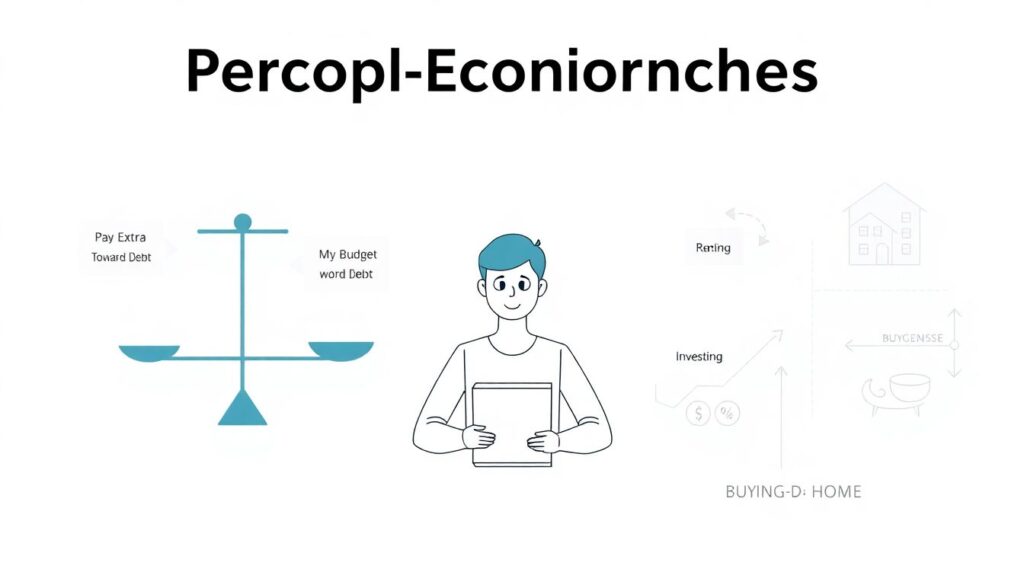
Every budget is a set of micro‑economic choices: your personal allocation of scarce resources. When you choose between paying extra toward debt or investing, you’re weighing expected returns and risk; when you compare renting versus buying, you’re analyzing discounted cash flows, even if you don’t use that term.
Thinking this way clarifies trade‑offs:
– A subscription that seems “only $15/month” is a multi‑year claim on your cash flow.
– A car upgrade isn’t just a higher monthly payment; it’s opportunity cost against future savings or investments.
– A salary increase is not really a gain if lifestyle inflation absorbs it all.
Experts recommend reframing your monthly budget as your personal policy document: a standing decision about how you treat money across time, rather than a punishment log for past choices.
Industry Impact: How Budgeting Is Reshaping Personal Finance
From Static Advice to Real‑Time Coaching
As millions of users adopt a monthly budgeting app or link their accounts to cloud‑based tools, financial services are shifting from one‑off advice (“You should save more”) to data‑driven coaching (“If you cut $80 from dining out, you’ll be debt‑free 7 months sooner”).
This has several industry‑level effects:
– Banks and fintechs are competing to provide the most intuitive budgeting features, not just the best rates.
– Robo‑advisors are increasingly integrating budgeting data to recommend realistic investment plans that factor in cash‑flow constraints.
– Credit products are being evaluated alongside total budget health rather than in isolation, with some lenders analyzing spending habits as part of underwriting.
A more informed customer base, armed with clearer budgets, tends to demand better transparency on fees and interest costs, putting pressure on legacy business models that rely on confusion and inertia.
Data, Privacy, and Algorithmic Budgeting
The flip side of smart budgeting tools is data concentration. As you adopt personal finance software for budgeting, you entrust third parties with detailed information about your habits and priorities. Regulators are paying increasing attention to:
– How budgeting apps monetize user data
– The security of bank connections and transaction histories
– The transparency of in‑app recommendations (are they neutral, or incentivized by affiliate deals?)
Over the next decade, expect tighter rules on how budgeting and finance apps can use data, similar to what has happened in advertising and social media. This will shape how “free” many of these tools remain and how they communicate offers and advice.
Expert‑Backed Tactics to Make Your Budget Work in Real Life
Practical Moves You Can Implement This Month
Financial coaches who work with real households — not theoretical budgets — consistently recommend a few pragmatic tactics:
– Create a “friction point” for your main problem category
If food delivery is your budget sinkhole, move that money into a separate debit account each month. When it’s gone, it’s gone. This is the modern version of cash envelopes.
– Use rolling 3‑month averages
One high bill can make a month look like a failure. Work with 3‑month averages for variable categories like groceries and utilities to see the true pattern and reduce emotional swings.
– Automate before you motivate
Set up automatic transfers to savings or investment accounts right after payday. Motivation is unreliable; automation is faithful.
– Schedule a 20‑minute “money meeting” with yourself
Once a month, open your app, spreadsheet, or notebook and ask three questions:
– Did my money go where I told it to go?
– What surprised me?
– What one rule or limit do I want to test next month?
Choosing the Right Tools and Templates
You don’t need to reinvent the wheel. Many people start with a simple monthly budget template download, then customize it. Experts suggest:
– Start with no more than 10–12 categories; complexity kills consistency.
– Highlight just three “attention” categories where overspending usually happens.
– Pick one tracking method (spreadsheet, app, or paper) and commit to it for at least 90 days before you judge it.
Here are some criteria professionals use when evaluating the best tools for tracking monthly expenses:
– Ability to sync all relevant accounts without constant manual fixes
– Clear, customizable categories that match your lifestyle
– Insightful reports — not just lists — showing trends, averages, and category ratios
– Easy export/backup so you’re not locked into a single provider
If you like structure and automation, a robust monthly budgeting app or dedicated budgeting platform will likely help you more than a static sheet. If you prefer full control and transparency, spreadsheets or lightweight apps may suit you better.
Bringing It All Together: A Budget You Can Actually Live With
Understanding your monthly budget is less about memorizing every transaction and more about mastering the shape of your cash flow: how much comes in, where it tends to go, and which levers you can pull when life changes.
To recap the expert guidance:
– Start with observation, not judgment: three months of honest spending data.
– Choose a simple framework and a tool you’re willing to use weekly.
– Automate savings and debt priorities so they happen without constant willpower.
– Review and adjust monthly, treating your budget as a living policy, not a rigid sentence.
As the industry evolves — with smarter apps, stronger data protections, and deeper integration between banking and budgeting — it will become easier to see the implications of every financial decision in real time. But the core task remains human: deciding what you want your money to do for you, then aligning your monthly budget with that story.