
Why banking fees deserve your attention right now
If you’ve ever stared at your statement wondering “Where did my money go?”, you’re not alone: over the last three years banks have quietly reshaped their fee menus, and the changes are big enough to feel in your budget. In the US, the Consumer Financial Protection Bureau (CFPB) estimated that overdraft and non‑sufficient funds fees brought banks about $15.5 billion in 2019; by 2022 that had dropped to roughly $9–10 billion as large banks cut or softened these charges. Between 2022 and 2024 dozens of major institutions either reduced overdraft fees from around $35 to the $10–$25 range or removed them entirely for standard checking. That sounds like a win, but at the same time many banks nudged up monthly maintenance fees and minimum balance requirements, so the money didn’t simply vanish. To really get bank account fees explained in a way that helps you, you need to see how all these moving parts fit together and where your particular account is quietly leaking cash month after month.
Main types of banking fees you’re probably paying
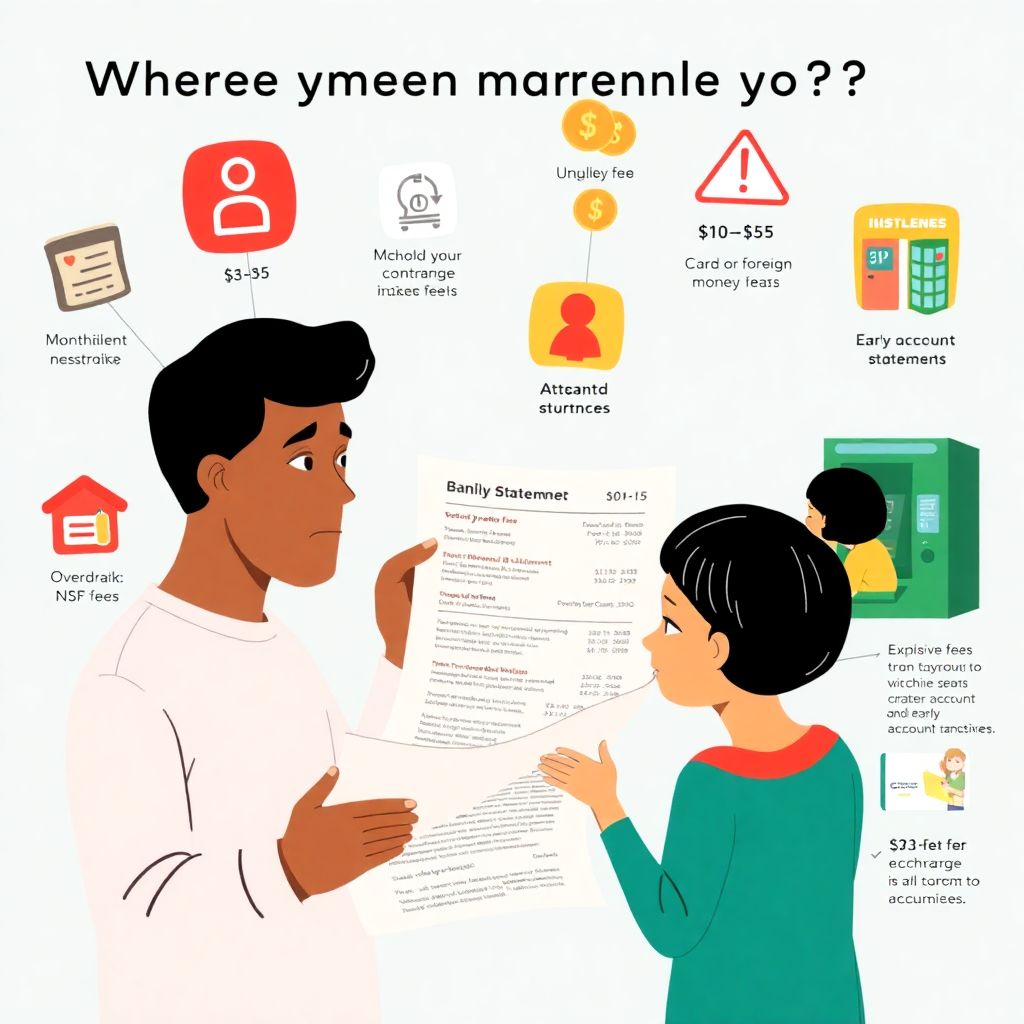
Before you can optimize anything, you need a clear map of the typical charges. For everyday customers, the big clusters of fees usually fall into a few buckets: monthly maintenance, overdraft and insufficient funds, ATM usage, card and payment fees, plus an assortment of “nuisance” charges like paper statements or early account closure. Across 2022–2024, average monthly checking maintenance fees at large US banks hovered around $10–$15, but the real issue is that waivers often require direct deposits of $500–$1,500 or a four‑figure minimum balance that many people don’t keep. Overdraft fees historically sat around $33–$35; by 2023, many large banks lowered them into the mid‑20s or reduced the number of times per day they could hit you, while online institutions increasingly moved to zero‑overdraft models. Internationally, patterns differ, but the logic is similar: banks charge most for events that generate operational or liquidity risk, and then they sprinkle in convenience pricing that counts on customers not reading the fine print carefully.
Monthly maintenance fees: the silent subscription
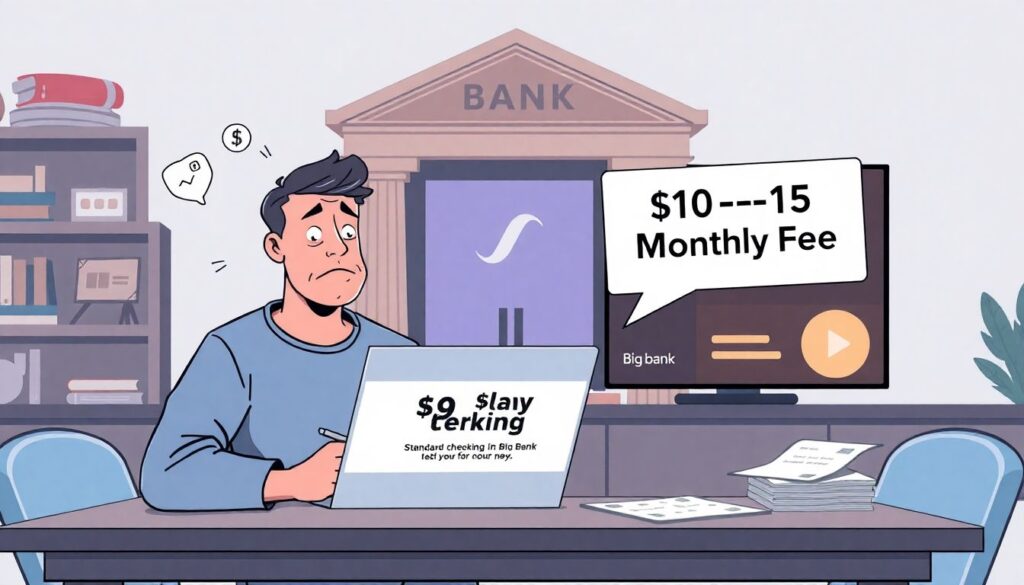
Monthly fees are like a streaming subscription you forgot to cancel, except instead of a movie you get the privilege of holding your own money. In the US, survey data between 2022 and 2024 shows that a standard checking account at a big brick‑and‑mortar bank usually lists a $10–$15 monthly charge, yet more than half of customers qualify for a waiver through direct deposit, student status, or minimum balance. The paradox is that people who can least afford it are the ones most often paying, because income volatility makes it hard to hit those thresholds consistently. If you track your last 12 months of statements, you may find that you paid maintenance fees in, say, four or five months when your direct deposits were irregular. That’s a red flag that your account design doesn’t match your cash‑flow reality. This is exactly where comparing checking accounts with low fees and digital‑first banks can pay off quickly, because the difference between $0 and $12 a month is $144 a year—enough to be worth a short afternoon of research and a bit of admin hassle.
- Check if your fee was waived every single month last year.
- If not, note which condition you failed: deposit, balance, or transactions.
- Estimate the yearly cost if you change nothing.
- Compare that number with alternatives at online and credit‑union options.
Overdraft and NSF fees: what changed since 2022
Overdraft and non‑sufficient funds fees used to be the heavy hitters. From around 2015 to 2019, they were remarkably stable near $33–$35 per incident at many US banks. Regulatory pressure and public scrutiny pushed a rapid shift starting in 2021, and by 2022–2023 several top‑10 banks cut their overdraft fees by 25–50%, introduced grace windows, or eliminated NSF fees entirely. The CFPB reported that overdraft and NSF fee revenue at the largest banks fell by about 50% between 2019 and 2022, and preliminary data into 2023 continued that downward trend. But the story isn’t simply “overdraft is gone.” Many institutions still charge when your negative balance exceeds a modest buffer or persists more than a day or two. Others limit the number of fees per day but increase the likelihood that a borderline transaction triggers a temporary hold. To understand your risk, you need to read the overdraft policy for your specific account, not just the headline marketing claim, because the same bank can have dramatically different rules between its basic and premium products.
- Find out if your bank charges per item, per day, or both.
- Check whether NSF fees (for declined checks or ACH) still exist.
- Look for a “$50 or less” buffer or 24‑hour forgiveness window.
- See if you can manually turn overdraft coverage off for debit cards.
ATM, card, and foreign transaction fees you overlook
The more invisible a fee is, the more likely you are to ignore it. ATM charges fall squarely into this category. Since 2022, the average out‑of‑network ATM fee in the US has stayed stubbornly high: roughly $3 from the machine owner plus $2–$3 from your own bank is common, turning a quick cash withdrawal into a $5 penalty. Card and payment fees are more subtle. Some banks still charge for expedited bill payments, wire transfers, or even multiple replacement cards per year. Foreign transaction fees typically sit around 2–3% of the purchase amount for many traditional credit and debit cards, which can quietly add tens of dollars to a weekend abroad. While fintech and some of the best banks with no monthly fees have started bundling no‑fee ATM usage and zero‑FX cards, you usually trade off branch access or certain in‑person services. Understanding where and how you spend—cash vs. card, domestic vs. foreign, in‑network vs. out‑of‑network—helps you target the specific pain points instead of chasing a generic “no fee” promise that doesn’t match your habits.
How banks design fees: the business logic behind the numbers
To manage your costs intelligently, it helps to think the way product managers at banks think. A checking account is a low‑margin, high‑volume product; the institution earns a mix of interest spreads on your deposits, interchange fees when you use your card, and various service charges. Over the last three years, as interest rates rose sharply between 2022 and 2023, banks earned more on deposits, which made it politically and commercially easier to cut visible pain points like overdraft. Some of that relief, however, is compensated by “pricing power” in other areas: higher wire fees, modestly increased safe deposit box costs, or new premium tiers that package features you previously received for free. When you compare banking fees between banks, you’re really comparing different revenue strategies built on the same underlying economics. Traditional banks lean on branch networks and cross‑selling, while online banks use low infrastructure costs to advertise free accounts but may earn more through partner products or data‑driven offers. Recognizing this helps you interpret whether a fee is paying for something you actually value—like 24/7 human support—or simply padding a P&L line you can avoid with a different provider.
bank account fees explained in one mental model
You can simplify the chaos by viewing each fee through a single lens: is it compensating the bank for real risk or work, or is it exploiting friction and inattention? Risk‑based fees include things like overdrafts that temporarily extend you credit, foreign transactions that require additional infrastructure, or wire transfers that must settle quickly and securely. Convenience or friction‑based fees are monthly maintenance for an account that costs little per user at scale, paper statement fees, or charges for using an ATM from another network when cheaper access exists nearby. Over the past three years, regulators around the world have increasingly pressured banks to justify the first type and dial back the second. That’s why you see overdraft structures changing while nuisance fees are more often simply rebranded or bundled. If you run through your statement line by line and classify each charge as “risk” or “friction,” you’ll notice that most of your annual cost sits in the second bucket, which is precisely where you have the most negotiating and switching power as a retail customer.
How to avoid bank fees without turning your life into a spreadsheet

You don’t need a finance degree to reduce charges meaningfully; you need a few automatic habits and some one‑time setup. Start by listing the top three fee categories that hit you in the last 12 months—often overdraft, monthly maintenance, and ATM. Then design simple guardrails aimed at those. For overdrafts, set a low‑balance alert on your banking app at an amount that gives you two or three days of typical spending room, so you’re warned before transactions bounce. For monthly charges, either upgrade your account to a tier you can realistically satisfy or, more radically, move to an institution that doesn’t charge them at all. For ATM costs, plan to withdraw slightly larger sums less often, and use your bank’s ATM locator to avoid foreign machines. When people search how to avoid bank fees, they often expect a long list of hacks; in practice, most of the savings come from two or three structural decisions plus a handful of alerts that run quietly in the background once configured.
- Turn on low‑balance and large‑transaction notifications.
- Align bill due dates with your main paycheck where possible.
- Use your bank’s ATM map before traveling or going out.
- Opt out of overdraft on debit if you prefer strict spending caps.
Choosing checking accounts with low fees that fit your behavior
The right account is less about slogans and more about matching structure to daily life. If you mostly tap your card, rarely use cash, and are comfortable online, a digital‑only provider or credit union with no monthly maintenance and reimbursed ATM fees might minimize your costs. Over 2022–2024, such providers have proliferated in many markets, often advertising free basic accounts and low or zero overdraft. If you run a small business, travel internationally, or handle frequent cash deposits, a traditional bank might make sense despite some visible charges, because it saves time and risk elsewhere. To judge whether an account truly offers checking accounts with low fees, simulate a month of your real behavior: number of ATM withdrawals, cross‑border transactions, ACH payments, and potential low‑balance days. Then “price” that pattern using the fee schedules of two or three candidate banks. This takes half an hour once but can easily surface $100–$300 a year in differences, which is significant compared with the marginal interest rate variations that advertising usually emphasizes.
Spotting the best banks with no monthly fees (and the fine print)
“No monthly fee” has become a powerful marketing label since 2022, as customer tolerance for visible charges declined and social media amplified bad experiences. Yet a zero monthly line item doesn’t guarantee an overall low‑cost relationship. Many of the best banks with no monthly fees rely on a few other levers: tighter out‑of‑network ATM policies, higher foreign transaction percentages, or limited live support that nudges you toward paid premium tiers. The trick is to read the full schedule of fees—usually linked at the bottom of the product page—for all services you use at least once a quarter. Pay special attention to dormant account fees, early account closure penalties, and limits on free transfers to external banks. Because competition has increased, especially among online providers, you can often nudge customer service for small perks—like extra ATM reimbursements or a temporary waiver—if you’re bringing in regular direct deposits. But you shouldn’t rely on exceptions; a truly good account is one whose standard rules are already aligned with your routine, so that you barely have to think about fees once you’ve set it up.
How to systematically compare banking fees between banks
Comparing one fee at a time is misleading; you want a structured, apples‑to‑apples view. Start by writing down four or five behaviors that define your financial life: salary deposits, typical end‑of‑month balance, how often you hit low balance, cash withdrawal frequency, and any international travel. Then pick two or three candidate institutions—perhaps your existing bank, a large national competitor, and an online or credit‑union option. For each, visit the “consumer fee schedule” PDF and extract only the charges that affect your behaviors: monthly maintenance, overdraft structure, ATM usage, domestic and international transfers, plus foreign card fees. When you compare banking fees between banks this way, you convert an abstract list of numbers into an annual cost for your specific pattern. Over the past three years, studies of US households show that switching from a traditional high‑fee checking account to a low‑cost or online alternative can save anywhere from $60 to $300 per year, depending on how often the customer previously overdrew and used out‑of‑network ATMs. Those savings are recurring, which means their impact compounds year after year.
Recent trends (2022–2024): what to expect next
From 2022 through late 2023, several structural trends emerged that are likely to shape fees going forward. First, regulatory pressure in the US, UK, and EU pushed banks to clarify and often soften overdraft and NSF practices, cutting headline charges while emphasizing transparency. Second, rising interest rates improved banks’ net interest margins, allowing them to experiment with more fee‑free consumer accounts while monetizing through spreads and partnerships. Third, competition from fintech firms with low‑cost, app‑centric offerings accelerated, particularly among younger customers who are more willing to switch providers. Public data through 2023 suggests that total fee revenue from overdrafts and certain nuisance charges declined, even as other areas such as premium services and investment‑linked products grew. I don’t have full 2024 and 2025 statistics yet, but given the trajectory, you can expect further unbundling: more tiers, clearer disclosure, and a continued shift away from surprise penalties toward subscription‑style packages. For you, that means more choice—but also more homework, because the gap between a truly low‑fee account and a superficially cheap one is widening, not narrowing.
Putting it all together: a simple 30‑day plan
Transforming your relationship with banking fees doesn’t require perfection; it requires one focused month. In week one, download the last 12 statements and highlight every fee; total the amount and group it by type. In week two, read your bank’s current fee schedule and mark which charges you could have avoided with different behaviors or account types. Week three is for market research: shortlist two alternatives that better fit you, using the mental model and comparison method we discussed. By week four, either renegotiate with your current bank—asking for a switch to a cheaper account or fee waivers based on your history—or open a new account and set up gradual migration of direct deposits and bills. Recheck your next three statements to confirm the impact. Once this is done, you’ll have bank account fees explained not just in theory but in your own numbers, and that understanding tends to stick; you’re far less likely to drift back into paying for friction when you’ve seen, in hard currency, how much a few informed decisions can save you every single year.