
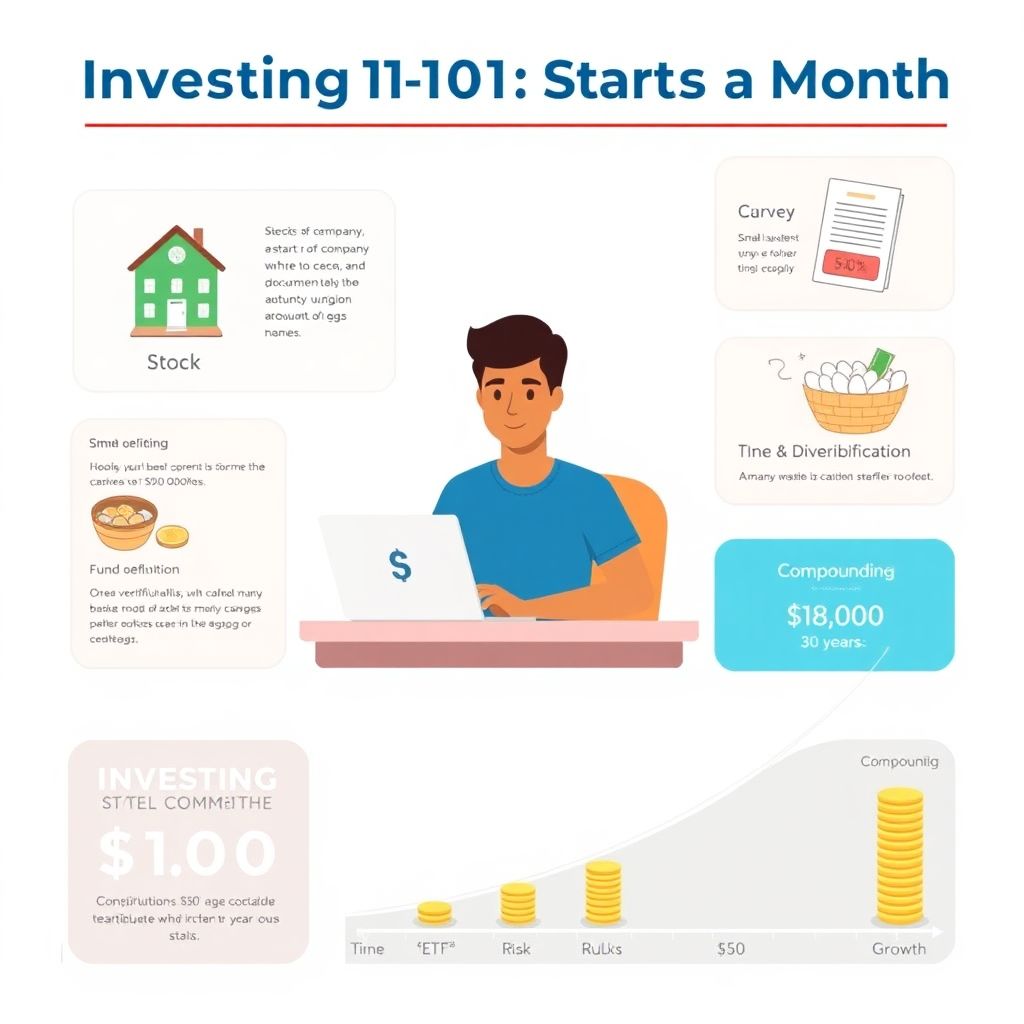
Investing 101: How to Start Investing with Just $50 a Month
So you’ve got 50 bucks a month and a desire to start building wealth. That’s enough. Really. You don’t need a six‑figure salary, a finance degree, or “perfect timing” to begin. You just need a plan, a bit of patience, and the willingness to let time do most of the heavy lifting.
Let’s walk through how to start investing with little money in a way that actually feels doable, not overwhelming.
—
Key Terms Without the Jargon
Before you put a single dollar into the market, you need to understand a few basic words. I’ll keep it simple and practical.
Investment
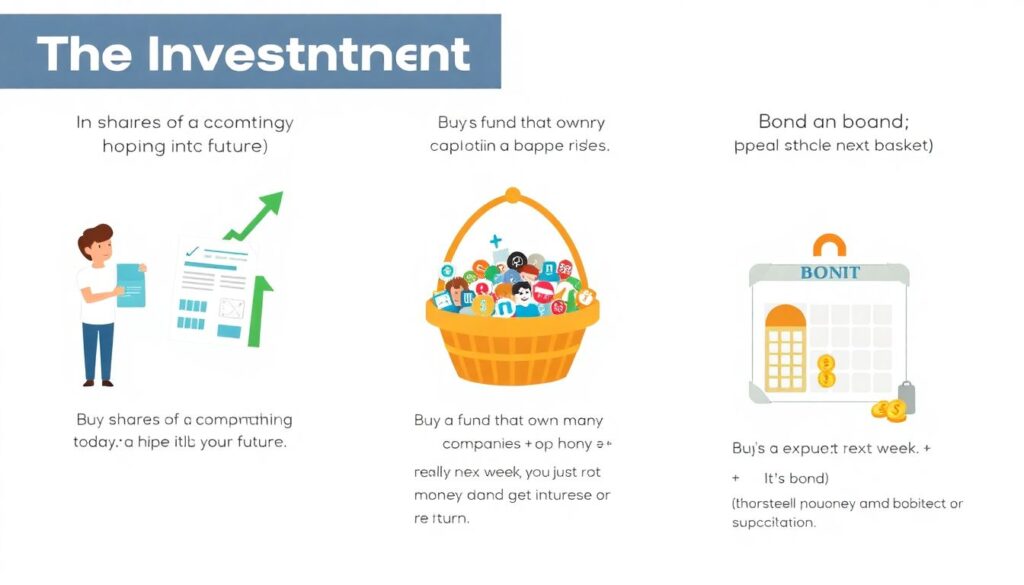
An investment is money you put into something today hoping it will grow in the future.
– Buy shares of a company → hope its value rises.
– Buy a fund that owns many companies → hope the whole basket grows.
– Buy a bond → you lend money and get interest in return.
If you expect your money back next week, that’s not investing, that’s parking cash. Investing is long‑term by design.
Stock
A stock is a small piece of ownership in a company.
– Own 1 share of Apple → you own a tiny slice of Apple.
– If Apple grows and earns more → your slice usually becomes more valuable.
Price goes up and down every day. That volatility is normal, not a bug.
Bond
A bond is basically an IOU.
– You lend money to a company or government.
– They promise to pay you interest and return the principal later.
Bonds are usually less volatile than stocks, but also often grow slower over the long term.
Fund (Mutual Fund / ETF)
A fund is a basket of many investments.
– Mutual fund: professionally managed basket, trades once a day.
– ETF (Exchange Traded Fund): basket that trades like a stock all day.
Most beginners are better off with broad, low‑cost index funds (more on that later) instead of trying to pick individual stocks.
Risk and Diversification
– Risk: The chance that you lose money or that your investment swings wildly in value.
– Diversification: Spreading money across many different investments so one bad pick doesn’t ruin everything.
In one line: Don’t put all your eggs in one basket. Put a small amount of money into many baskets.
—
What $50 a Month Can Really Do
You might think: “What’s the best way to invest 50 dollars a month if it’s such a tiny amount?” This is where time and compounding show their power.
Compounding, But Visual
Compounding is earning returns on your returns. Here’s a text‑based diagram to picture it:
Year 1: You invest $50/month → total contributions: $600
Year 2: Your $600 earns returns + you add another $600
Year 3: Your original $600 + returns earn more returns, plus your new $600, and so on
Or as a simple arrow diagram:
$50 → grows →
$50 + growth → grows →
($50 + growth) + new $50 → grows → repeat…
Let’s be a bit more numeric, but still approachable:
– You invest $50 per month
– That’s $600 a year
– Over 30 years, you’ve put in $18,000 of your own money
If your average annual return is about 7% (a rough historical average for a diversified stock portfolio after inflation, not a guarantee), the future value could land around $56,000+.
You turned $18k of contributions into roughly triple that amount just by starting early and staying consistent.
—
Step 1: Build a Tiny Safety Cushion First
Most experts agree: don’t invest your rent money.
Before you focus on beginner investing for beginners with small amounts, professionals usually suggest:
1. Pay off high‑interest debt (like credit cards).
2. Build a small emergency fund (even $500–$1,000 helps).
Why? Because if your car explodes and you have no cash, you’ll be forced to sell investments at a bad time. A little safety cushion protects your investing plan.
—
Step 2: Choose Where Your $50 Lives (Accounts 101)
You can’t just throw money at the stock market. You need an account. Think of it as a “bucket” that holds your investments.
Basic Types of Accounts
– Brokerage account
Regular investment account. No special tax perks, but flexible. You can invest any amount and can withdraw anytime (though taxes may apply on gains).
– Retirement accounts (401(k), IRA, etc.)
These often come with:
– Tax advantages
– Sometimes employer matching (free money if you have a 401(k))
If you have access to a 401(k) with a match, many experts will say:
Priority #1 is getting the full employer match. That’s a 100% return right out of the gate.
But if your goal is simply to learn how to invest small amounts of money each month with flexibility, a basic brokerage account through a reputable broker or app is totally fine to start.
—
Step 3: Pick Your Investing Vehicle
Now the crucial part: what do you actually buy with those $50 chunks?
Option A: Broad Index Funds (Expert Favorite)
Ask a lot of professionals, and you’ll hear some version of:
> “Buy low-cost, diversified index funds and hold them for decades.”
An index fund simply tracks a market index like the S&P 500. You’re not trying to beat the market; you’re just riding along with it.
Text diagram for a U.S. total market index fund:
“`
Fund
├─ Big Tech companies
├─ Banks
├─ Healthcare
├─ Energy
├─ …hundreds or thousands more
“`
Benefits:
– Huge diversification instantly
– Historically strong long‑term returns
– Very low cost if you choose the right funds
For many beginners, the best way to invest 50 dollars a month is to automate contributions into one or two broad index ETFs or mutual funds.
Option B: Target-Date Retirement Funds
These are “all‑in‑one” funds that automatically adjust risk as you approach retirement age.
– You choose a target year (e.g., 2055).
– The fund is more aggressive (more stocks) when you’re young.
– Over time, it shifts toward bonds and less volatility.
They’re great if you want a set‑it‑and‑forget‑it approach.
Option C: Individual Stocks (Proceed Gently)
Picking individual stocks can be exciting, but here’s the thing most pros will warn about:
– Higher risk
– Requires research and discipline
– Easy to chase hype and buy high, sell low
If you’re investing only $50/month, pouring it all into one or two companies is basically the opposite of diversification. Many experts suggest making broad index funds your “main course,” and using small money for individual stocks only after you understand the basics and your core investing plan is on autopilot.
—
Step 4: Choose Your App or Platform
Now for the practical side: where do you press the buttons?
What to Look For
You want:
– No or low commissions on trades
– Ability to buy fractional shares (so you can invest $50 even if a stock or ETF costs $300+)
– Easy automatic monthly investing
– Clear, simple interface, not a casino look‑alike
When people look for the best investment apps for beginners with $50, they generally lean toward:
– Reputable online brokers with strong regulation and security
– Apps that offer educational content, not just flashy charts
Read reviews, check fees, and avoid anything that feels like pure gambling. If the app is constantly pushing you to trade every hour, that’s a red flag, not a feature.
—
Step 5: Automate $50 and Forget the Noise
Once you’ve chosen:
– An account type
– A good fund (or two)
– A solid platform
…your next job is to make it boring.
Set Up Automatic Investing
1. Pick a date right after payday.
2. Set up an automatic transfer of $50 from your bank to your brokerage.
3. Set up an automatic purchase into your chosen fund(s).
Now your plan looks like this:
“`
Payday → $50 auto-transfer → auto-buy index fund → repeat monthly
“`
This is dollar‑cost averaging in action: you invest the same amount regularly, buying more shares when prices are low and fewer when prices are high. Over time, this smooths out the bumps.
—
How $50 a Month Compares to “Doing Nothing”
Let’s compare two imaginary people over 30 years:
Person A – “I’ll Start When I Have More Money”
– Waits 10 years, then starts investing $150/month for 20 years
– Total contributions: $36,000
– At 7% average annual return, ends up with around $78,000 (ballpark)
Person B – “I’ll Just Start with $50”
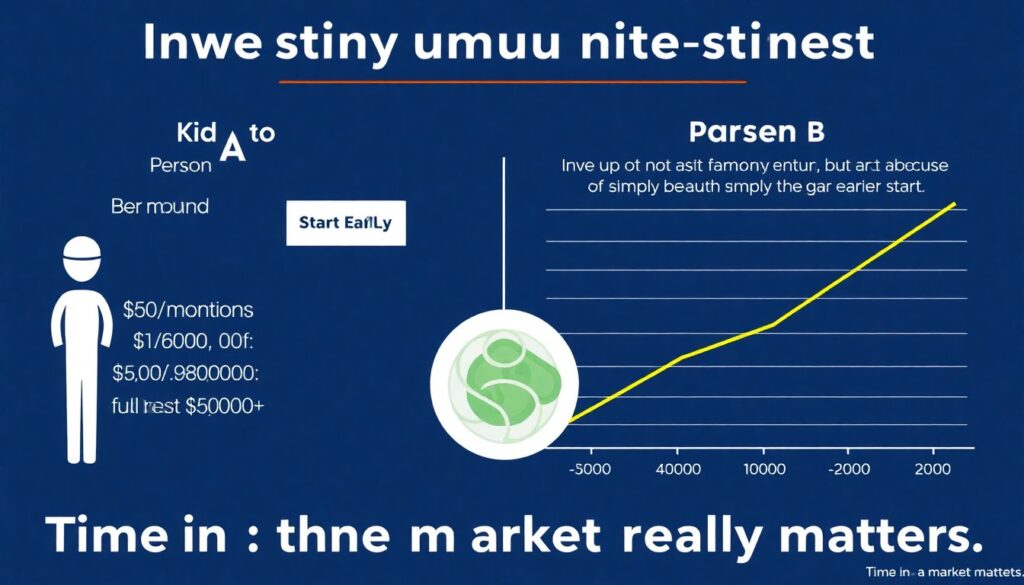
– Invests $50/month for full 30 years
– Total contributions: $18,000
– At the same 7% return, ends up with around $56,000+
Person B put in half the money and still lands not that far behind Person A, just because they started earlier. Time in the market really matters.
This is why so many pros hammer the point: start small, start now.
—
How to Start Investing with Little Money: A Simple 5-Step Checklist
Here’s a concrete, no‑fluff sequence you can follow.
- Clear high‑interest debt and build a mini emergency fund.
- Open a beginner‑friendly brokerage or retirement account.
- Choose 1–2 low‑cost, diversified index funds or a target‑date fund.
- Set up an automatic $50/month transfer and purchase.
- Ignore daily market noise; review your plan once or twice a year.
That’s it. That’s how beginner investing for beginners with small amounts really works in practice.
—
What Experienced Investors Wish Beginners Knew
I’ll summarize some common expert recommendations you’ll hear from financial planners, CFA charterholders, and seasoned investors.
1. Focus on Behavior, Not Brilliance
Most professionals will tell you: you don’t need to be a genius. You need:
– Consistency
– Patience
– A simple plan you can actually stick to
Skipping one panic sell in a crash is usually more important than finding the next hot stock.
2. Fees Quietly Eat Your Future
Every 1% fee you pay annually is 1% less return for you. Over decades, that’s huge.
– Prefer index funds with low expense ratios.
– Be wary of “advisors” who are really product salespeople pushing high‑fee funds.
Experts routinely show charts where a 1–2% fee difference translates into tens of thousands of dollars lost over a 30‑year horizon, especially when you invest small amounts of money each month for a long time.
3. Time Beats Timing
Pros know they can’t perfectly time the market either. What they do instead:
– Stick to a long‑term asset allocation (mix of stocks/bonds).
– Rebalance occasionally.
– Stay the course through ups and downs.
For a new investor with $50 a month, trying to “wait for the crash” usually means never starting.
4. The Best Investment Is Often Boring
You’ll rarely see professionals bragging on TV about quietly buying an S&P 500 index fund every month for 20 years. It’s not flashy. But it works, and it’s usually the best way to invest 50 dollars a month if your goal is long‑term growth, not entertainment.
—
Comparing Popular Beginner Approaches
To wrap up the strategy side, let’s compare three broad approaches you’ll see pitched online.
1. “All In on One Stock” Approach
– High risk
– High stress
– Easy to mess up with emotions
Most experts recommend against putting all of a small monthly investment into one or two individual companies.
2. “Trading for Quick Gains” Approach
– Lots of buying and selling
– Higher taxes, higher costs
– Requires time and skill most beginners don’t have
Professionals with full teams and data still struggle to beat the market consistently. A newcomer on a phone app has massively worse odds.
3. “Simple Index Fund and Chill” Approach
– Broad diversification
– Low cost
– Minimal time commitment
This is the approach that aligns with what many evidence‑based financial planners actually do in their own retirement accounts.
—
Putting It All Together: Your First Month
To make this ultra‑concrete, here’s how your first 30 days might look:
Week 1
– Check high‑interest debts and build or top up your mini emergency fund.
– Research 2–3 reputable brokers or apps; pick one and open an account.
Week 2
– Learn the basics of one or two index funds (e.g., a total market fund and/or an S&P 500 fund).
– Decide your initial mix (for many young investors, a 100% stock index fund allocation is common, but adjust to your risk comfort).
Week 3
– Fund your account with your first $50.
– Place your first buy order into your chosen fund.
Week 4
– Set up automatic monthly contributions of $50.
– Log out, step away, and let time and compounding start working.
—
The Real Win: Building the Habit
Starting with $50 a month won’t make you rich overnight, but it does something more important: it turns you into an investor.
You’re learning:
– To prioritize future you
– To stay calm when markets move
– To use simple tools that anyone can access
As your income grows, bump that $50 to $75, then $100, then more. Because you already know how to start investing with little money, scaling up will feel natural, not scary.
The market rewards time, discipline, and consistency—not perfection. Your first small automatic deposit is you stepping onto that path.