

Why reducing credit card debt needs a safety-first plan
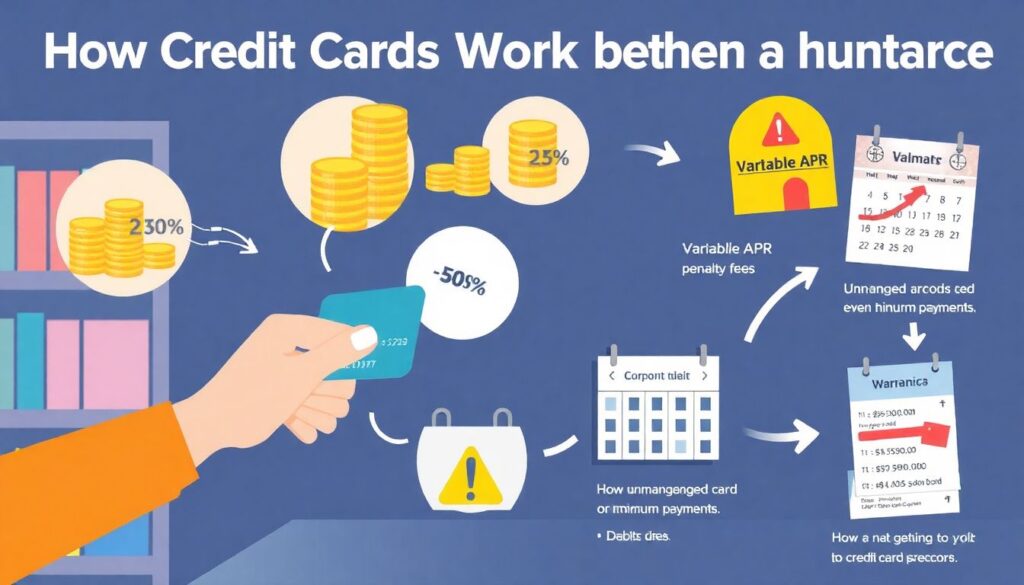
Credit cards look simple on the surface: swipe, sign, pay later. But the underlying mechanics — compound interest, variable APR, penalty fees — mean that unmanaged balances can grow faster than most people expect, even if they keep making minimum payments. To reduce your credit card debt safely, you need more than enthusiasm; you need a structured, low‑risk plan that protects your credit score, your cash flow, and your psychological bandwidth. Experts in personal finance consistently warn that aggressive tactics, like draining emergency savings or closing multiple accounts at once, can backfire. So the real objective is not just speed, but controlled deleveraging: shrinking your balances while maintaining liquidity, limiting interest costs, and avoiding moves that trigger credit score damage or future borrowing problems.
Reducing debt becomes a lot easier once you treat it like an engineering problem, not a moral failure.
Map your debt precisely before you touch it
Before you even think about the best way to pay off credit card debt fast, you need a precise inventory. Guessing balances or “rounding” interest rates leads to bad prioritization. Debt strategists recommend building a mini balance sheet: list every card with current balance, credit limit, APR (separate purchase APR and cash advance APR if they differ), statement due date, and minimum payment. This lets you calculate your utilization ratio per card and overall, which directly affects your credit score. Experts also suggest adding one more variable: emotional load. Some debts cause more stress than others — maybe it’s a card you hide from your partner or one linked to medical bills — and that stress can influence which balance you tackle first.
A clear map turns a vague problem into a set of solvable equations instead of a fog of anxiety.
Choose a payoff strategy: avalanche vs snowball vs hybrid
Debt payoff methods are essentially algorithms for allocating cash. The “avalanche” method targets the highest APR first, minimizing total interest paid and often being mathematically optimal. The “snowball” method targets the smallest balance first, generating rapid wins that boost motivation and adherence — something behavioral economists emphasize as crucial. Many credit counseling services for credit card debt now recommend a hybrid approach: rank by APR, but if two accounts are close, start with the smaller balance to capture a psychological win early. In every case, you keep paying minimums on all cards, then direct every extra dollar to the chosen “target” account until it’s zero, then roll that freed payment into the next one.
The winning strategy is the one you can follow consistently for 12–24 months, not just the one that looks elegant in a spreadsheet.
Make your budget debt-aware, not aspirational
A safe reduction plan starts with your cash flow. Debt experts repeatedly see the same error: people design fantasy budgets that ignore irregular expenses, then fall back to using cards and erase progress. Instead, build a “debt-aware” budget that incorporates realistic categories: irregular bills, annual renewals, car repairs frequency, and a modest fun-money line so you don’t rebel against your own plan. Segment your monthly net income into three buckets: fixed obligations, operating expenses, and a dedicated “debt acceleration” pool. Automate transfers of that pool right after payday so extra payments happen before you have a chance to spend the money. Continually test stress scenarios: if you lost some income, which payments could you still maintain without swiping more plastic? This risk‑testing mindset keeps your plan resilient under real‑world volatility instead of collapsing at the first surprise bill or urgent purchase.
A budget that works under pressure is far more valuable than a perfect budget that only works on paper.
Use balance transfers strategically, not impulsively
credit card balance transfer offers can be powerful tools when used with discipline and dangerous when used casually. A 0% or low promotional APR for 12–18 months can sharply reduce interest drag, but only if you understand the fine print: transfer fees, reversion APR after the promo window, and whether purchases on the same card share the teaser rate. Specialists advise using transfers only if you can realistically clear the transferred amount during the promo period and if the total cost (fees plus residual interest) is lower than your current trajectory. Treat the promotional period like a fixed‑term amortizing loan: divide the transferred balance by the number of promo months and set that as your required monthly payment, then automate it.
If you keep spending on the new card while paying down the old debt, you’re just reshuffling liabilities, not reducing them.
Evaluate consolidation and relief programs with skepticism
When debt feels overwhelming, credit card debt relief programs and low interest debt consolidation loans for credit cards start to look like lifelines. Some are legitimate, but many are structured to maximize fees rather than your benefit. A consolidation loan only helps if the effective interest rate is lower, the term isn’t so long that you pay more total interest, and you don’t immediately re‑load your old cards. Likewise, “relief” programs that ask you to stop paying creditors while they negotiate settlements can cause substantial credit score damage, collection activity, and tax consequences on forgiven balances. Certified financial planners generally treat settlement as a last‑resort tool after other options (budget rework, balance transfers, income boosts) have been exhausted.
Always analyze these products as contracts with trade‑offs, not as magic reset buttons for your financial history.
When expert guidance is worth the appointment

There’s a point where DIY optimization stops being efficient. That’s where professional support earns its keep. Reputable credit counseling services for credit card debt (often non‑profit and accredited by NFCC or similar bodies) will perform a full cash‑flow analysis, review your credit report, and propose a debt management plan (DMP) if appropriate. Under a DMP, they may negotiate reduced interest rates and structured payments with your card issuers, then you make a single consolidated payment to the agency. Independent financial planners stress two filters: the counselor should disclose funding sources, fee structures, and potential credit impact clearly, and they should not pressure you into any particular product in the first meeting.
If a “specialist” guarantees results, skips analysis, or tells you to ignore your credit report, that’s your cue to walk away.
Boost repayments safely: income tweaks and expense surgery
Once your structure is in place, the most direct way to accelerate payoff is to widen the gap between income and expenses, but in a controlled way. Professionals talk about “income micro‑streams”: small, repeatable inflows like freelance work, overtime blocks, or monetizing underused assets, explicitly earmarked only for debt reduction. On the expense side, focus on recurring contracts: telecom, subscriptions, insurance premiums. Renegotiating or canceling these compounds savings every month, unlike one‑time frugality stunts. A key expert tip: avoid raiding your entire emergency fund for lump‑sum payments. Keeping at least one to three months of essential expenses in liquid reserves maintains resilience; otherwise, a single shock sends you straight back to high‑interest borrowing.
Your aim is sustainable surplus, not temporary austerity that rebounds into larger debt later.
Protect your credit profile while you pay down
Many borrowers unintentionally damage their credit while trying to clean it up. Closing old cards right after payoff reduces available credit and can spike utilization on remaining accounts. Credit analysts typically suggest: keep long‑tenure cards open, especially those with no annual fee; avoid applying for multiple new lines while executing your plan; and prioritize on‑time payments above everything else. Even during aggressive payoff phases, keeping utilization under about 30% on each card and overall is a practical target. If you must miss something in a crisis, experts prefer you protect essentials like housing and utilities, but contact card issuers early—many have hardship programs that can temporarily reduce rates or minimums without reporting negative information.
Think of your credit score as an asset you’re managing in parallel with your debt, not a casualty of the process.
Lock in new habits so the debt doesn’t come back
The last stage of safe credit card payoff is preventing relapse. Behavioral finance research shows that environment design beats willpower over the long term. After you’ve stabilized balances, adjust card settings: enable alerts for large transactions, due dates, and when utilization crosses a chosen threshold. Where possible, route predictable monthly costs through a debit account or a single low‑APR card you clear in full. Schedule a recurring “financial review” once a month to check balances, spending categories, and progress against your targets, treating it like any other maintenance routine.
Debt freedom isn’t a one‑time event; it’s an operating mode. With a structured plan, careful use of tools like credit card balance transfer offers, and selective reliance on professional guidance, you can reduce your credit card debt safely and keep it that way.