
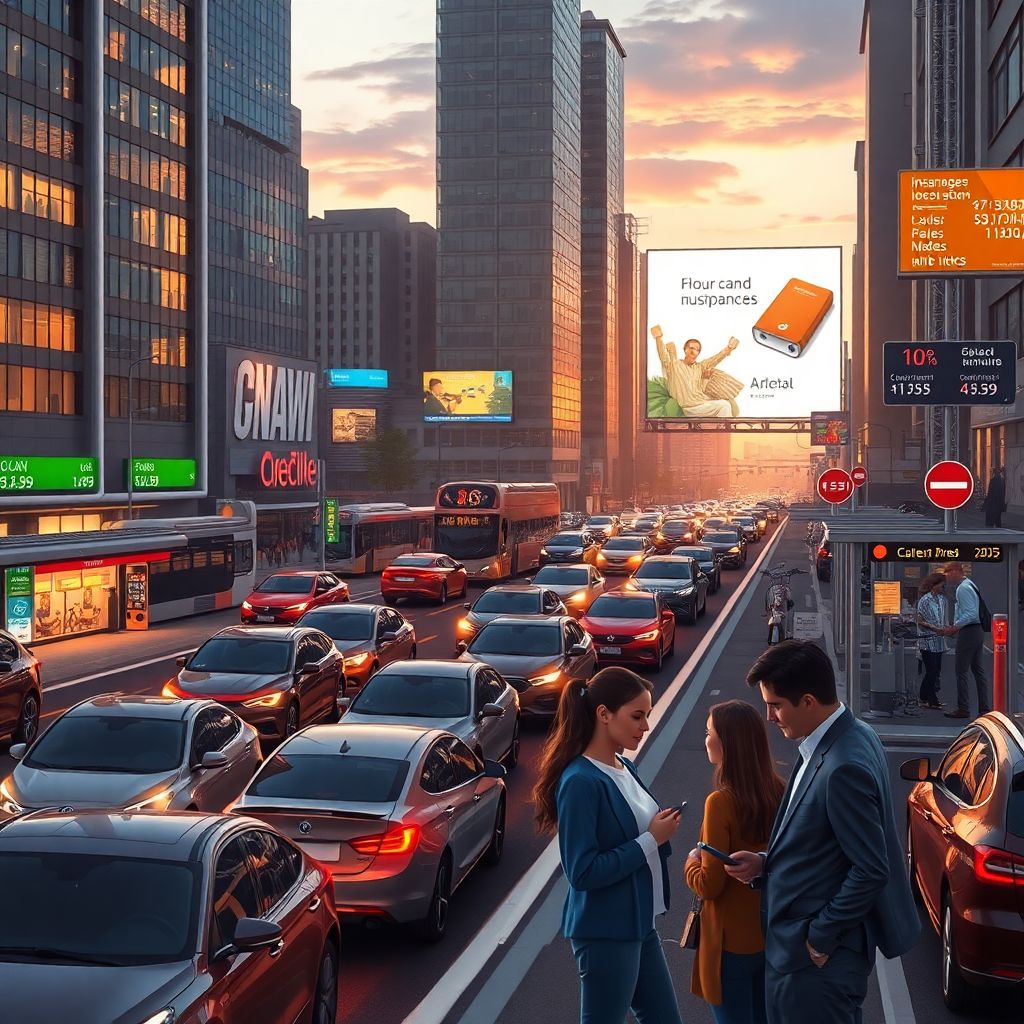
Why Transport Feels So Expensive in 2025
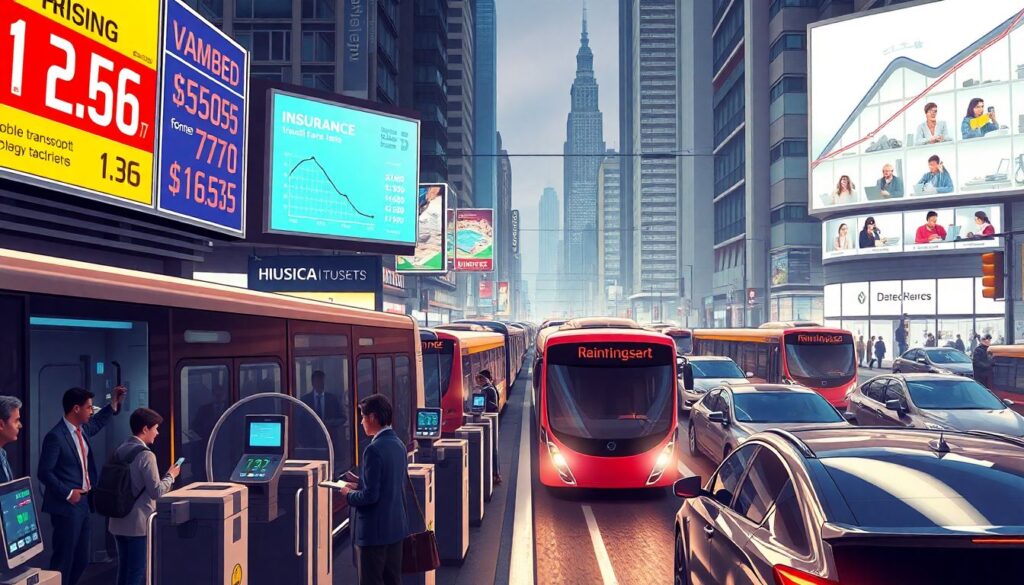
Transport costs have been creeping up for decades, but the pressure feels especially strong in 2025. Fuel is volatile, insurance is not getting cheaper, and even public transit in many cities keeps raising fares to cover infrastructure and labor.
Yet our mobility expectations have exploded. Remote work helped for a while, but video calls didn’t kill commuting. Many people now juggle hybrid schedules, side gigs, and social lives spread across larger urban regions. The result: you need flexibility, but your wallet is not amused.
Before diving into specific tactics, it helps to see *how we got here* and why the old “just buy a car and be done with it” playbook no longer works for many people.
A Short Historical Detour: How We Ended Up Car-Dependent
In the early 20th century, urban mobility was dominated by walking, trams, and trains. Cars existed, but they were a luxury toy. Then came mass production (Ford’s Model T), highway construction after World War II, and large-scale suburbanization in North America, Australia, and parts of Europe.
By the 1960s–1980s, car ownership was sold as a symbol of status and freedom. Zoning laws separated homes from jobs and shops, basically forcing people to drive. Public transport systems in many places were underfunded and lost ground.
From the 1990s onward, several trends reshaped transport economics:
– Budget airlines cut the cost of long-distance travel but shifted expectations about “cheap” mobility in general.
– Ride‑hailing apps (Uber, Lyft, etc.) in the 2010s promised convenience, but the era of heavily subsidized rides didn’t last.
– In the 2020 pandemic, use of buses and trains collapsed, revenues plunged, and systems had to raise prices or cut service later to survive.
– By 2025, we have a messy mix: car‑centric infrastructure, strained public transit, and lots of “micro-mobility” options like scooters and shared bikes.
All this means: saving money on transport today is less about one magic trick and more about designing a small “mobility system” for your life that balances cost, time, and comfort.
Let’s build that system step by step.
—
Step 1: Map Your Real Mobility Needs (Not Your Habits)
The biggest mistake beginners make is optimizing around current habits (“I drive everywhere”) instead of actual needs (“I need to get to place X at time Y with item Z”).
1.1. Do a One-Week Mobility Audit
For 7 days, write down every trip:
– Origin and destination
– Departure and arrival time
– Purpose (work, groceries, kids, social, leisure)
– Mode (car, bus, bike, walking, taxi, etc.)
– Cost (including parking, tolls, and tips)
– Approximate time (door to door)
You can just use a note app or spreadsheet. The idea is to see patterns.
Newcomer tip:
Don’t rely on memory. We systematically underestimate small trips (like “quick” car runs to the store) that add up in fuel and parking costs.
1.2. Classify Trips by Flexibility
Once you have a week or two of data, label each trip:
– Fixed time, fixed place – e.g., start of a shift, picking up a child at daycare.
– Flexible time, fixed place – e.g., going to the gym whenever.
– Flexible time, flexible place – e.g., meeting a friend who doesn’t care where or when exactly.
The more flexible a trip is, the easier it is to move it to a cheaper mode or off-peak time. This is your key lever to save money without sacrificing mobility.
—
Step 2: Reconsider Car Ownership vs. Car Access
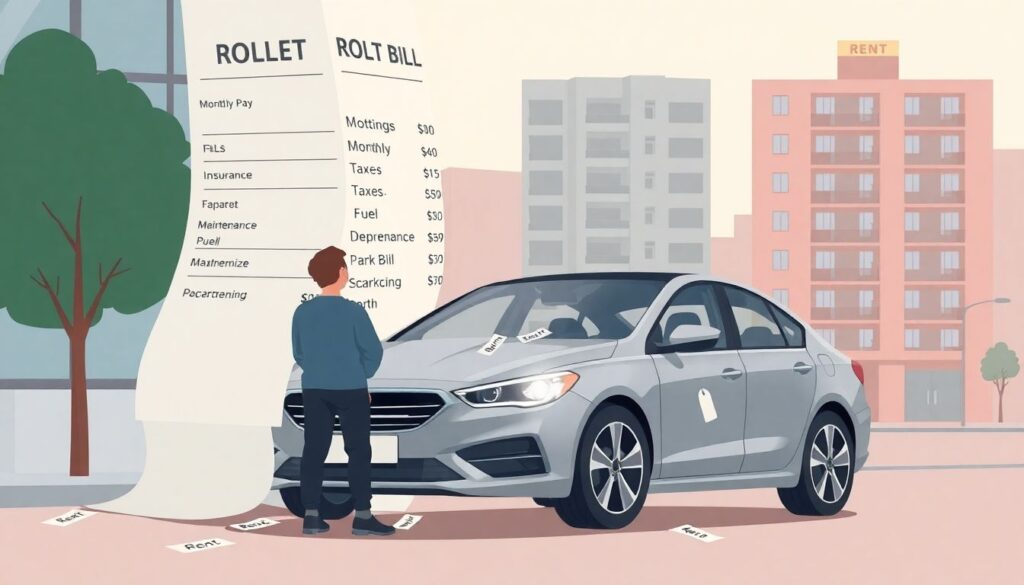
For decades, “own a car” was the default. In 2025, that default is expensive: monthly payments, insurance, taxes, fuel, maintenance, depreciation, parking. Many people don’t realize their car can cost more per month than their rent once all items are included.
2.1. Calculate Your True Cost of Car Ownership
Include at least:
– Monthly payment or lease
– Insurance
– Fuel (or electricity for EVs)
– Scheduled maintenance and repairs (use a yearly estimate divided by 12)
– Parking permits and typical parking fees
– Tolls and taxes
– Depreciation (rough estimate: annual value loss ÷ 12)
Now divide the monthly total by your monthly kilometers/miles driven. You’ll get a cost per km/mile that’s often shockingly high.
Common error:
Comparing a single bus ticket with the *fuel-only* cost per trip. That ignores 60–70% of car expenses.
2.2. When Ownership Still Makes Sense
Owning a car can be rational if you:
– Live in a low-density area with weak public transport.
– Regularly travel at odd hours (night shifts) when other modes are scarce.
– Carry heavy equipment or multiple passengers often.
– Drive enough that per‑mile costs drop below other alternatives.
Even in these cases, some optimization is possible:
– Downsize to a more fuel‑efficient or easier-to-maintain model.
– Adjust insurance coverage (e.g., higher deductible) after checking risks.
– Use correct tire pressures and regular maintenance to reduce fuel burn.
2.3. When Car Access Beats Car Ownership
If your audit shows that you use a car *intensively* only a few days per month, switching from ownership to *on‑demand access* can cut costs dramatically.
Options include:
– Traditional rental agencies
– Car‑sharing platforms (round-trip or free‑floating)
– Peer‑to‑peer car rentals
This is where affordable car rental deals and car‑sharing subscriptions come into play. Booking strategically for weekends or specific projects (moving, trips, bulk shopping) often undercuts the total monthly cost of owning a vehicle that sits idle most of the time.
Beginner warning:
Don’t just compare the daily rental price with your monthly car payment. Factor in how many days per month you truly *need* a car once other modes are optimized.
—
Step 3: Squeeze Maximum Value from Public Transportation
Public transit remains one of the most efficient ways to move lots of people cheaply, even when it feels imperfect.
3.1. Stop Paying Full Price Per Trip
If you use buses, trams, or metros several times a week, paying single fares is almost always the most expensive path.
Look for:
– Monthly or weekly passes
– Off-peak or evening tickets
– Multi-trip bundles (10‑ride, 20‑ride, etc.)
– Income-based or student discounts
This is exactly where discount public transportation passes shine. In many cities, a monthly pass becomes cheaper than pay‑as‑you‑go at around 15–20 round trips per month, which is just the typical commuting pattern.
3.2. Optimize for Reliability, Not Perfection
You don’t have to use public transit for *every* trip for it to be cost-effective. Even shifting your weekday commute to transit while keeping other trips by car or bike can cut your monthly transport spending by a third or more.
Short but useful tactic:
Combine public transit with walking or cycling for the “first/last mile” instead of using taxis to connect.
3.3. Typical Beginner Mistakes with Transit
– Ignoring time-of-day variations and always traveling during the most crowded, slowest window.
– Failing to check real-time apps and assuming schedules never change.
– Not registering a transit card and losing unused credit when the card is lost.
—
Step 4: Use Shared and On-Demand Transport Strategically
The last decade brought a whole ecosystem of on-demand mobility: ride‑hailing, shared bikes and scooters, car‑pooling apps. Used naively, they drain your budget; used well, they plug holes in your mobility grid cheaply.
4.1. Budget Ride Sharing Without the “Convenience Tax”
A car by yourself in a taxi or ride-hailing app is the most comfortable but usually the priciest road option. Splitting that ride changes the math. In many regions, there are budget ride sharing options that match riders headed in similar directions so the fare is divided.
To keep costs low:
– Be flexible on pick‑up time by 5–15 minutes.
– Accept slightly longer routes with additional passengers.
– Consider shared rides for airport transfers or long corridors where demand is high.
Common trap:
Using shared rides for very short hops inside dense city centers. Walking or cycling is often just as fast and free (or nearly free).
4.2. Micro‑Mobility: Bikes and Scooters
Shared bikes and e‑scooters exploded around 2018–2022, then went through consolidation. In 2025, the market is more stable but priced to be profitable, so trips are no longer “almost free”.
To use them economically:
– Prefer monthly passes for bike-share if you use it almost daily.
– Avoid paying per minute on e‑scooters for routes you know will be slow (hills, crowded sidewalks).
– For frequent use, owning a basic bike or a used e‑bike is usually cheaper than constant rentals.
Newcomer tip:
If you buy a bike, budget for a *serious* lock. A stolen bike is wasted capital and a forced return to more expensive modes.
4.3. cheap transportation services: What’s Actually Cheap?
Many platforms advertise cheap transportation services, but “cheap” often depends on distance, time of day, and surge pricing rules. Read the fine print:
– Check pricing at your typical commute time, not at 2 a.m.
– Compare base fare + per‑minute + per‑distance components.
– Watch out for “service fees” and “booking fees” added at checkout.
Use these services as fillers for awkward trips (late at night, poorly connected areas), not as your default.
—
Step 5: Design a Weekly “Mobility Mix”
Instead of asking “Which mode is best?”, ask “What *combination* gives me the best cost, time, and comfort trade‑off this week?”
5.1. Build a Simple Weekly Plan
After your audit and research, sketch something like:
– Work commute: bus/metro during the week with a monthly pass.
– Groceries: bulk shopping once a week with a rental car or car‑share.
– Gym/social trips: walking or bike-share when possible.
– Late nights: pre‑budgeted rideshare, shared if available.
This is your mobility “baseline”. You’ll still improvise, but now you have a low-cost default.
5.2. Use Subscriptions and Passes Intelligently
Mobility in 2025 is full of subscription models. They can either save you a lot or quietly drain your account.
Think about:
– Public transport passes
– Bike/scooter monthly bundles
– Car‑share membership plans
– Rideshare “loyalty” services
Only subscribe if:
– You can realistically use the quota (trips, minutes, kilometers).
– The effective per‑trip cost is lower than pay‑as‑you‑go.
– You’ve set a reminder to reevaluate in 1–3 months.
—
Step 6: Advanced Cost-Saving Tactics (When You’re Ready)
Once you’ve stabilized your mobility mix, there are deeper optimizations.
6.1. Temporal Optimization: Travel When It’s Cheaper
Many systems vary prices by time. You can save money by shifting your schedule slightly:
– Work arrival time adjusted by 30 minutes to dodge peak fares or traffic.
– Grocery or leisure trips moved to evenings or weekends when parking is cheaper.
– Long-distance trips booked on off-peak days.
If your employer allows, a hybrid schedule where you cluster on-site days (e.g., Tuesday–Thursday) can reduce both commuting frequency and the need for costly urban parking.
6.2. Spatial Optimization: Choose Where You Live (When Possible)
Historically, cheap housing far from city centers seemed like a clear win. But when you factor in long commutes, low cost commuter transport solutions and transit accessibility become just as important as rent.
If you’re moving or renegotiating housing:
– Compare *total* monthly cost = rent + transport.
– Map transit lines, cycling infrastructure, and walkability.
– Consider whether a closer but slightly pricier location lets you drop a car altogether.
6.3. Tech Tools: Navigation, Optimization, Forecasting
Modern navigation apps now incorporate:
– Real-time traffic and incident data.
– Public transport disruptions and replacement services.
– Fare estimations for car, transit, rideshare, and micro‑mobility.
Use them not just to pick the fastest route, but the cheapest acceptable route. Some apps let you explicitly filter by cost or emissions; that often correlates with money saved.
—
Common Pitfalls When Trying to Save on Transport
You don’t want cost optimization to backfire. Here are frequent errors people make:
7.1. Over-Optimizing for Money, Ignoring Time and Energy
Walking 50 minutes with heavy bags just to avoid a modest transit fare isn’t sustainable. Transport must remain viable for your energy level, health, and schedule.
Watch for:
– Chronic exhaustion because your “cheap” commute takes twice as long.
– Missed social or professional opportunities due to extremely inflexible transport choices.
– Safety risks (e.g., walking long distances at night through unsafe areas).
7.2. Failing to Include Hidden Costs
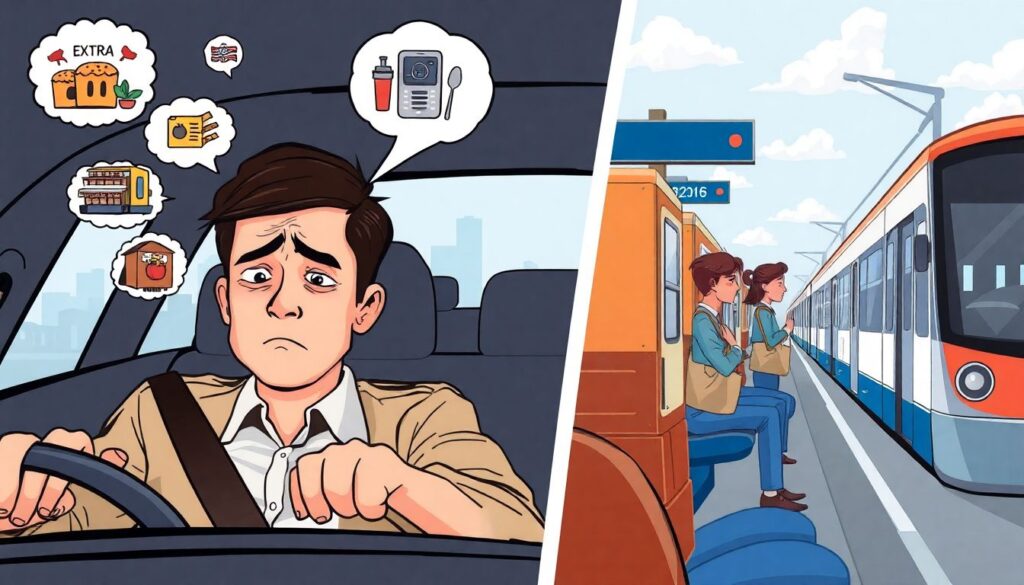
– Extra meals out because your long commute eliminates time to cook.
– Parking tickets and fines from risky parking.
– Wear and tear on your own health (e.g., stress from driving in heavy traffic daily).
Sometimes slightly more expensive transport that shortens your commute frees time and energy for income-earning activities or meaningful rest.
7.3. Long-Term Commitment to the Wrong Mode
Locking into a long car lease or an inflexible subscription when your life circumstances are changing (new job, moving, study) is risky.
Beginner advice:
In periods of transition, use flexible options (month-to-month passes, short-term rentals) until your routines stabilize.
—
Practical Starter Checklist
To make this concrete, here’s a simple sequence you can follow over the next month.
8.1. Week 1: Observe and Measure
– Track every trip and its cost.
– Mark which trips feel essential and which are optional or flexible.
8.2. Week 2: Research Options
– Check public transit passes and any local discounts.
– Compare car costs with car‑sharing and affordable car rental deals for your typical use cases.
– Look up shared bikes/scooters and ride‑sharing providers in your area.
8.3. Week 3: Run Experiments
Pick 1–2 changes:
– Try transit for your commute three days in a row.
– Replace a short car trip with walking or cycling.
– Use a shared ride with others for a weekend outing instead of solo driving.
Observe how it affects cost, time, and comfort.
8.4. Week 4: Lock in the Wins
– Commit to a monthly pass or subscription *only* if your experiment shows clear savings.
– Adjust recurring routines (gym, shopping, visits) to align with your new low-cost mobility pattern.
– Set a reminder for three months from now to reassess.
—
Looking Forward: Mobility After 2025
Transport systems are in flux. Cities are experimenting with congestion charges, integrated ticketing across modes, and even mobility-as-a-service bundles where one subscription covers buses, trains, bikes, and car‑share. Autonomous vehicles are progressing, but in 2025 they are still far from eliminating the cost of drivers on a large scale.
What’s unlikely to change soon is this: being deliberate beats being passive. People who make even a modest effort to understand their mobility patterns and costs consistently spend less without becoming “trapped at home”.
By designing your own mix of walking, cycling, public transit, shared rides, and occasional car access, you can keep your freedom to move while keeping your transport budget under control.
You don’t have to become a transport expert. Just treat mobility like any other part of your personal finances: measure it, question the old habits, test alternatives, and keep what works.