

Why Paying Off Student Debt Fast Feels So Hard (and Why It’s Still Possible)
Paying off student debt in just a few years can sound like a fantasy, especially if your balance is bigger than your first annual salary. But it’s not magic; it’s math plus behavior. The problem is that most advice is either painfully generic (“just budget better”) or unrealistically aggressive (“live on rice and beans in your parents’ basement for five years”). This guide sticks to realistic moves that a normal person can make, including some less obvious tactics people rarely talk about, so you actually see the balance dropping instead of just watching interest pile up forever.
How We Got Here: A Short History of Student Debt
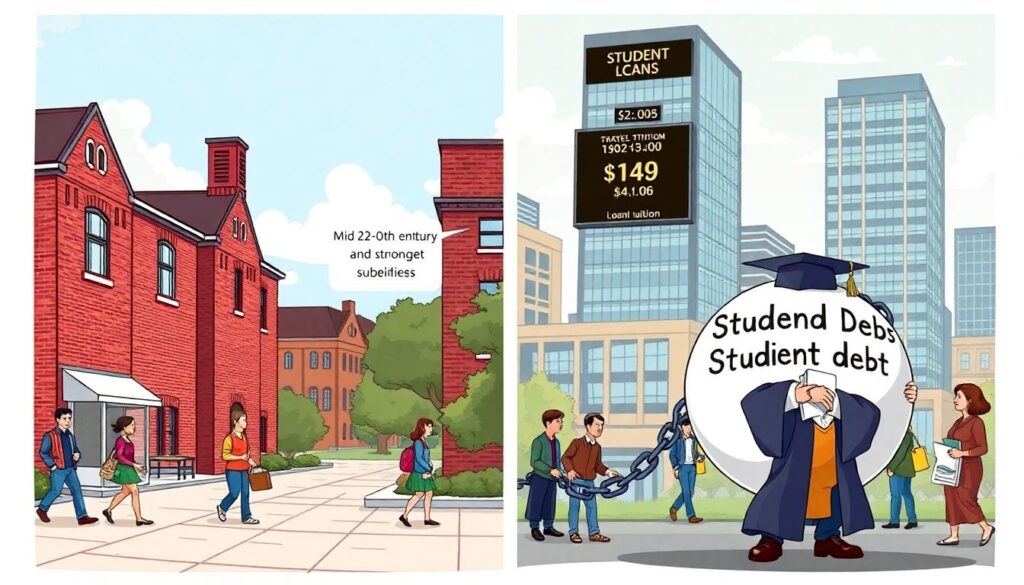
Student loans used to be a small bridge, not a lifelong mortgage. In the mid‑20th century, tuition was comparatively low, many state schools were heavily subsidized, and working a part‑time job could realistically cover a big chunk of costs. As college prices climbed faster than wages, families started relying on loans more heavily. Government‑backed loans made it easier to borrow, private lenders jumped in, and over time “take out loans, get the degree, figure it out later” became the default script. Fast‑forward a few decades, and millions of people now graduate with a mountain of debt and no clear roadmap, trying to figure out how to pay off student loans fast while still building a life that includes things like rent, food, and maybe even happiness.
Why Your Loan Feels So Sticky
Student loans are sticky mostly because of interest and minimum payments that are set to keep you in debt for 10–25 years. On a standard plan, you can pay for years and barely touch the principal, especially if your interest rate is high. Add in confusing loan types, shifting government programs, and advice that contradicts itself, and it’s easy to freeze. The key is to flip the default: instead of assuming you will drag the loan for decades, you design your finances around getting rid of it in a specific timeframe, even if that timeline is “four to seven years” instead of some internet‑famous “18 months or you’re a failure.” That shift in mindset changes which decisions feel reasonable—on housing, work, side income, and even relationships.
Basic Principles That Actually Work in Real Life
1. Treat Your Debt Like a Project, Not a Personality Trait
Your loan balance isn’t your identity; it’s a big project with a start, middle, and end. Give it a deadline, even if it’s rough: “I will be done in five years.” That one sentence changes your behavior. You stop asking “Can I afford the minimum?” and start asking “What monthly payment gets me done by that date?” A student loan payoff calculator comes in handy here: plug in your balance, rate, and target payoff date, then see what monthly number you need. The figure might feel aggressive at first, but it gives you something to shoot for. Instead of feeling guilty every time you spend money, you’re simply comparing each choice against that monthly target and adjusting as you go.
2. Focus on Interest Rate First, Emotion Second
Emotionally, you may hate a certain loan more than others—maybe it’s from a predatory lender or it has your parents’ name on it. Practically, the loan with the highest interest rate is the one draining you the fastest. One of the best strategies to pay off student loan debt quickly is the “avalanche” method: pay minimums on all loans, then throw every extra dollar at the highest‑rate one until it’s gone, then move to the next. If you need more motivation, you can still celebrate mini‑wins after each loan is knocked out, but resist the urge to chase the smallest balance if it’s also your cheapest debt. Think like an engineer, not a reality‑show contestant.
3. Squeeze Your Interest Rate Before You Squeeze Your Lifestyle
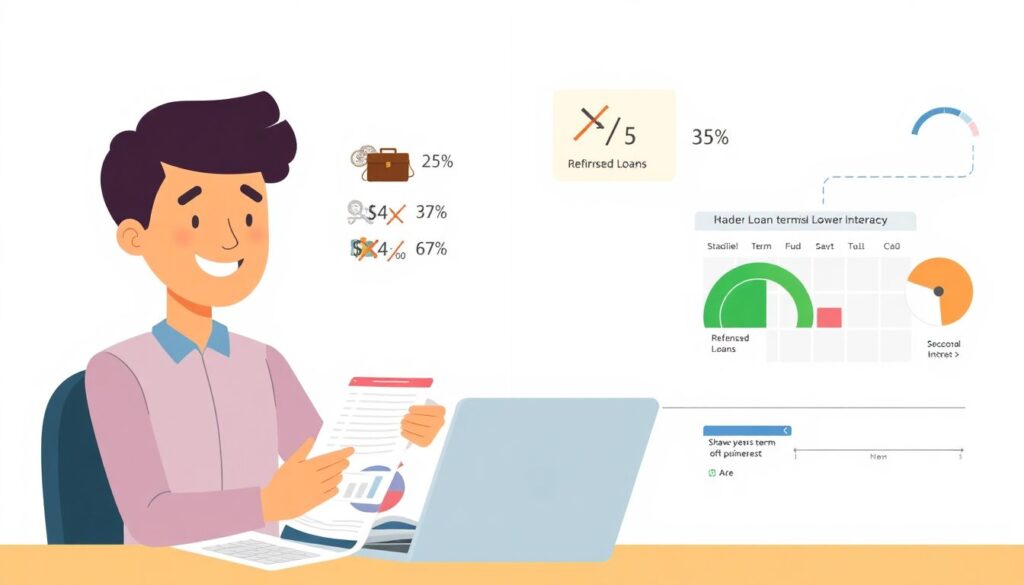
Before you cut every joy out of your budget, see if you can win on the interest side. Many people ignore student loan refinancing rates because they assume they won’t qualify or think it’s some scammy trap. In reality, if you have stable income and decent credit, a good refinance can shave years off your payoff timeline by lowering your rate several percentage points. You trade federal protections for private‑loan terms, so it’s not automatically smart for everyone, but run the numbers. If refinancing drops your rate from, say, 7% to 4% and you keep payments the same or higher, you dramatically reduce total interest. That’s like giving yourself a raise without working extra hours.
4. Build a “Debt Offense” Budget, Not a Bare‑Bones Survival Budget
Most budgets are defensive: “How do I avoid overdrafting?” Instead, design an offense‑focused budget: “How do I free the maximum cash for loan attacks without blowing up my mental health?” Start with your non‑negotiables (rent, groceries, insurance, basic fun) and then reverse‑engineer how much you can send to loans. Don’t forget irregular money—tax refunds, bonuses, small inheritances, side‑gig payouts. Instead of treating those as surprise shopping money, pre‑commit a percentage (say 70%) to your debt project. This way you don’t live like an ascetic every single day, but you still accelerate aggressively when windfalls show up.
Unconventional Ways to Crush Your Loans Faster
1. Use Geography as a Financial Tool
One of the most underrated moves is relocating strategically for a few years. Instead of asking only “Where do I want to live?” ask “Where could I live for five years that gives me a high income and low costs?” That might mean moving from an expensive coastal city to a midsize city with a reasonable rent‑to‑income ratio, or even going abroad to a country with lower living costs while working remotely for a U.S.‑based employer. If you keep your salary similar but slash rent by $600 a month, that’s $7,200 per year that can go straight to your loans. Over three years, that’s over $20k off your balance without a single hour of overtime.
2. Turn a Career Pivot into a Loan‑Payoff Weapon
Many people fear changing careers because it means starting at the bottom again, but a well‑timed pivot can actually shorten your debt timeline. If you move from a low‑growth field into one with faster salary jumps (think tech, data, certain trades, or specialized healthcare roles), your income can double within a few years. You might take a lateral or even small temporary pay cut to retrain, but if your new path catapults you into a higher bracket quickly, you can dedicate that new income to debt. The key is to pre‑commit: “Every raise and promotion for the next three years goes 80% to debt, 20% to lifestyle.” You get some quality of life improvement while still making brutally fast progress.
3. Treat a Side Hustle Like a 100% Debt Engine
Side gigs often flop because they’re fuzzy: maybe it’s for “extra spending money” or “saving for later.” If you want your loans gone, give the side hustle a single purpose—every dollar after tax attacks the principal. For instance, you drive rideshare two evenings a week, or freelance on weekends, with a simple rule: none of that income touches your regular bills. Because the side income is clearly earmarked, the trade‑off (less free time, more effort) feels tied to a visible goal: you watch your balance fall thousands of dollars faster each year. After the loans are dead, you can either quit the side hustle or redirect it to investing.
4. Use Your Employer Like a Financial Ally
More employers now offer programs that help pay off student loans as a benefit, but they don’t always advertise them loudly. Ask HR directly whether they have a student loan assistance program, tuition repayment benefits, or partnerships with refinancers. Sometimes the benefit is modest—say, $100 a month toward your loans—but over three years that’s more than $3,000 of free principal reduction. Some roles in healthcare, public service, or education also come with formal loan forgiveness options; others include signing bonuses you can earmark for debt. Build this into your job‑search criteria: a slightly lower salary with hefty loan contributions might beat a “higher” salary with no help once you compare the total package.
5. Create a “Mini Retirement from Debt” Instead of Burning Out
Aggressive payoff plans often fail because people commit to a brutal lifestyle that’s not sustainable. One unconventional approach is to design short sprints and scheduled breaks. For example, you do six months of heavy payments and extra work, then one month where you drop to the minimums and rest, maybe use your time to reconnect socially or travel cheaply. You still move faster than a normal 10‑year plan, but you design the process around your energy levels rather than pretending you’re a robot. This on‑off pattern can keep you in the game long enough to actually finish, instead of flaming out after a year of misery.
Examples of Realistic Payoff Plans
Example 1: The Steady Climber
Imagine Alex, who has $45,000 in loans at about 6% interest and earns $55,000 a year. Instead of accepting a 10‑year plan, Alex commits to a six‑year finish. A quick how to pay off student loans fast search leads to using a calculator: the monthly payment to be done in six years is roughly double the standard minimum. Alex grabs a roommate to cut rent by $400 a month, cancels a car lease for a cheaper used car, and starts a small weekend photography side gig that brings in $300 after taxes. Almost all of that extra cash goes straight to the loans. The lifestyle isn’t glamorous, but it’s also not complete deprivation: there’s still a modest dining‑out and entertainment budget each month.
Example 2: The Geographic Switch
Now consider Brianna, who owes $70,000 in a mix of federal and private loans at an average 7% interest and works remotely earning $75,000. Instead of staying in a high‑rent city, she moves to a smaller city where rent is $800 less per month. She keeps the same job, refinances her private loans at lower student loan refinancing rates while leaving federal ones untouched for flexibility, and keeps her old “big city” budget for everything except housing. The $800 a month she saves plus one annual bonus go straight to debt. Over four years, she clears the private loans completely and slashes the federal balance, with more of each payment hitting principal thanks to the reduced rate.
Example 3: The Career Pivot Strategist
Finally, picture Marco, who has $90,000 in graduate school loans and is stuck in a $48,000‑a‑year role with limited growth. He decides on a deliberate pivot into a more lucrative field—data analytics. For 12 months he studies evenings, takes a lower‑paid but high‑growth entry role at $50,000, and keeps his lifestyle flat. Within three years, promotions push him to $85,000. Marco keeps spending at roughly his old level and sends most of the new income to his loans. He also uses a student loan payoff calculator every few months to see how each raise can pull his payoff date closer. In year six after graduation, he makes his last payment, helped largely by that early decision to move into a different career lane.
Common Myths That Keep People Stuck
Myth 1: “It’s Pointless to Pay Extra; I’ll Never Make a Dent”
This belief comes from staring at giant balances and feeling small. The truth is that extra payments matter massively when they’re consistent and targeted. When you send even $100 extra a month to principal on a 6–7% loan, you’re cutting off years of future interest. The effect multiplies if that extra becomes $300, then $500 as your income grows or your rent falls. The balance doesn’t move fast in the first few months, but compound math is quietly flipping in your favor. The debt snowball doesn’t roll itself; you push it a while before gravity helps.
Myth 2: “Refinancing Is Always a Trap”
Refinancing is neither hero nor villain; it’s a tool. It can be harmful if you expect to use federal protections like income‑driven repayment or forgiveness and then lock yourself into a private loan. But it can also be a game‑changer if your situation is stable and you’re committed to a fast payoff. The key is clarity: you only refinance the portion of debt you’re sure you want to knock out quickly, you compare multiple offers, and you avoid extending the term just to get a slightly lower monthly payment. The goal is to reduce interest paid over the life of the loan, not to make it more comfortable to drag the loan around forever.
Myth 3: “All Help Programs Are Too Good to Be True”
There’s a lot of skepticism about programs that help pay off student loans, and some of it is justified—fine print exists, and rules can change. But dismissing them all outright means leaving real money on the table. Public service, teaching in certain areas, military service, and some healthcare roles all have legit schemes that either forgive a chunk of your balance after a set number of years or contribute monthly amounts. The catch is usually time and documentation: you have to stick with a role, certify employment properly, and keep payments up to date. That’s not “free money with no strings,” but it can absolutely be part of a multi‑year payoff strategy.
Myth 4: “I Must Choose Between Having a Life and Paying Off Debt”
This all‑or‑nothing mindset derails people quickly. You don’t have to live like a monk for five years or give up on getting ahead. A more sustainable mindset is: “I will compress my debt payoff into a few focused years, but I’ll design it to be hard and meaningful, not miserable and endless.” That might mean saying no to some big vacations, yes to smaller experiences, and being intentional about where your money brings you the most happiness. When you build in small rewards and schedule breaks, your plan stops feeling like punishment and starts feeling like training—intense, but with a clear finish line and benefits that last your entire financial life.
Putting It All Together: Your 5‑Step Action Plan
1. Map your situation clearly. List every loan, rate, and balance. Use a student loan payoff calculator to see different payoff timelines and monthly payment options. Pick a realistic target (for example, four to seven years) rather than just aiming for “as fast as possible” with no specifics attached.
2. Lower interest where it makes sense. Look into whether refinancing, consolidation, or switching repayment plans can reduce your effective rate without sabotaging federal protections you actually need. Run the numbers, not just your feelings.
3. Engineer a cash surplus. Tweak your housing, transportation, subscriptions, and side income until you free a concrete monthly amount for extra payments. Make those payments automatic so they don’t depend on willpower.
4. Design your lifestyle intentionally. Decide which comforts you’ll keep and which you’ll pause during your payoff years. Schedule sprints and rests so the plan is tough but human. Communicate your goals to friends or a partner so social pressure works with you, not against you.
5. Re‑evaluate every 6–12 months. As your income changes, revisit your numbers and push the timeline shorter when you can. Celebrate each loan you kill, then immediately redirect that freed‑up payment to the next one so your momentum never fully resets.
Final Thoughts: A Few Years of Focus for Decades of Freedom
Student debt can make you feel like your life is on hold, but it doesn’t have to be your permanent background noise. With a clear deadline, smart use of interest‑rate tools, intentional lifestyle choices, and some unconventional levers like geography, career pivots, and employer benefits, it’s completely realistic to pay off a substantial balance in just a few years. The trade‑off is not “suffer endlessly” versus “ignore it and hope for the best”; it’s “focus deeply for a while” so that the rest of your financial life is built on solid ground instead of on top of a loan statement that never seems to shrink.
Комментарии