

Historical Context of Insurance Needs
From Mutual Aid to Modern Risk Pools
Insurance needs did not appear overnight; they evolved alongside trade, urbanization and financial markets. Early guilds and merchant associations essentially ran primitive risk pools, where members compensated each other after fires or shipwrecks. Over time, governments and private underwriters formalized these arrangements into contracts with defined coverage, exclusions and premiums. As industrialization increased both the frequency and severity of losses, insurance shifted from a community favor to a specialized financial service. Understanding this trajectory helps explain why modern policies are dense with clauses: they encode centuries of legal disputes, actuarial refinements and regulatory interventions aimed at balancing consumer protection with insurer solvency.
Digital Transformation and Online Quotes
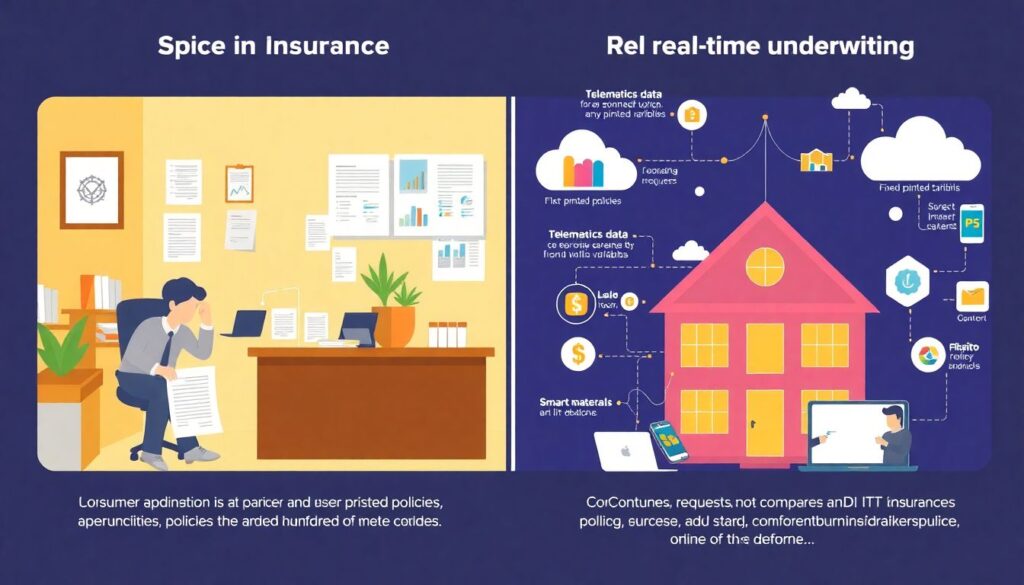
The last two decades added a new layer: digital distribution and real‑time underwriting. Where agents once relied on paper applications and fixed tariffs, algorithms now price policies using hundreds of variables, from telematics in your car to building materials in your home. Consumers can now request an insurance quote online in minutes and receive instant indicative prices. This speed is convenient but also shifts more analytical work to you: instead of an agent filtering options, you must interpret coverage limits, deductibles and riders yourself. As a result, understanding your own risk profile has become just as important as understanding insurer offerings.
Core Principles of Assessing Insurance Needs
Risk Identification and Quantification
Before choosing products, you need a structured view of risk exposure. In technical terms, this means mapping events by probability and impact: how likely is something to happen, and how financially painful would it be? Medical emergencies, liability claims and long‑term disability typically have low probability but extremely high impact, so they warrant priority coverage. Everyday losses like a cracked phone screen are frequent but relatively cheap; insuring them may be inefficient. In practice, you convert this analysis into coverage types, sum insured and deductibles. The goal is not zero risk, but an economically rational transfer of catastrophic exposures from your balance sheet to an insurer.
Prioritization, Budget and Coverage Depth
Once risks are mapped, you must fit protection into a finite budget. This is where trade‑offs become explicit. Many people chase low monthly premiums and “affordable health insurance plans” without checking whether out‑of‑pocket maximums could bankrupt them during serious illness. Others over‑insure minor assets, like electronics, while ignoring income‑replacement coverage. A practical sequence is: first, protect human capital (health, disability, life insurance for families), then secure essential physical assets (home, vehicle), and only then consider optional add‑ons. Within each category, adjust deductibles and limits so that routine losses remain self‑funded, while rare but devastating events are fully transferred to the insurer.
Step‑by‑Step Approach to Define Needs
1. List your assets, income sources, and dependents, then assign a rough monetary value to each.
2. For every major risk (death, illness, accident, property loss, liability), estimate financial impact and likelihood.
3. Decide which risks you will retain, which you will reduce via behavior, and which you will transfer via insurance.
Practical Approaches to Designing Your Coverage
DIY Research and Aggregator Platforms
One approach is fully do‑it‑yourself, using comparison sites and carrier websites. This method lets you gather dozens of offers, target the best car insurance rates, and compare home insurance policies on premiums, limits and optional endorsements. You can request an insurance quote online from several providers in parallel, exporting results into your own spreadsheet for analysis. The advantage is transparency and control; the downside is cognitive overload. Policy wording, sub‑limits and exclusions are not standardized, so “cheaper” can mean “narrower” in ways that only become clear after a claim. DIY suits people who are comfortable reading contracts and doing quantitative trade‑off analysis.
Using Brokers and Financial Planners

A second approach relies on intermediaries: independent brokers or fee‑based financial planners. They translate your risk profile into product configurations, help optimize riders, and benchmark you against market norms. For complex needs—such as layered liability, business coverage, or sophisticated life insurance for families with estate‑planning goals—this expertise can prevent expensive mistakes. The trade‑off is potential conflicts of interest if advisors are compensated by commissions, nudging them toward products that pay more rather than those best aligned with your needs. Mitigating this requires you to ask explicitly about compensation models and to request multiple structured alternatives, not a single “recommended” option.
Hybrid Strategy and Periodic Review
A third, often more robust, approach mixes DIY benchmarking with professional input. You might first scan the market yourself, exploring typical premiums and features for your profile, then engage a broker to stress‑test your assumptions. Every two to three years—or after major life events—you repeat this process: re‑assess risks, update coverage, and check whether incumbents remain competitive. In this model, online tools help you quantify trade‑offs, while advisors help decode legal and tax nuances. This hybrid strategy reduces information asymmetry without forcing you to become a full‑time insurance analyst, yet still anchors decisions in structured, data‑driven comparisons.
Real‑World Implementation Examples
Young Family with Limited Budget
Consider a couple with one child, variable income and a tight monthly budget. Their intuitive focus may be on pediatric care and minor health expenses, but the real systemic risks are loss of the main earner’s income and major medical events. They might select moderately high‑deductible yet comprehensive medical coverage, prioritize term life insurance for families at 10–15 times annual income, and add basic disability insurance. To contain costs, they could skip low‑value add‑ons like gadget coverage and roadside assistance bundles. Using this framework, every euro or dollar of premium is tied to a clearly identified catastrophic risk.
Homeowner with Car and Significant Assets

Now take a homeowner with a paid‑off house, one car and meaningful savings. Their key concerns are property damage, liability, and large shocks from accidents or lawsuits. They should systematically compare home insurance policies not just on price, but on rebuilding cost basis, water damage clauses and liability limits. For the vehicle, chasing the best car insurance rates is sensible only after normalizing for coverage—collision, comprehensive, and uninsured motorist limits. A slightly higher premium may be justified by broader protections or stronger claims service. Umbrella liability coverage can cost little relative to the substantial increase in protection across home and auto.
Common Misconceptions and How to Avoid Them
Price‑Only Shopping and the Value Fallacy
A prevalent misconception is that insurance is a homogeneous commodity and that the lowest quote is always optimal. This leads people to sort offers solely by premium, ignoring coverage breadth and insurer reliability. In reality, two policies with similar prices can differ drastically in sub‑limits, claim handling practices and exclusions. A low premium may reflect aggressive underwriting assumptions or narrow coverage rather than real efficiency. When you receive an insurance quote online, treat it as a starting point for deeper analysis, not a final decision metric. Evaluating value means weighing claim scenarios, not just monthly cost.
The “Set and Forget” Coverage Myth
Another widespread error is treating insurance as a one‑off transaction rather than a dynamic component of financial planning. People buy policies after a life event, then leave them untouched for a decade while income, dependents and assets change. The result is misalignment: over‑insurance in some areas and dangerous gaps in others. Rising healthcare costs can quietly erode the adequacy of once “affordable health insurance plans,” while inflation and property upgrades can outpace static home coverage limits. Instituting a regular review cycle—ideally tied to tax season or major budget revisions—keeps your risk transfer strategy synchronized with your actual life situation.