

Why Personal Finance for Kids Matters More Than Ever
Teaching kids about money isn’t about turning your 8‑year‑old into a mini Wall Street trader. It’s about giving them enough understanding to avoid the most common money traps adults fall into: debt they don’t understand, emotional shopping, and “I have no idea where my paycheck went.” When children get simple, hands‑on lessons early, they grow up seeing money not as something mysterious or scary, but as a tool they can control. The basics of personal finance for kids are actually pretty simple: learn how money flows in and out, decide what you want, make a plan, and check if it’s working. The trick is to explain this in a way that feels like a game, not a lecture, and to repeat the same ideas through real‑life situations at home, in shops, and even online.
Key Ideas to Explain in Kid Language
Income, Spending, Saving and Giving
For a child, “income” might be pocket money, birthday cash from grandma, or payment for walking a neighbor’s dog. “Spending” is the fun, obvious part: toys, snacks, game skins. “Saving” is today’s self being kind to future self. “Giving” is using money to help others or support causes they care about. Instead of dropping these words once and forgetting, repeat them during daily life: “You have 5 dollars income from chores this week. How much do you want to spend now, save for that LEGO set, or give to the animal shelter?” Over time kids start to see that every coin has four possible “roads,” and they get to choose which road to send it down.
Wants vs. Needs Without Boring Lectures
A classic mistake is turning “wants vs. needs” into a moral sermon. Kids switch off fast. Try this instead: whenever your child asks for something, play a quick game—“Need, Want, or Totally Extra?” Needs: food, basic clothes, school supplies. Wants: cinema tickets, branded shoes, a cooler backpack. Totally Extra: the third plushie this week. No punishment, just practice labeling. You can even let them choose one “Totally Extra” item per month if their saving goal is on track. This way kids don’t associate money talk with constant “no,” but with conscious decisions and trade‑offs that they control.
Necessary Tools: Turning Abstract Money Into Something Kids Can See
Old‑School Tools That Still Work
The simplest toolkit for teaching kids personal finance is surprisingly low‑tech: three or four physical containers. Call them “Spend,” “Save,” “Give,” and optionally “Grow” (for investing later). Clear jars work better than piggy banks because children can literally watch the money levels rise and fall. Stick on labels they design themselves. Each time money arrives, you both decide how much goes into each jar. Over a few weeks, they see that “Save” grows slowly but powerfully, while “Spend” empties quickly. That physical experience does more than a dozen lectures on interest or long‑term goals.
Smart Digital Helpers (Used Creatively)
Once kids are ready for digital tools, you can introduce the tech side of personal finance in a playful way. The best money management apps for kids often come with visual goals, simple graphs, and chore trackers. Don’t just use them to nag about tasks; use them to test mini‑experiments. For example, agree on a week where the child saves 50% of “income,” then compare the chart with a week where they save only 10%. Let them see how different habits change the lines. An online allowance tracker for children can also help you stop being the “Bad Cop Accountant,” because the rules and amounts are visible to everyone, not just “in your head.”
Kid‑Friendly Banking Tools
When your child is ready for more responsibility, you can step beyond cash and jars. Some modern debit cards for kids with parental controls allow you to set spending limits per day, block certain stores, and get instant notifications. That means you can safely let a pre‑teen buy their own bus ticket or snack while still having a safety net. Instead of using these only as security tools, turn them into teaching tools: once a month, sit together and review the transaction list. Ask simple questions: “Which spending made you really happy? Which one felt kind of pointless a day later?” Now the bank app becomes a mirror showing their habits back to them.
A Step‑by‑Step Process to Build Money Skills
Step 1: Start with a Story, Not a Spreadsheet
Kids remember stories, not rules. Begin with a short, real story from your life: “When I was 20, I bought a phone on credit I couldn’t really afford. I paid for it for two years and couldn’t go on trips with my friends.” Or invent a character—“Mia has 10 dollars a week; let’s see what happens if she spends everything vs. if she saves half.” Put simple numbers and trade‑offs into these stories. Children quickly grasp that every choice has a hidden price, and they start looking for those hidden prices in their own decisions.
Step 2: Create a Mini “Family Money System”
Instead of random pocket money and occasional cash gifts, set up a predictable system. For example, every Saturday is “Payday.” Agree on what is paid: daily chores, extra tasks, or just a base allowance. Split the money into jars or app categories together. Then add one twist that makes this system feel like a game: a weekly “Money Mission.” That might be “Find one cheaper alternative to something you want” or “Save an extra 1 dollar compared to last week.” Over time, the pattern (income → plan → action → review) becomes automatic and doesn’t feel forced.
Step 3: Give Them Real Choices and Real Consequences
If you always step in to “rescue” them from bad purchases, they never learn. Agree in advance which areas are their responsibility. For example, you cover basic clothes, they pay for accessories and trending items. If they blow their money on impulse buys and then can’t afford the hoodie they wanted, let that discomfort do its quiet teaching. Just don’t add “I told you so” on top. Later, gently ask, “What would you do differently next time?” This reflection turns mistakes into lessons, not into shame.
Step 4: Add Goals That Actually Excite Them
Saving “just because” is boring. Help your child pick a specific goal that lights them up: a big LEGO set, a trip to the amusement park, extra game credits, or even donating a chunk to help animals. Turn that into a visible target—print a picture, draw a progress bar, and color it in as the “Save” jar grows. Many financial literacy programs for kids talk about goal‑setting, but you can go further: let them choose between multiple goals. “You can reach Goal A faster or Goal B later but bigger; which path do you want?” Now they’re practicing delayed gratification in a way that feels empowering, not restrictive.
Step 5: Introduce “Future You” and Simple Investing
Even younger children can grasp the idea of “Future You.” Explain it like this: “There is a future version of you who still loves cool stuff and good food. When you save or invest, you’re sending gifts to that Future You.” Next, introduce the very basics of investing without complex jargon. You might say, “Saving is like hiding money in a box; investing is like planting it in a garden so it can grow.” For older kids, you can simulate the stock market using play money or a demo account. Let them “invest” in three pretend companies and track what would have happened each week. This keeps things safe but realistic, and it beats dry textbook exercises.
Step 6: Do a Monthly “Money Check‑In” Together
Schedule a short family “money check‑in” once a month. Keep it casual: hot chocolate, 10–15 minutes, no lectures. Look at what came in, what was spent, how the goals are going, and what they’d like to change. Let the child speak first. Ask open questions like, “What are you proud of this month?” and “Anything you wish had gone differently?” This regular reflection turns money into a normal topic, not a taboo subject. Over time, you model what many adults struggle with: honestly checking in with your finances without panic or blame.
Non‑Standard, Creative Ways to Teach Money
Turn Your Home Into a Tiny Economy
Think of your household as a mini‑country and let your child help manage part of it. For example, give them a “snack budget” for the week. They decide what to buy within that amount—cookies, fruit, yogurt, or chocolate. If they blow it all on day one, there’s no second budget. If they manage it well, maybe they keep any leftovers as a bonus. You can even let older kids choose and price certain “services” at home: maybe they run a “laundry business” for the family and get paid per load. This sends a strong message: money is tied to value and effort, not just to adults giving handouts.
Use Games, But Hack the Rules
Board games like Monopoly or The Game of Life are classics, but you can customize them to teach modern realities. For example, add “unexpected expense” cards: “Your phone screen cracked, pay 30,” or “You forgot to cancel a subscription, lose 10 each turn until you remember.” Build in “opportunity” cards like “Free online course helps you earn more, throw again” to slip in the idea that a personal finance for kids course or skills training can be more valuable than short‑term spending. After every game, discuss one or two moments: “Where did things go wrong? What clever move worked well?” Kids learn to spot patterns instead of just chasing wins.
Use Technology as a Training Ground, Not Just a Threat
Kids already live in a digital world, so use that to your advantage. Instead of only saying “you’re spending too much time online,” try creating financial mini‑challenges tied to their tech habits. For instance, link a certain amount of allowance to creating something useful online: a short review of a book, designing a logo for their “business,” or researching cheaper options for a family purchase. If your child is using a kid banking app, treat it as a simulation lab, not a surveillance tool. Let them experiment with small weekly budgets: “This week you run the ‘entertainment department’ for the family. You have 20 dollars to plan something fun for everyone.” They learn planning, comparison, and responsibility in a highly motivating way.
When to Use Courses, Apps and External Help
Courses and Apps That Complement Home Lessons
Not every parent feels confident teaching money skills, and that’s fine. A well‑designed personal finance for kids course can give you ready‑made examples, exercises, and age‑appropriate explanations. Look for options that include interactive tasks and real‑life scenarios, not just videos to watch passively. Combine that with digital tools your child already likes. Some of the best money management apps for kids let you set goals, track chores, and even simulate interest on savings. Use the app to reinforce whatever the course or your household system is teaching, so the child sees the same key ideas—income, choices, goals, reflection—from different angles.
Making Schools and Community Work for You
If your child’s school offers any financial literacy programs for kids, don’t treat them as “extra homework.” Ask the teacher what concepts they’re covering and mirror those at home with tiny experiments. If they talk about budgeting, let your child help plan a birthday party budget. If they learn about saving vs borrowing, discuss how you decided whether to take a loan for a car or save up. You can also look for community activities—youth entrepreneurship clubs, charity projects, or family workshops. When kids see that money skills matter outside the home, they take the subject more seriously without feeling pressured.
Troubleshooting: What to Do When Things Go Sideways
Common Problems and How to Fix Them
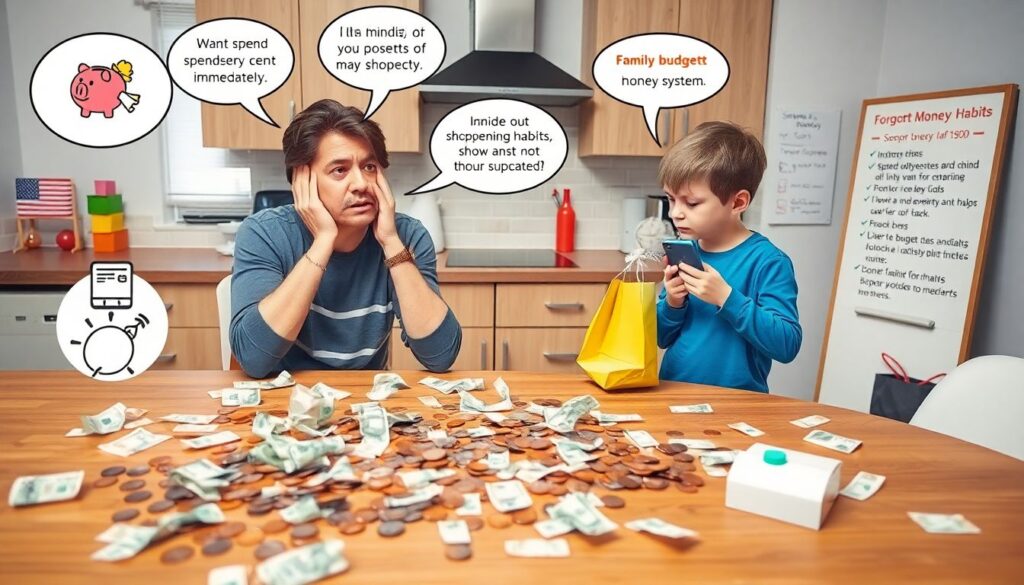
1. Your child spends every cent immediately
2. They don’t care about saving, even with a goal
3. Money talks turn into arguments
4. They hide purchases or lie about spending
5. You keep forgetting the system you set up
If your child spends everything instantly, don’t just tighten control. Instead, shrink the time horizon. Give very small, more frequent amounts and shorter goals—a weekend goal instead of a month. Let them feel “quick wins” from waiting just a few days. If they don’t care about saving, maybe the goal isn’t truly theirs. Ask what they would choose if there were no limits for a moment, then help scale that dream down into a realistic first step. You want their eyes to light up when they talk about the goal, otherwise you’re pushing a cart they don’t want.
Dealing with Conflict and Sneaky Behavior
Arguments usually mean that either the rules are unclear, or the child feels they have zero voice in decisions. Review the rules together and invite them to suggest one change. Even if you can’t accept every idea, approving one or two gives them a sense of ownership. If they start hiding purchases, resist the urge to explode. See it as a signal that they’re scared of your reaction. Have a calm chat: “I care more about honesty than about what you bought. Let’s look at this together and see what we can learn.” Over time, the goal is to be their advisor, not their financial police officer.
When Parents’ Own Money Stress Gets in the Way
Many adults carry their own money fears—debts, unstable income, or childhood scarcity. Kids feel that tension even if you never mention numbers. You don’t have to pretend everything is perfect, but try to frame money challenges as solvable puzzles, not disasters. For example: “We’re tightening our budget for a while so we can get rid of this loan faster. Here’s what we’re changing.” Consider learning alongside your child: take a beginner budgeting class, read a easy money book together, or explore a simple investment simulator side by side. You don’t need to be a flawless expert. Modeling curiosity and steady improvement is far more powerful than pretending you’ve always done everything right.
Wrapping Up: Aim for Progress, Not Perfection
Teaching kids personal finance isn’t about raising a flawless financial genius. It’s about helping them build a few sturdy habits: noticing where money goes, thinking before spending, setting goals that excite them, and reviewing what worked or didn’t. With some jars or envelopes, a good app or an online allowance tracker for children, maybe a kid‑friendly card or two, and honest conversations, you give them a head start many adults wish they’d had. Start small, stay consistent, and treat every mistake as fresh data, not failure. If your child reaches adulthood unafraid of money, aware of their choices, and willing to keep learning, you’ve already taught them the most important financial lesson there is.