
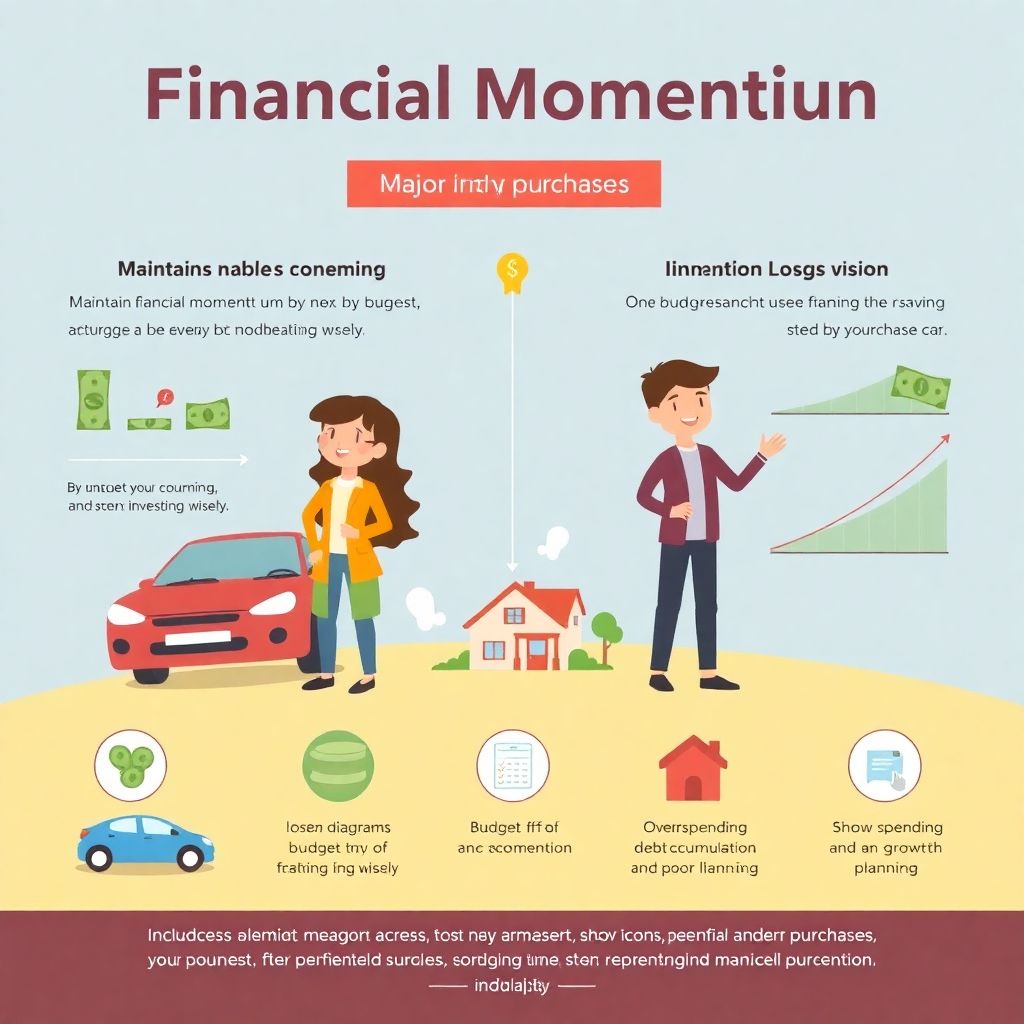
Understanding Financial Momentum in the Context of Major Purchases

Financial momentum refers to the sustained ability to manage, grow, and optimize personal capital over time, even after significant expenditures. A “big purchase” is any financial transaction that substantially reduces liquid assets or incurs long-term liabilities—such as buying a car, home, or expensive equipment. Maintaining momentum post-purchase involves preserving cash flow, minimizing debt burden, and continuing to meet financial objectives like saving and investing. Losing momentum often results in prolonged debt cycles, depleted emergency funds, and stagnation in wealth accumulation.
Common Post-Purchase Setbacks for Inexperienced Buyers
Novices often miscalculate the total cost of ownership. For instance, purchasing a vehicle involves not only the sticker price but also insurance, maintenance, registration, and depreciation. A frequent mistake is underestimating these auxiliary costs, leading to budget overruns. Another pitfall is the psychological phenomenon of “spending inertia”—once a large amount is spent, buyers may feel desensitized to further expenditures, increasing discretionary spending.
Typical beginner errors include:
– Ignoring opportunity cost by depleting investment capital for a depreciating asset
– Failing to adjust post-purchase budgets to reflect new financial constraints
– Relying excessively on credit, increasing long-term interest obligations
Post-Purchase Cash Flow Recalibration
To maintain momentum, recalibrating cash flow is critical. This involves rebalancing income and expenditures to reflect the new financial reality. The first step is updating a detailed cash flow diagram: income streams (salary, dividends, side income) on one axis, and fixed/variable expenses on the other. After a major purchase, fixed expenses often increase—e.g., mortgage payments or insurance premiums. Overlaying this diagram with a pre-purchase version helps visualize financial shifts and identify inefficiencies.
Key recalibration techniques:
– Implement zero-based budgeting to allocate every dollar of income
– Prioritize high-interest debt repayments to reduce financial drag
– Automate savings contributions to preserve investment growth
Comparative Analysis: Maintaining vs. Losing Momentum
Consider two individuals who each purchase a $30,000 car. Person A maintains financial momentum by financing only 50% of the car, keeping emergency reserves intact, and continuing to invest 15% of their income. Person B, however, finances the full amount over 72 months, suspends retirement contributions, and uses their emergency fund for the down payment. Over time, Person A sustains liquidity and capital growth, while Person B faces higher interest costs and reduced financial flexibility.
The diagrammatic comparison would show diverging trajectories:
– Person A’s net worth curve resumes upward slope within 3–6 months
– Person B’s curve flattens or declines due to compounding liabilities
Strategies to Preserve Financial Agility
Following a significant purchase, liquidity and adaptability are paramount. One effective strategy is to establish a “recovery buffer”—a short-term savings goal that rebuilds financial reserves within a set timeframe (e.g., 3–6 months). Additionally, dynamic budgeting tools can assist in tracking deviations from financial targets. Avoiding lifestyle inflation is also essential; maintaining pre-purchase spending habits prevents further strain on resources.
Recommended practices:
– Set post-purchase financial KPIs (e.g., savings rate, debt-to-income ratio)
– Use financial dashboards to monitor real-time progress
– Reassess goals quarterly to adapt to changing circumstances
Case Example: Home Purchase Recovery Plan

After purchasing a $250,000 home with a 20% down payment, a buyer may experience a liquidity drop. To maintain momentum, they can implement a structured recovery plan: limit discretionary spending for 6 months, redirect bonuses toward rebuilding emergency savings, and schedule biweekly mortgage payments to reduce interest. This approach not only restores financial stability but also improves long-term equity accumulation.
Such proactive measures contrast sharply with passive recovery, where the buyer continues spending as before, accumulating credit card debt and delaying financial goals. The difference in outcomes becomes evident over time in credit scores, investment growth, and financial stress levels.
Conclusion: Sustained Financial Discipline Post-Purchase

Maintaining financial momentum after a large purchase requires strategic planning, behavioral discipline, and adaptive budgeting. Recognizing the full scope of financial impact—including hidden costs and opportunity losses—is crucial. By avoiding common pitfalls and implementing structured recovery tactics, individuals can preserve long-term financial health and continue progressing toward their economic objectives.